Do Otters Make Good Pets?
Ever wondered what it would really be like to keep an otter as a pet? Explore the realities behind otter ownership—from legal considerations and complex care needs to behavior, cost, and what life with these captivating animals truly entails.
Otters are undeniably adorable. With their playful behavior, expressive faces, and social personalities it’s no wonder that videos of them have turned many viewers into adoring fans.
But for those curious about owning one as a pet, it’s important to look past the cuteness and understand what otter care truly involves.
Let’s dive into the reality of otter ownership – from legal restrictions and habitat needs to behavior, diet, and the ethics of keeping them in captivity.
What Makes Otters So Appealing?
Otters are intelligent, curious, and highly active animals. Watching them play, interact with their environment, and solve problems can be incredibly entertaining and even educational.
Their personalities are bold and engaging – many keepers describe them as having a mischievous streak similar to a ferret or raccoon but with even more energy.
With that said, their cuteness and charm is exactly what can lead to misconceptions about what it takes to care for them properly.
Is It Legal to Own an Otter?
In most of the USA owning a pet otter is not legal.
Very few states allow pet otters without special permits.
A few states allow otters with a permit (like Florida) but in most states these permits are primarily reserved for licensed wildlife rehabilitators, zoos, or educational facilities.
In states where otters are legal, North American river otters and Asian small clawed otters are the two species usually available in the exotic pet trade.
Keep in mind that sea otters are not allowed as pets due to their classification as a marine species and they are protected under the Marine Mammal Protection Act.
Remember to always check your state, county, and city laws before bringing home a pet otter or any other exotic pet.
Caring for a pet otter the right way is a serious commitment. Potential owners must be fully prepared to meet the animal’s needs and should do extensive research before deciding to bring one into their home.
Otters Are Not Water Dogs
Otters have complex needs that can be very difficult and expensive to replicate in the average home setting.
In the wild, otters will swim, dive, forage, socialize, and can travel several miles a day. Replicating this lifestyle in captivity is time consuming, expensive, and can be a real challenge for the average owner.
Unlike dogs and cats, otters have not been selectively bred and are not fully domesticated. While some captive born otters may develop reduced wild tendencies and appear relatively tame, they still remain wild animals at their core.
However there is a notable exception: a population of domesticated Asian small clawed otters in Indonesia that are widely kept as pets and raised in close contact with humans. Further research is needed to fully understand how these otters differ from their wild counterparts and what long term effects human interaction may have on this unique group.
What Do Otters Need in Captivity?
Here’s a quick look at what it would take to care for an otter responsibly:
- A large secure outdoor enclosure with land and water areas
- Filtered pool or pond deep enough to swim and dive
- Daily mental, physical, and environmental enrichment to encourage natural behaviors and help prevent boredom
- Social interaction – otters are often highly social and can become distressed when kept alone
- Proper climate control – depending on otter species and the climate
- A diet that mimics their natural prey – lots of fresh fish, shellfish, etc.
Even for experienced exotic animal caretakers, there’s still more to consider – providing the right environment is just one part of the equation. It’s important to fully understand the complexity of caring for an otter and honestly evaluate your resources, time, and capabilities before deciding to bring one home.
Otters are incredibly smart animals and are a fun species to work with – but they are not easy pets and aren’t the best choice for 99.99% of people.
Behavior & Temperament
Otters are not low maintenance pets. These adorable mustelids are full of energy and need extensive daily mental and physical enrichment.
Without sufficient enrichment and exercise they can become bored, obese, stressed, destructive, and aggressive.
Potential behavioral issues include:
- Biting – otters have strong jaws and sharp teeth
- Territorial behavior
- Marking with strong-smelling musky secretions
- Screeching or vocalizing loudly when hungry, frustrated, or excited
Otters also have sharp claws and a strong digging instinct, so outdoor enclosures must be built to keep them from digging out or climbing over fences.
Keeping a pet otter indoors is possible, but it requires the owner to make some serious adjustments – however, without enough enrichment otters can easily damage flooring, walls, furniture, and anything else they can get their cute little paws on.
Their strength and intelligence also allow them to manipulate their environment in unexpected ways, like opening latches, cupboards, and doors. Any indoor areas accessible to them needs to be “otter-proofed” to keep them from getting into things they shouldn’t.
Diet & Health Care
Feed the Right Kind of Foods
Seafood, aquatic invertebrates, and fresh fish form the foundation of a healthy otter diet. These items can be expensive so potential owners should be financially prepared to meet these dietary needs.
Feeding an otter properly requires high quality:
- Fresh whole fish
- Crustaceans – crabs, shrimp, etc.
- Mollusks and Clams
- Shrimp
- Live fish and other whole prey to encourage natural behaviors
- Supplements to prevent nutritional deficiencies
Feeding Frequency
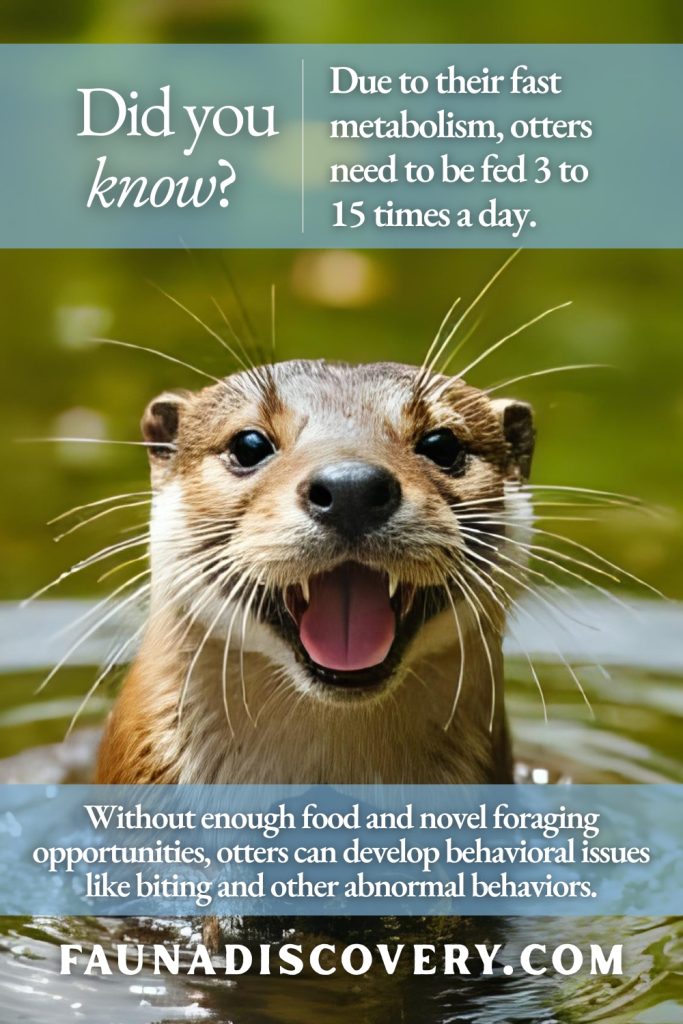
Otters have a high metabolism and need to be fed 3 to 15 times a day. When they don’t receive enough food or foraging opportunities, they often develop behavioral issues such as biting, aggression, and other abnormal behaviors.
For those who work outside the home, feeding a pet otter can become a real challenge.
Otters can only thrive with caretakers who have plenty of time to meet their needs, keep them engaged with novel challenges, and provide stimulating foraging activities.
Stay Away From Yucky Ingredients
It is important that caretakers do not feed cat or dog food to otters – these are not species appropriate and could lead to health issues.
Asian small clawed otters in particular are highly prone to urinary stones in captivity. Their diet (especially one that’s high in calcium and low in protein and sodium) is believed to be a major contributing factor to the development of this problem.
Cost of Owning an Otter
Even where they are legal, owning an otter is still extremely expensive.
Some common potential costs include:
- Custom built enclosure with pool/pond and water filtration: $10,000+
- Food and supplements: $800 to $1,000+/month
- Enrichment, activities, and toys: $300 to $800+/month
- Routine veterinary care and emergencies: $300 to $1000+/year
- Licensing, permits, inspections, insurance, etc.: Varies by region
Ethical Concerns
The rise in otter ownership and “pet otter” content online has led to a surge in illegal wildlife trade – especially in Southeast Asia where baby otters are taken from the wild, often after their mothers are killed. This practice is not only unethical but it’s also contributing to the decline of wild otter populations.
While the chances of wild born otters entering the U.S. exotic pet trade are relatively low, it’s still important to source animals from ethical USDA licensed breeders.
Is There Any Responsible Way to Work with Otters?
Yes! Look for opportunities with sanctuaries, zoos, wildlife centers, licensed rehabilitation facilities, and other professional facilities that work with otters.
These environments are built with the animal’s welfare in mind and are managed by professionals who are trained to meet their complex needs.
If you’re passionate about otters, you could consider:
- Supporting conservation programs
- Volunteering at a wildlife rescue
- Visiting ethical accredited zoos, aquariums, sanctuaries, or organizations that educate the public responsibly
Your curiosity and love for animals is valid and valuable. With education, advocacy, and ethical support for conservation, you can have a positive impact on otters and other exotic animals.
The Honest Truth About Pet Otters
So, do otters make good pets?
No, otters do not make good pets for the average person. While they are smart, charismatic, and fascinating animals, the complexity of their care and potential behavioral challenges make them a poor fit for 99.99% of people.
Owning a pet otter is not for everyone – it takes a very specific type of person to successfully care for an otter. Potential owners need to carefully evaluate whether they’re able to invest the time, money, and space required to properly care for this water loving species.
Want to Learn More?
Subscribe to Fauna Discovery for science based animal care tips, exotic species spotlights, enrichment ideas, and behavior insights. Let’s build a world where all animals (wild and captive) can truly thrive instead of just surviving!