Do Barn Owls Mate for Life? The Surprising Truth About Their Relationships
Explore the truth behind owl relationships — from seasonal pair bonds to fascinating courtship behaviors — and learn more about how these remarkable owls raise their young.
- The Short Answer: It’s Complicated
- Understanding Barn Owl Pair Bonds
- Factors That Affect Barn Owl Pair Bonds
- How Barn Owls Find and Court Mates
- Comparison to Other Owl Species
- Barn Owl Parenting Responsibilities
- The Role of Environment in Barn Owl Relationships
- What This Means for Barn Owl Conservation
- Fascinating Facts About Barn Owl Relationships
- The Verdict
When you spot a barn owl gliding silently through the twilight, it’s natural to wonder about the secret life of these ghostly hunters. One of the most common questions people ask is whether barn owls mate for life.
The answer offers fascinating insight into the complex behavior and survival strategies of these nocturnal birds.
The Short Answer It’s Complicated
Barn owls (Tyto alba) practice what biologists call “serial monogamy” rather than true lifelong pairing. This means they usually stay loyal to one partner for a single breeding season (or sometimes for several seasons) but they don’t necessarily remain together for life like some other bird species.
Understanding Barn Owl Pair Bonds
During the breeding season, barn owls form strong pair bonds that typically last through the nesting and chick rearing period. These “seasonal partnerships” involve close cooperation, including:
- Mutual Territory Defense – Both the male and female defend their nesting area from intruders.
- Coordinated Hunting and Feeding – The male usually hunts and delivers food to the female while she incubates the eggs.
- Shared Parental Care – Once the chicks hatch, both parents work tirelessly to feed and protect them.
Long Term Mate Fidelity
Research shows that barn owl pairs often reunite for several breeding seasons – sometimes for 2 to 5 years or more – if both birds survive and return to the same nesting territory.
However, this faithfulness is practical rather than emotional. Barn owls are “site faithful” birds, meaning they tend to return to nesting sites that have proven successful in the past. If both partners happen to return to the same site, they typically resume their partnership out of efficiency and familiarity – not due to lifelong romantic attachment.
Factors That Affect Barn Owl Pair Bonds
The main reason barn owls don’t mate for life comes down to survival. These birds face numerous natural and human related threats including:
- Vehicle collisions
- Predation
- Starvation during harsh winters
- Rodenticide poisoning (rat poison)
- Habitat loss
In the wild, barn owls typically live only 2 to 4 years, although some can survive over a decade under ideal conditions. Because so many fail to live long enough, maintaining lifelong pair bonds simply isn’t feasible for most individuals.
Territory Availability
If a barn owl loses its mate, it generally finds a new partner for the next breeding season rather than remaining solitary. The likelihood of pairing again depends heavily on the availability of suitable nesting sites and potential mates within the area.
When both former partners return to the same territory, they will often reunite – but if one doesn’t, the survivor quickly accepts a new mate.
Breeding Success
Barn owls can also “divorce” if their nesting efforts repeatedly fail. If a pair’s chicks don’t survive or reproductive success is low, one or both birds may seek new partners the following year.
This behavior helps increase the chances of future breeding success, especially in regions where other healthy proven mates are available.
How Barn Owls Find and Court Mates
When breeding season approaches, male barn owls perform a series of distinctive courtship behaviors to attract a female. These displays help demonstrate fitness, territory quality, and commitment as a potential mate.
Typical courtship behaviors include:
- Vocal Displays – Males produce loud raspy screeches to announce their presence and attract females.
- Display Flights – They perform graceful, looping flights around potential nesting areas to showcase their agility.
- Food Offerings – Males bring prey to females as a sign of their ability to provide for a family.
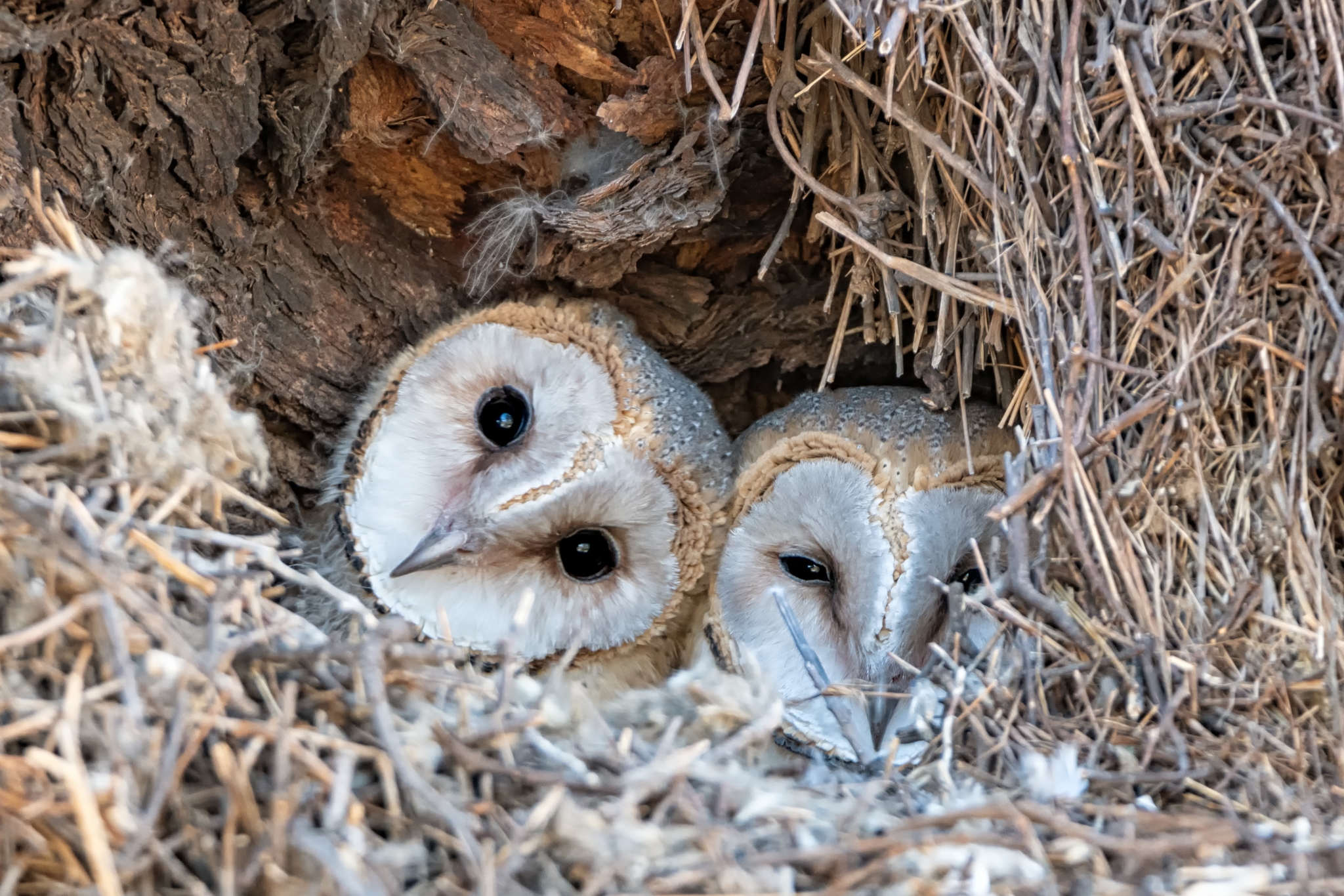
- Nest Showing – Once interest is mutual, males guide females to potential nesting sites, often within barns, hollow trees, or nest boxes.
Establishing Territory
After forming a pair bond, the owl couple establishes and defends a breeding territory. The male continues supplying food to the female throughout the egg laying and incubation period, which lasts roughly 30 to 32 days.
This steady food provision reinforces the bond and ensures the female can focus entirely on nesting duties.
Comparison to Other Owl Species
Barn owls’ mating patterns differ slightly from those of other owl species:
- Great Horned Owls – Tend to form long term bonds and often mate for many years (sometimes for life).
- Snowy Owls – Pairings are more opportunistic, and they will change partners depending on food availability and breeding location.
- Eastern Screech Owls – They show behavior similar to barn owls, often reuniting with previous mates if both survive and return to the same nesting site.
Barn Owl Parenting Responsibilities
While barn owls may not mate for life, they are exceptionally dedicated parents during each breeding season. Once nesting begins, the pair works in close coordination to raise their young:
- Females handle most of the incubation and brood the hatchlings to keep them warm and protected.
- Males take on the role of provider, hunting nightly to supply food for both the female and the chicks.
- Both parents fiercely defend the nest from predators and intruders, ensuring their young have the best chance of survival.
Raising Multiple Broods
In years when prey is plentiful, a barn owl pair may successfully raise two (or occasionally even three) broods in a single season. This extended period of cooperation not only boosts reproductive success but also strengthens the pair’s bond and increases the likelihood that they will reunite the following year.
The Role of Environment in Barn Owl Relationships
Barn owls living in rich, stable environments are far more likely to maintain long term partnerships. For successful breeding and pair stability, they require:
- Abundant Prey Populations – Consistent access to rodents and small mammals ensures reliable food sources.
- Secure Nesting Sites – Safe cavities, barns, or nest boxes protect eggs and chicks from predators.
- Minimal Human Disturbance – Quiet and undisturbed territories reduce stress and increase breeding success.
High quality habitats improve survival rates, making it more likely that both members of a pair return to the same territory for subsequent breeding seasons.
Human Impact
Conservation efforts that provide nest boxes and protect barn owl habitats can indirectly promote longer pair bonds by improving survival rates.
When both members of a pair survive the winter, they’re far more likely to reunite and breed together again.
What This Means for Barn Owl Conservation
Understanding barn owl mating behavior helps conservationists create more effective protection strategies:
- Nest Box Programs – Offer safe and reliable breeding sites that encourage site fidelity and repeat pairings.
- Habitat Corridors – Connect territories and help barn owls find mates and expand their range safely.
- Rodenticide Reduction – Lowers poisoning risks, increasing adult survival and long term reproductive success.
- Road Mortality Prevention – Protects breeding adults, reducing population turnover and supporting pair stability.
Fascinating Facts About Barn Owl Relationships
- A female barn owl typically lays 4 to 7 eggs per clutch, sometimes more in years with abundant prey.
- Barn owl pairs communicate through unique hissing, screeching, and chittering vocalizations.
- Males often cache extra prey near the nest during breeding season to feed their mate and chicks.
- Juveniles from previous broods occasionally remain near their parents’ territory for several months.
- In mild climates, barn owls may breed year round when food supplies remain steady.
Serial Monogamy Serves Barn Owls Well
While barn owls don’t mate for life in the traditional sense, they do form strong seasonal partnerships that can last for several years. This flexible approach to bonding provides a clear evolutionary advantage – allowing them to adapt to changing conditions and improve their reproductive success.
The next time you see a barn owl gliding silently through the night or perched in a barn doorway, remember that these remarkable birds embody both independence and cooperation.
Their relationships reflect the balance between survival and connection – a testament to the elegance of nature’s design.
By understanding and protecting barn owls, we safeguard not only individual birds but also the habitats and prey systems that sustain their lives and relationships year after year.