10 Easiest Corals to Keep Alive A Beginner’s Reef Tank Guide
Discover the 10 easiest corals for beginners, with care requirements, smart placement tips, and common mistakes to avoid. Build your reef with confidence and let your tank glow from day one.
- Why Starting with Easy Corals Matters
- The Top 10 Easiest Corals for Beginners
- Essential Care Tips for Beginner Coral Keepers
- Common Beginner Mistakes to Avoid
- Where to Start : Building Your Coral Collection
- Where to Buy Your First Corals
- What to Look For: Watching Your Corals Thrive
- Your Reef Journey Starts Here
So you’ve got your saltwater aquarium up and running, and now you’re ready to add some gorgeous corals to the mix! I totally get it, there’s nothing quite like watching those vibrant colors sway in the current.
But let’s be real: not all corals are created equal… especially when you’re just starting out.
The good news? There are plenty of stunning, beginner friendly corals that’ll make your tank look amazing without driving you crazy with complicated care requirements.
Why Starting with Easy Corals Matters
Before we dive into the best corals for beginners, let’s chat about why choosing hardy species is so important.
Corals are living organisms that require stable water parameters, proper lighting, and consistent care. Starting with forgiving species gives you time to learn the ropes without the heartbreak of losing expensive, delicate specimens.
Plus, success breeds confidence, and you’ll be ready to tackle more challenging corals once you’ve mastered the basics!
The Top 10 Easiest Corals for Beginners
1. Zoanthids (Zoas)
Hands down, zoanthids are probably the most beginner friendly corals you can find.
These colorful little button polyps come in an absolutely wild variety of patterns and colors – we’re talking neon greens, bright oranges, and even rainbow combinations!
They’re incredibly forgiving when it comes to lighting (low to moderate works great), they tolerate a range of water conditions, and they spread relatively quickly, giving you that instant gratification we all secretly love.
Care Level: Easy
Lighting: Low to Moderate
Flow: Low to Moderate
Why They’re Great: Super hardy, affordable, and they multiply readily
2. Green Star Polyps (GSP)
If you want a coral that’s practically indestructible, green star polyps are your best friend.
This fast growing soft coral creates a gorgeous carpet of bright green polyps that wave in the current like an underwater meadow.
GSP is so hardy that many experienced reefers actually use it as an “indicator species” – if your GSP looks unhappy, something might be off with your water parameters.
Care Level: Easy
Lighting: Low to High
Flow: Moderate
Why They’re Great: Nearly impossible to kill, grows quickly, adds movement to your tank
3. Mushroom Corals (Discosoma and Rhodactis)
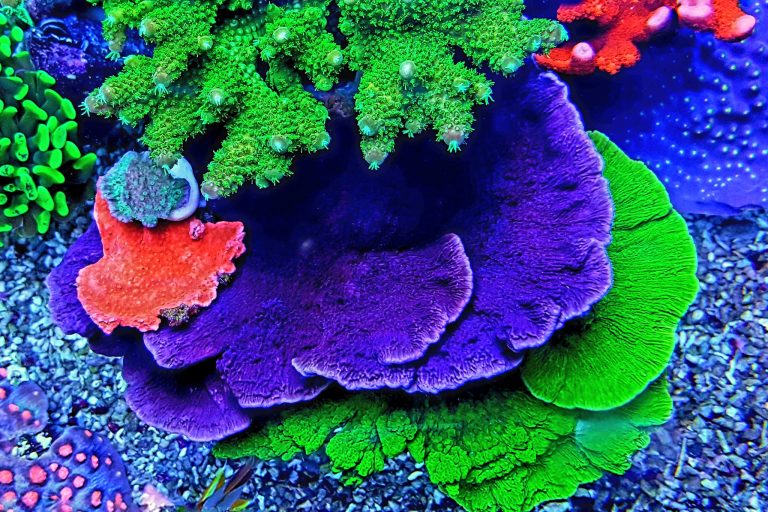
Mushroom corals are absolute champions for beginners! These soft corals come in tons of colors (like blues, greens, reds, spotted patterns) and they’re ridiculously easy to care for.
They do well in lower light conditions (perfect if you’re not ready to invest in expensive lighting yet), and they can tolerate less than perfect water quality while you’re still figuring things out.
Care Level: Easy
Lighting: Low to Moderate
Flow: Low
Why They’re Great: Thrive in lower light, very forgiving, come in beautiful varieties
4. Kenya Tree Coral
The Kenya tree coral is like the houseplant of the reef world… it just keeps growing no matter what you do!
This soft coral has a beautiful tree like structure with feathery branches that sways gently in the water.
It’s incredibly hardy and actually grows so well that you might find yourself giving away frags to fellow hobbyists (which is a fun problem to have!).
Care Level: Easy
Lighting: Low to Moderate
Flow: Low to Moderate
Why They’re Great: Super hardy, fast growing, easy to propagate
5. Xenia (Pulsing Xenia)
Xenia coral is totally mesmerizing to watch! These soft corals have polyps that literally pulse open and closed, creating this hypnotic movement in your tank.
They’re pretty forgiving when it comes to parameters, though they can be a bit picky about water chemistry.
Some tanks they absolutely thrive in, while in others they might struggle… but when they’re happy, they’re really happy and will spread like crazy!
Care Level: Easy to Moderate
Lighting: Moderate
Flow: Low to Moderate
Why They’re Great: Unique pulsing movement, fast growing when conditions are right
6. Duncan Coral (Duncanopsammia axifuga)
Duncan corals are an excellent choice if you want an LPS (Large Polyp Stony) coral that won’t stress you out.
These gorgeous corals have large fleshy polyps that extend during the day, showing off their green or purple coloring.
They’re more forgiving than many other LPS corals and don’t require intense lighting, making them perfect for someone taking their first steps into stony corals.
Care Level: Easy to Moderate
Lighting: Low to Moderate
Flow: Low to Moderate
Why They’re Great: Beautiful, hardy LPS option, responds well to target feeding
7. Toadstool Leather Coral (Sarcophyton)
Toadstool leathers are classic beginner corals for a reason! These soft corals have a distinctive mushroom shape with polyps that extend from the cap, creating a fuzzy appearance.
They’re incredibly hardy, tolerate a wide range of conditions, and can grow to impressive sizes.
Just be aware – they occasionally shed a waxy coating as part of their natural cycle, which is totally normal!
Care Level: Easy
Lighting: Low to Moderate
Flow: Moderate
Why They’re Great: Very hardy, distinctive appearance, long lived
8. Blastomussa (Blastos)
Blastomussa corals are a fantastic LPS option for beginners who want something with a bit more “wow” factor.
These corals have large, colorful mouths in shades of red, green, and pink that create a stunning display.
hey prefer lower light and flow, making them perfect for shadier spots in your aquarium. They’re also pretty forgiving when it comes to water parameters!
Care Level: Easy
Lighting: Low to Moderate
Flow: Low
Why They’re Great: Gorgeous colors, low light requirements, very hardy
9. Candy Cane Coral (Caulastrea furcata)
Candy cane corals are named for their striped appearance, and they’re absolutely perfect for beginners dipping their toes into LPS corals.
These hardy corals extend their feeding tentacles at night and are pretty forgiving about lighting and water conditions.
They also respond really well to target feeding, which is super fun to watch!
Care Level: Easy to Moderate
Lighting: Low to Moderate
Flow: Low to Moderate
Why They’re Great: Hardy LPS, beautiful striping, enjoys target feeding
10. Palythoa (Palys)
Palythoas are similar to zoanthids but generally have larger polyps, creating a really cool effect in your tank.
They come in tons of color morphs and are extremely hardy, tolerating a wide range of lighting and flow conditions.
Just one important note: palys can contain palytoxin, so always wear gloves when handling them and never touch your face during aquarium maintenance!
Care Level: Easy
Lighting: Low to Moderate
Flow: Low to Moderate
Why They’re Great: Very hardy, large colorful polyps, affordable
Essential Care Tips for Beginner Coral Keepers
Water Parameters Matter (But Don’t Stress Too Much!)
Here’s the thing about water parameters… they’re important, but you don’t need to be obsessive right out of the gate. For the corals listed above, aim for these ranges and you’ll be golden:
- Temperature: 75°F to 80°F (24C to 27°C)
- Salinity: 1.025 to 1.026 specific gravity
- pH: 8.0 to 8.4
- Alkalinity: 8 to 11 dKH
- Calcium: 400 to 450 ppm
- Magnesium: 1250 to 1350 ppm
- Nitrates: Under 20 ppm
- Phosphates: Under 0.10 ppm
The most important thing? Consistency! Corals hate sudden changes way more than they hate slightly imperfect parameters.
Lighting: You Don’t Need to Break the Bank
One of the biggest misconceptions about coral keeping is that you need crazy expensive lighting.
While that’s true for some advanced SPS corals, all the beginner corals on this list do great with moderate, affordable LED fixtures.
Start with something in the 50 to 100 PAR range for most of these corals, and you’ll be totally fine!
Water Flow: Keep It Moving
Corals need water movement to bring them nutrients and oxygen while carrying away waste. For the corals listed above, moderate flow works beautifully.
You don’t need anything crazy – just enough to see the polyps gently swaying. Too much flow can actually stress these corals out, so aim for a gentle to moderate current.
Feeding Your Corals
Here’s some good news: most of the corals on this list get their energy from the symbiotic zooxanthellae algae living in their tissues (fancy, right?).
That said, many will benefit from occasional target feeding with coral foods, especially the LPS varieties like duncans and candy canes.
It’s not required for survival, but it definitely helps with growth and coloration!
Common Beginner Mistakes to Avoid
1. Adding Corals Too Soon
I know, I know – you’re excited! But please wait until your tank has fully cycled and has been stable for at least a month before adding corals.
Patience now equals success later, I promise!
2. Overcrowding Your Tank
Corals need space to grow, and many release chemicals that can irritate their neighbors. Give each coral plenty of room – you can always add more later as you figure out growth patterns!
3. Chasing Parameters Too Aggressively
Stability is more important than perfect numbers. Don’t make huge adjustments to your water chemistry all at once. Small, gradual changes are the way to go!
4. Ignoring Acclimation
Always acclimate new corals slowly! Temperature acclimate for at least 15 minutes, and consider drip acclimating for 30 to 60 minutes to help them adjust to your water parameters.
5. Not Testing Water Regularly
Test your water parameters at least weekly when you’re starting out. This helps you catch problems early before they become disasters!
Building Your Coral Collection
If you’re staring at this list feeling a bit overwhelmed about where to begin, here’s my recommendation: Start with 2 to 3 different types from this list.
Maybe grab some zoanthids for color variety, a toadstool leather for that cool soft coral look, and some mushrooms for a shady spot. See how those do for a month or two, then add more!
Starting slowly gives you time to learn each coral’s behavior, figure out the best placement in your tank, and build your confidence.
Plus, it’s way easier on your wallet (reef keeping can get expensive fast if you’re not careful!).
Where to Buy Your First Corals
You’ve got a few great options for sourcing beginner corals:
- Local Fish Stores: Shopping local is awesome because you can see exactly what you’re getting, ask questions, and build relationships with experienced reefers. Many local stores offer beginner friendly frags at reasonable prices.
- Online Retailers: There are tons of reputable online coral vendors that ship overnight. You’ll often find better prices and selection online.
- Local Reef Clubs: This is a seriously underrated option! Joining a local reef club connects you with experienced hobbyists who often have frags available for cheap (or even free). You’ll also get invaluable advice and support!
- Coral Swaps and Frag Sales: These events are super fun and a great way to find healthy corals at great prices while meeting other enthusiasts.
Watching Your Corals Thrive
Healthy corals should show:
- Full polyp extension during the day (or night for some species)
- Vibrant, consistent coloration
- Steady growth over time
- Quick response to feeding (for LPS corals)
Signs something might be wrong:
- Polyps that stay retracted for multiple days
- Tissue recession or bleaching
- Unusual slime or discoloration
- Failure to extend tentacles during normal periods
If you notice these signs, test your water parameters first – that’s usually where problems originate!
Your Reef Journey Starts Here
Starting your coral collection is honestly one of the most exciting parts of the reef keeping hobby! These beginner friendly corals will give you a gorgeous reef while you develop the skills and knowledge to tackle more challenging species down the line.
Remember, every expert reef keeper started exactly where you are now, so don’t get discouraged if things aren’t perfect right away.
Take your time, enjoy the learning process, and don’t be afraid to ask questions in online forums or at your local fish store. The reef keeping community is super welcoming and loves helping newcomers succeed!
Now go forth and create that amazing reef tank you’ve been dreaming about! Your first corals are waiting, and trust me… watching them grow and thrive is going to be so worth it.
Happy reefing! 🪸