There’s a Creature Covered in Fingernails and Nobody’s Talking About It
Part artichoke, part armor, 100% endangered. Everything you never knew you needed to know about the pangolin.
If the fashion world were to claim a spirit animal, the pangolin would make an unexpectedly fitting choice. Cloaked in a seamless arrangement of overlapping keratin scales – the very same material as human nails – this quietly remarkable mammal has moved through forests and savannas for some 80 million years. Long before sustainability entered the cultural lexicon, the pangolin embodied it with effortless precision.
And yet, despite the distinction of being the most trafficked wild mammal on earth, it remains curiously unfamiliar to many. Consider this your introduction.
What Exactly Is a Pangolin?
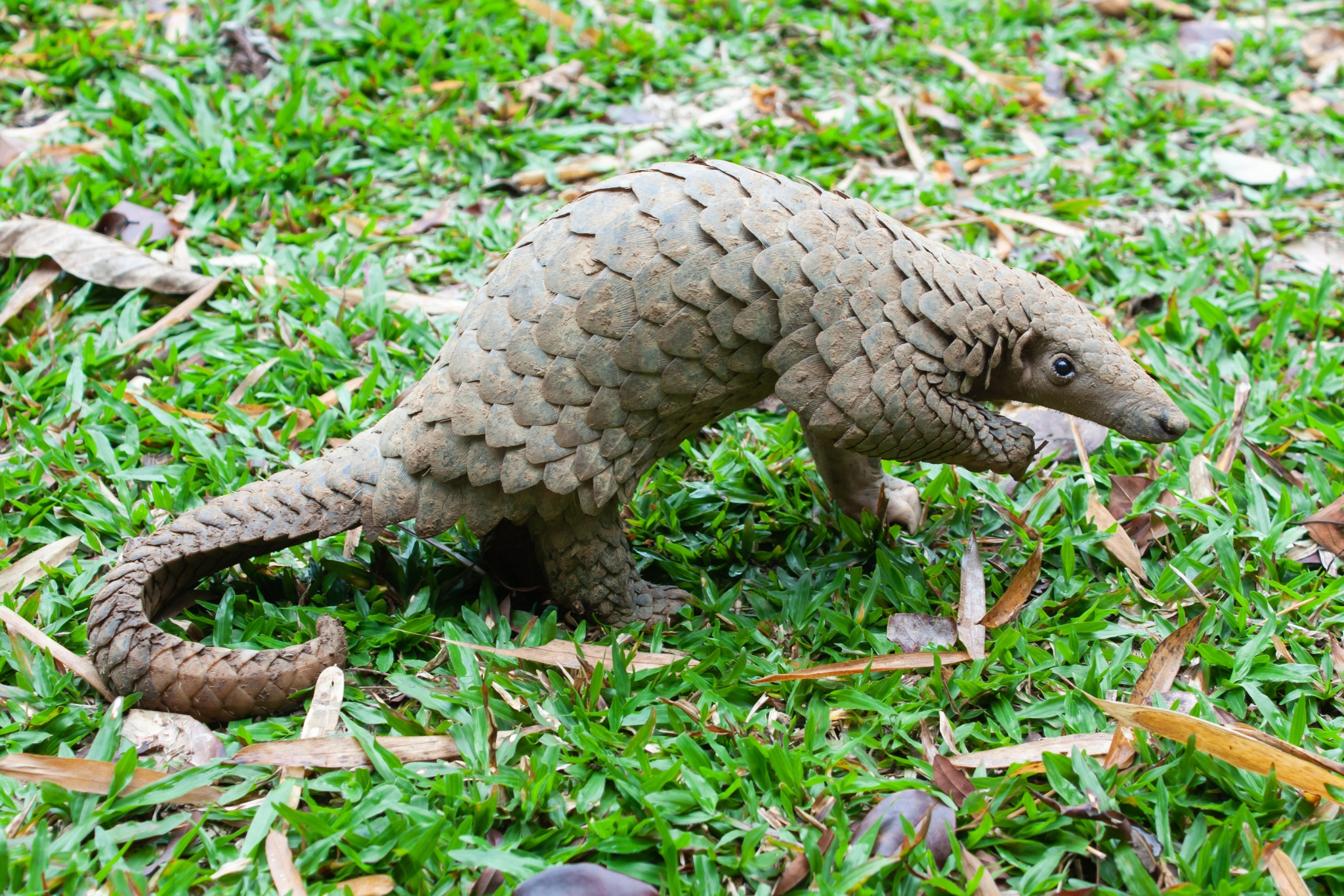
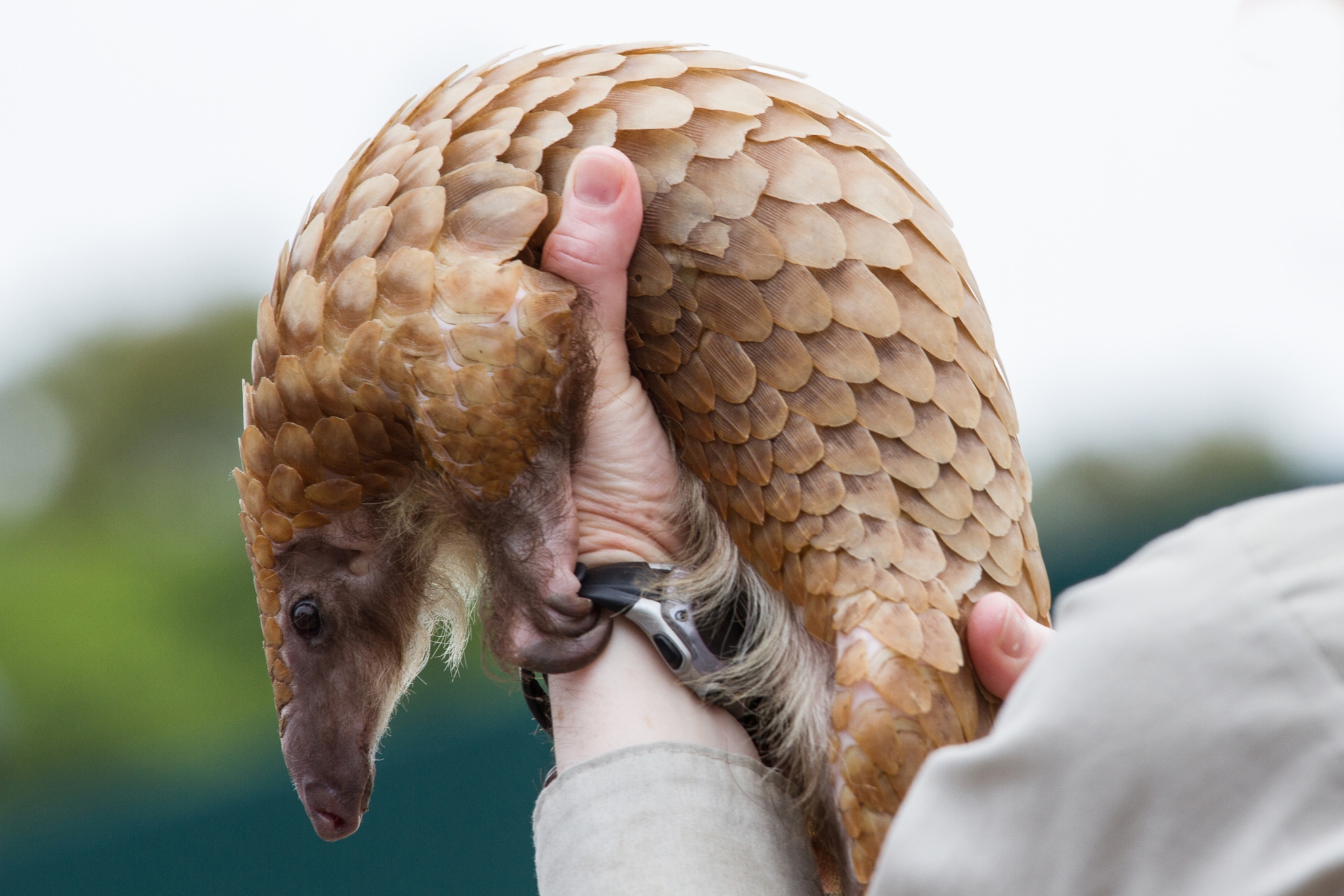
The pangolin (order Pholidota) stands as one of nature’s more avant-garde creations. Picture, if you will, an artichoke reimagined as an animal – refined, scaled, and equipped with a taste for ants – capable of curling into a perfectly composed, armored sphere at the first sign of danger. That, in essence, is the pangolin.
Eight distinct species are found across Africa and Asia, from the imposing giant ground pangolin of sub-Saharan Africa to the elegantly adapted Sunda pangolin of Southeast Asia, each no less captivating than the next.
Though they bear a passing resemblance to anteaters or armadillos, pangolins are not closely related to either. Their nearest living relatives belong, somewhat unexpectedly, to the order of carnivores – think cats, dogs, and bears.
Trafficked Mammal
A Status Symbol Worth Protecting
Let’s consider the pangolin’s appearance – because it truly deserves a closer look. Its scales, composed of keratin (the very same material as human fingernails), are arranged in precise, overlapping rows, forming what can only be described as nature’s most elegant suit of armor. Depending on the species, a pangolin can have hundreds to well over a thousand individual scales, accounting for as much as 20 percent of its total body weight.
When faced with danger, the pangolin responds with remarkable composure: it tucks its head, wraps its tail neatly around its body, and curls into a near-perfect sphere. The result is a defense so refined that even formidable predators have been observed abandoning the effort altogether.
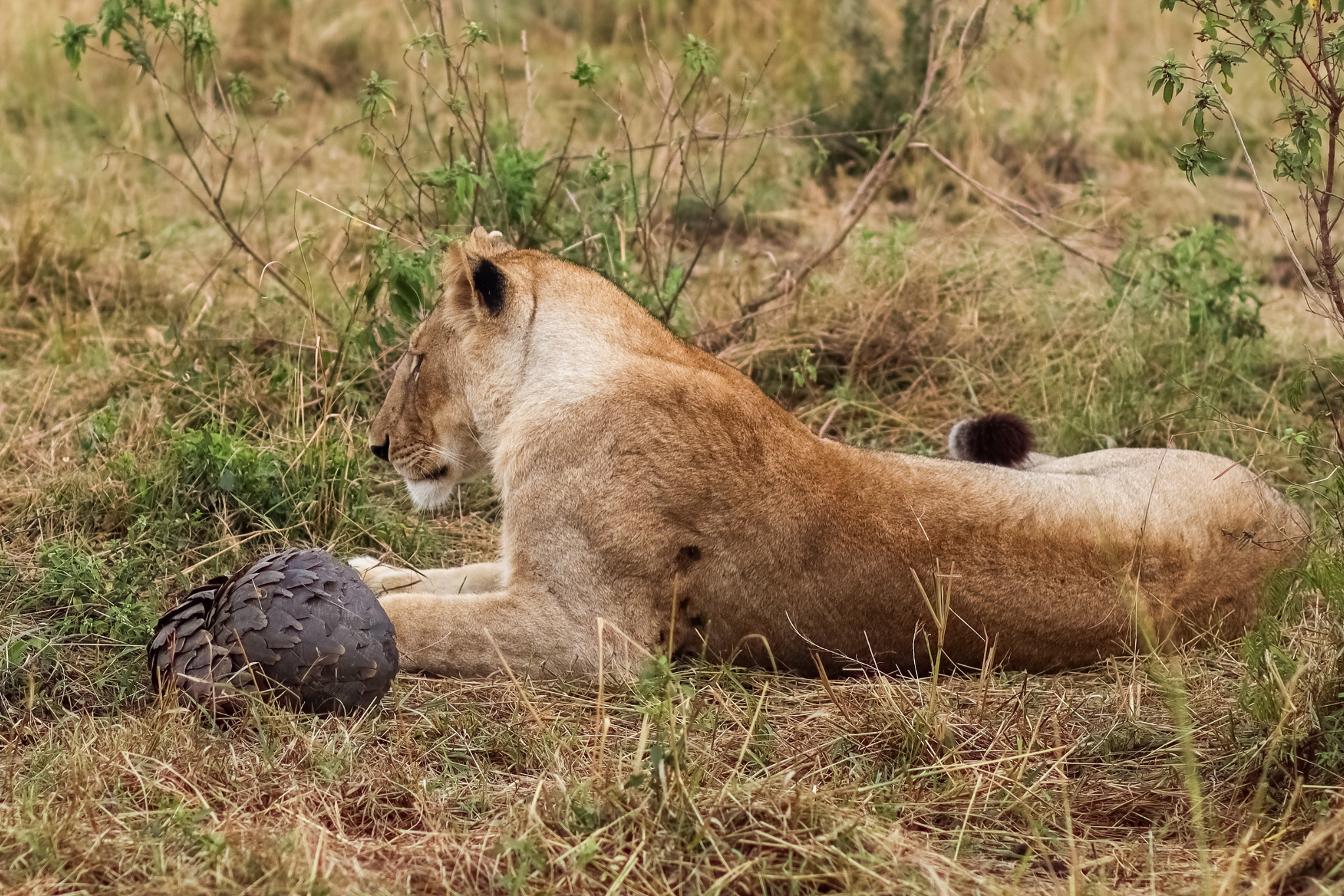
Both lions and hyenas — renowned for their bone-crushing strength — are deterred by this impeccably designed protection.
And yet, there is a quiet tragedy in this sophistication. The very scales that safeguard the pangolin in the wild have made it a target for poaching. In parts of Asia, they are mistakenly believed to possess medicinal value… despite being nothing more than keratin. This enduring myth has had devastating consequences, driving sharp declines in pangolin populations across both Asia and Africa.
A Diet That Is Quietly Radical
The pangolin is an insectivore of remarkable dedication. A single individual can consume up to 70 million insects each year – primarily ants and termites – quietly establishing itself as one of the ecosystem’s most important and effective natural pest managers. This is achieved with a tongue of extraordinary design, which in larger species can extend beyond the length of the body itself and is anchored deep within the torso, near the pelvis.
Pangolins may lack teeth, but nothing is left to chance. In a solution reminiscent of birds, they swallow small stones, sand, or grit, which are retained in a muscular stomach and used to grind food with quiet, methodical precision.
Nocturnal, Solitary, and Deeply Underrated
Pangolins are largely nocturnal and notably solitary, moving through their environments with quiet discretion. They communicate primarily through scent marking and make their homes in burrows or hollow trees, depending on the species. Mothers carry their young – charmingly known as “pangopups” – a detail that feels almost too delightful to be entirely real.
They are not creatures of spectacle. They do not call attention to themselves or perform for an audience. Instead, they exist with a composed, unhurried dignity – an understated self-possession that feels, in its own way, quietly aspirational.
The Conservation Crisis You Should Know About
This is where the narrative turns urgent. All 8 species of pangolin are listed on the IUCN Red List, ranging from Vulnerable to Critically Endangered.
It is estimated that more than 1 million pangolins were poached between 2000 and 2013 alone – trafficked for their scales, their meat, and, in some cases, their blood. Demand is driven largely by markets in China and Vietnam, though the trade extends far beyond any single region.
In 2016, all 8 species were granted the highest level of international protection under CITES (the Convention on International Trade in Endangered Species), effectively banning commercial trade. It was, by any measure, a landmark decision. And yet, enforcement remains uneven, and demand has proven difficult to extinguish.
The COVID-19 pandemic briefly brought pangolins into global focus, as they were proposed as a potential intermediate host for SARS-CoV-2—though this has never been conclusively established. Regardless, the moment cast a rare spotlight on the broader realities of illegal wildlife trade, and on pangolins themselves – attention that, at the very least, was not without value
How to Actually Help
Conservation is not a spectator sport, and the pangolin’s survival is not inevitable. Here’s where to direct your energy:
Support Serious Organizations
These reputable groups focus specifically on pangolin conservation, anti-poaching efforts, and demand reduction campaigns.
Be a Conscious Traveller
When visiting regions where pangolin trafficking is prevalent, refuse to patronise markets or restaurants that sell wildlife products. Report suspected trafficking to local authorities or organisations like TRAFFIC.
Talk About Them
Awareness is one of the most powerful tools in conservation. The pangolin’s obscurity in the Western world is part of the problem. The more people know and care, the harder it becomes to ignore their plight politically and commercially.
The Pangolin Needs Our Help
The pangolin is ancient, elegant, ecologically essential… and in serious trouble. It is a species refined over millions of years, clad in evolutionary armor that serves as both its greatest strength and, tragically, its greatest vulnerability. It asks very little of the world beyond the space to exist undisturbed.
The least we can do is ensure that it has that chance.