How to Calm a Spooky Horse Training Tips That Actually Work
From causes to solutions, explore everything you need to know about helping a spooky horse relax, trust you, and build real confidence.
- Understanding Why Horses Spook
- Common Causes of Nervousness and Spookiness
- Step 1: Start With the Basics — Health and Comfort
- Step 2: Build a Foundation of Trust Through Groundwork
- Step 3: Manage the Environment Intelligently
- Step 4: Address Rider Tension and Body Language
- Step 5: Use Consistent, Structured Exposure Training
- Step 6: Know When to Bring in Professional Support
- A Note on Nutrition and Supplements
- The Bottom Line
A horse that suddenly jumps sideways at a plastic bag or freezes when it spots a shadow can be unsettling to ride—and pretty frustrating when you have no idea what caused it.
But spooky behavior usually has a reason behind it.
It could be physical discomfort, a lack of experience with certain sights and sounds, or simply the natural instincts of a prey animal.
The good news is that being nervous doesn’t have to be a permanent part of your horse’s personality. With a proper health check, patient groundwork, and consistent training, most horses can learn to feel more confident in their surroundings.
And over time, that confidence can turn a nervous horse into a calmer and more trusting partner.
Understanding Why Horses Spook
Horses are prey animals, so they’re naturally wired to react quickly when something seems scary.
That instinct helped their ancestors survive in the wild, but it doesn’t always fit neatly into modern life at the barn, arena, or out on the trail. When a horse spooks, it usually isn’t being difficult or dramatic—it’s reacting to something it genuinely perceives as a threat, even if there’s nothing dangerous there.
Understanding that can change the way you respond. If your horse shies away from a plastic bag, for example, it isn’t trying to test you. Its nervous system may have already kicked into “flight” mode before it has a chance to figure out whether the bag is actually dangerous.
The goal with a spooky horse isn’t to fight that instinct. It’s to work with it, gradually helping the horse learn that unfamiliar sights, sounds, and situations aren’t something it needs to fear.
Common Causes of Nervousness and Spookiness
Before trying to change spooky behavior, it’s important to figure out what might be causing it. A horse that suddenly becomes nervous or reactive may be responding to something physical, something in its environment, or simply a lack of experience.
Physical Causes
- Pain or discomfort: this can include back pain, an ill-fitting saddle, hoof problems, dental issues, or ulcers
- Vision problems: changes in eyesight can make familiar objects suddenly seem unfamiliar or threatening
- Fatigue or muscle soreness: a tired or uncomfortable horse may be more reactive than usual
- Hormonal changes: some horses, particularly mares, can be more sensitive or reactive during hormonal fluctuations
Environmental causes
- New or unfamiliar surroundings: a new arena, trail, barn, or even a rearranged environment can make a horse more alert
- Sudden sights, sounds, or changes in light: unexpected movement or noise can easily trigger a startle response
- Herd dynamics: separation from other horses or changes within the herd can increase anxiety
- Weather: wind, in particular, is a common trigger for spooky behavior
Experience Based causes
- Rider tension: horses are remarkably good at picking up on a rider’s nervousness, which can make an already alert horse even more reactive
- Limited exposure: horses that didn’t experience many different sights, sounds, and environments when they were young may be more reactive to them later
- Past negative experiences: a frightening event or harsh training can leave a horse more cautious in certain situations
- Gaps in groundwork: without a solid foundation, a horse may not know how to respond when something unexpected happens
Rule Out Pain First
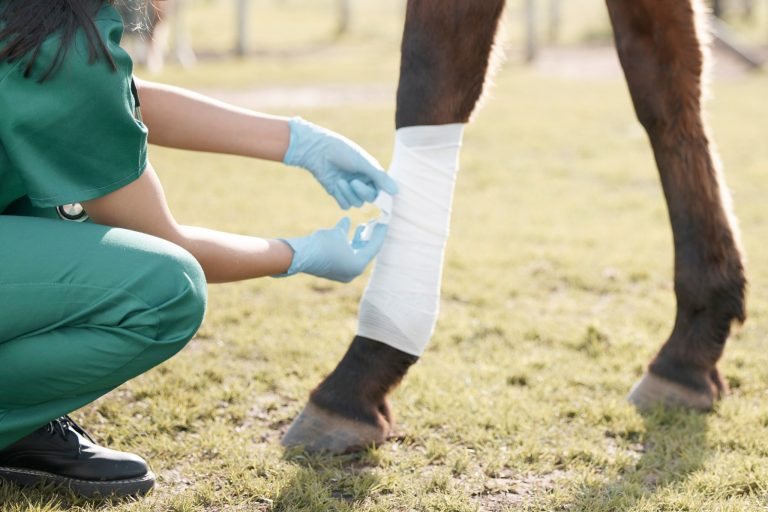
Before assuming your horse is simply nervous or spooky, it’s worth talking with your veterinarian and, if needed, having a saddle fitter or equine dentist check for any sources of discomfort.
Step 1 Start With the Basics — Health and Comfort
A horse that’s uncomfortable is going to have a hard time relaxing, so it’s worth checking for physical issues before starting a training plan.
Make Sure You’ve Looked At:
Saddle fit: the saddle should fit properly without pinching, rocking, or creating pressure points
Dental health: keep dental care up to date, since mouth pain can contribute to head tossing, tension, and anxious behavior
Hoof balance and soundness: even subtle hoof pain or lameness can show up as tension or spooky behavior rather than an obvious limp
Digestive health: gastric ulcers are common in performance horses and can sometimes show up as girthiness, spookiness, or an unusually “hot” temperament
Turnout and forage: horses with limited turnout or not enough access to forage may have extra pent-up energy, which can make them more reactive
Once you’re confident your horse isn’t dealing with an underlying physical problem, you can focus on the training and environmental factors that may be contributing to the spookiness.
Step 2 Build a Foundation of Trust Through Groundwork
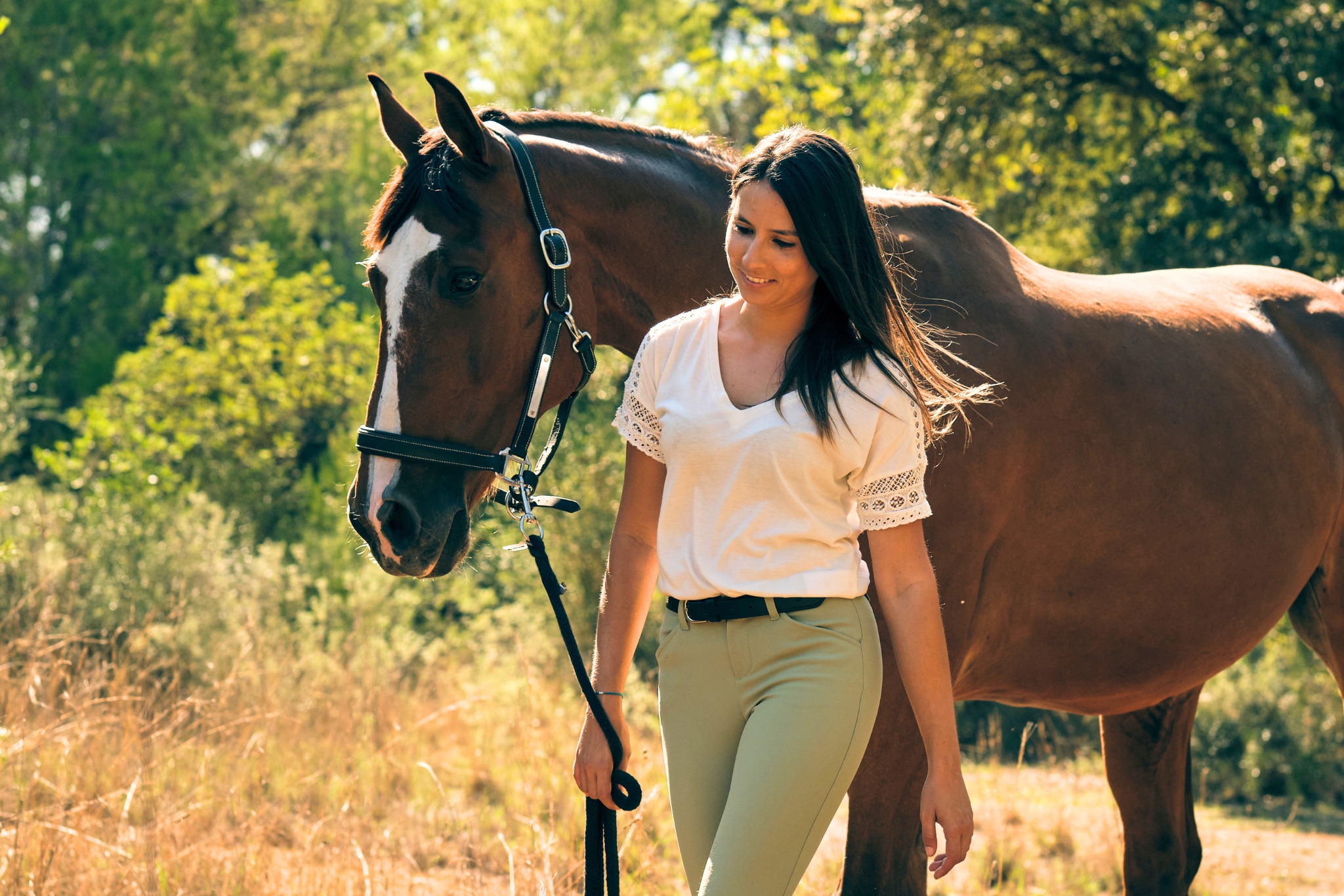
Groundwork is often where you can make the biggest difference with a spooky horse. It gives your horse a chance to focus on you and process what you’re asking without also having to manage the added weight and balance of a rider.
Groundwork Exercises That Can Help
Desensitization
Slowly introduce things like flags, tarps, plastic bags, and unfamiliar sounds at a pace your horse can handle. The goal isn’t to overwhelm them. Give the horse a chance to think, and release the pressure as soon as you see an honest effort to relax or move toward the right response.
Yielding Exercises
Teach your horse to move its hindquarters, shoulders, or forequarters away from light pressure. These exercises build responsiveness while encouraging your horse to pay attention and think instead of simply reacting.
Obstacle Work
Walking over poles, across tarps, over bridges, or around pedestals gives your horse opportunities to solve small challenges and build confidence.
Liberty Work / Long-Lining
These exercises allow your horse to work through some tension without a rider on its back, while also giving you a clearer view of its body language and reactions.
The key to all of these exercises is timing. Horses learn from the release of pressure, so knowing when to soften or stop asking can be just as important as the exercise itself.
Step 3 Manage the Environment Intelligently
Confidence building works best when you give your horse plenty of chances to succeed instead of pushing until they feel overwhelmed.
Start Somewhere Familiar
Introduce new sights, sounds, or objects in an environment where your horse already feels comfortable.
Use a calm buddy: If possible, work with a steady companion horse. Horses that are strongly attached to their herd often feel more confident when a calm horse is nearby.
Take it in small steps: Break new experiences into manageable pieces rather than exposing your horse to everything at once.
Know when your horse is over threshold: There’s a big difference between a horse that’s thinking and one that’s reacting. Trembling, holding the head unusually high, or refusing a treat can all be signs that your horse is too stressed to learn. When that happens, give them more distance and time instead of adding more pressure.
Step 4 Address Rider Tension and Body Language
It’s easy for riders to accidentally add to a horse’s nervousness without realizing it. Horses are incredibly sensitive to small changes in our body language, so things like gripping with your legs, holding your breath, or stiffening in the saddle can signal that something is wrong—even before the horse has actually reacted.
A few simple adjustments can help
Focus on your breathing: Take slow, deep breaths, and even make your exhale audible when you’re riding through a tense moment. It can help you stay relaxed and give your horse a calmer signal to follow.
Keep your hands soft: Follow your horse’s movement instead of bracing or pulling on the reins when you feel nervous.
Don’t fixate on the scary object: Staring directly at whatever has caught your horse’s attention can make both of you more tense. Instead, keep your eyes and attention on where you want to go.
Have a plan: Horses often respond well to clear, purposeful direction. Riding with a plan can give your horse more confidence than hesitating or anticipating the next spook alongside them.
Step 5 Use Consistent, Structured Exposure Training
For horses with more serious anxiety, a structured desensitization program usually works better than occasional, random exposure to things they find scary.
The goal is to build confidence gradually and give the horse plenty of opportunities to learn that unfamiliar situations are safe.
A Good Program Might Include
Short, regular sessions: A few minutes of practice each day is often more useful than one long session every so often.
A consistent “safe” cue: This could be a particular tone of voice or a simple halt and breathe routine that your horse learns to associate with feeling calm and secure.
Positive reinforcement: Use scratches, praise, or treats to reward moments of relaxation and calm behavior, rather than focusing only on correcting unwanted reactions.
Gradually increase the challenge: Start with easy situations, such as stationary objects in a quiet environment, and slowly work toward moving objects, new locations, and busier surroundings as your horse becomes more confident.
Step 6 Know When to Bring in Professional Support
Most nervous horses become much more confident with patient, consistent groundwork and time.
But if the anxiety is tied to past trauma, ongoing pain, or deeply ingrained flight responses, it may be worth bringing in a professional who has experience with behavioral rehabilitation or working with difficult cases.
Seek Outside Help If You Notice
Spooking that escalates: If your horse starts bolting, rearing, bucking, or becoming difficult to control, don’t try to work through it alone.
Little or no progress: If you’ve been doing consistent, appropriate groundwork for several weeks without seeing improvement, a fresh perspective can help identify what’s missing.
A sudden change in behavior: A horse that becomes noticeably more nervous or reactive out of nowhere may be dealing with pain or another physical problem and should be evaluated.
Safety concerns: If you’re worried about your own safety or that of anyone handling or riding the horse, bring in an experienced professional rather than pushing forward on your own.
A Note on Nutrition and Supplements
Supplements aren’t a replacement for good training, management, or addressing the underlying cause of anxiety.
With that said, some owners use calming supplements containing ingredients like magnesium or B vitamins as part of a broader approach. If you’re considering supplements, it’s best to discuss them with your veterinarian or equine nutritionist rather than relying on them as a quick fix.
Diet can also play a role in how some horses behave. Horses that are sensitive to high starch or high sugar diets can become more excitable, so a forage first, lower starch feeding plan may be worth discussing with an equine nutritionist, particularly if your horse is consistently anxious or reactive.
The Bottom Line
A nervous or spooky horse isn’t a horse with a “bad” personality.
More often, it’s a horse trying to tell you that something doesn’t feel right—whether it needs more confidence, a stronger foundation of trust, or a closer look at its physical comfort.
The biggest changes usually come from small consistent sessions rather than trying to fix everything at once. With patient groundwork, good timing, and attention to both physical and emotional needs, even a very reactive horse can gradually become calmer and more confident.
It may take time, but building that trust can make a huge difference—not just in how your horse responds to scary situations, but in the relationship you build together.