25 Fascinating Asian Elephant Facts You Didn’t Know
Discover 25 fascinating Asian elephant facts you never knew! From 40,000 trunk muscles to mirror self recognition, learn why these gentle giants are extraordinary.
- Physical Characteristics That Set Them Apart
- Intelligence and Emotional Complexity
- Communication and Social Behavior
- Feeding and Ecological Impact
- Unique Abilities and Adaptations
- Cultural and Conservation Significance
- Why Asian Elephant Conservation Matters
- Our Responsibility to Earth’s Gentle Giants
Asian elephants are among the most intelligent, emotionally complex, and culturally significant animals on our planet. While most people know these majestic creatures are endangered and have impressive trunks, there’s a treasure trove of lesser known facts that reveal just how remarkable they truly are.
Let’s explores the hidden wonders of Elephus maximus that will change how you see these gentle giants forever.
Physical Characteristics That Set Them Apart
1. Not All Asian Elephants Have Tusks
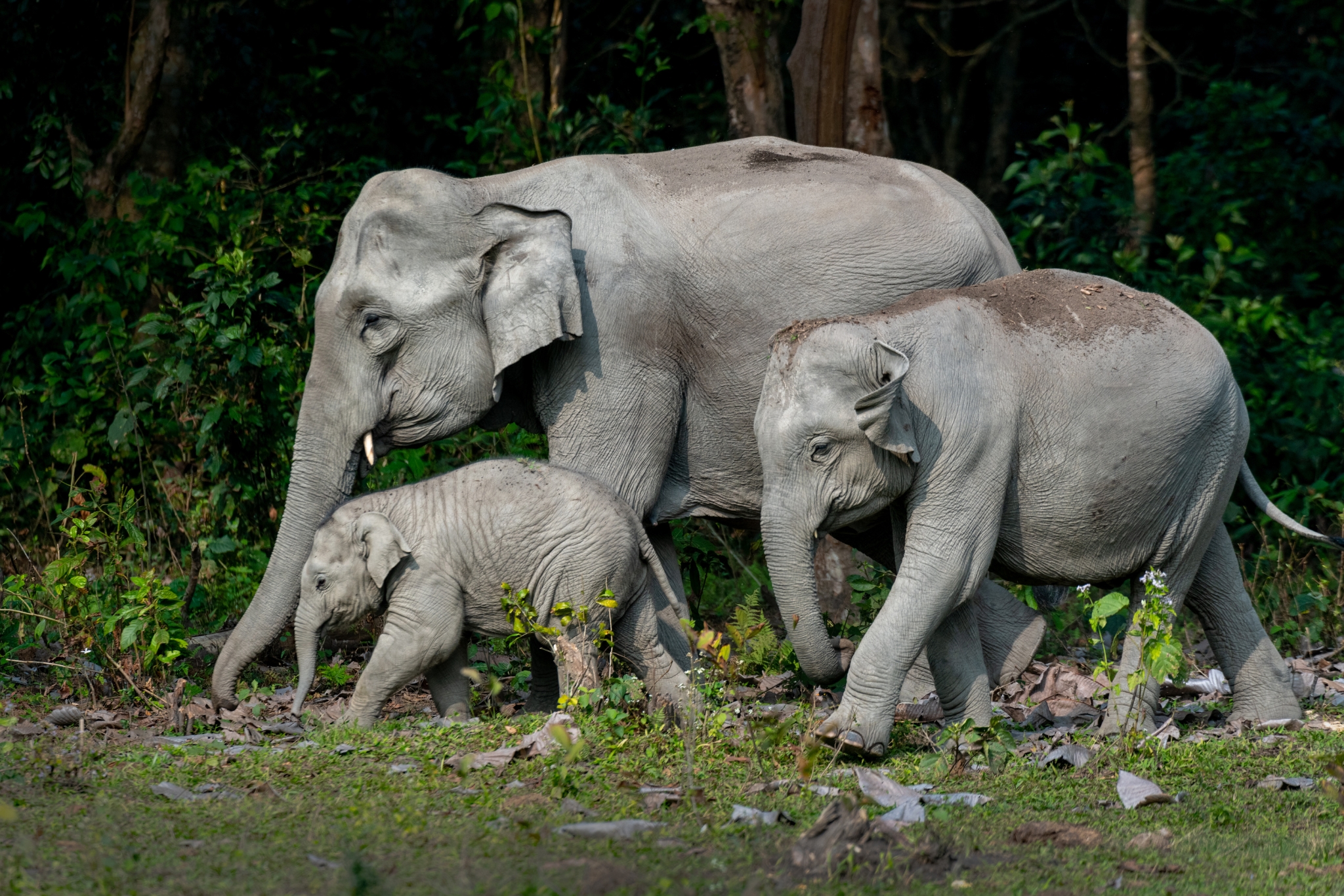
Unlike their African cousins, only some male Asian elephants develop tusks, and females typically don’t have them at all. Males without tusks are called “makhnas,” and they make up a significant portion of the population – in some regions, up to 95% of males are tuskless. This trait has actually increased due to poaching pressure, as tusked elephants were preferentially killed, creating an evolutionary advantage for tuskless individuals.
2. Their Trunk Contains Over 40,000 Muscles
The Asian elephant’s trunk is a masterpiece of biological engineering, containing more than 40,000 individual muscles but not a single bone. This incredible muscular structure allows them to perform tasks ranging from delicate (like picking up a single grain of rice) to powerful (such as lifting logs weighing hundreds of pounds). By comparison, the entire human body contains only about 600 muscles.
3. They Have a Unique Twin-Domed Head
One of the easiest ways to distinguish Asian elephants from African elephants is their distinctive head shape. Asian elephants have a twin-domed skull with an indent in the middle, creating two bumps on their forehead. This unique cranial structure houses their large brain and provides attachment points for their powerful jaw muscles.
4. Their Ears Are Shaped Like India
Asian elephant ears are significantly smaller than African elephant ears and have a distinctive shape that remarkably resembles the Indian subcontinent. This isn’t just a fun coincidence – the smaller ear size is an adaptation to their forest habitat, where large ears would be cumbersome, unlike the African savanna where large ears help with heat dissipation.
Intelligence and Emotional Complexity
5. They Can Recognize Themselves in Mirrors
Asian elephants are one of only a handful of species that pass the mirror self-recognition test, a benchmark for self awareness. In experiments, elephants have used mirrors to inspect parts of their bodies they couldn’t normally see and have tried to remove marks placed on their heads – behaviors that demonstrate they understand the reflection is themselves and not another elephant.
6. Elephants Experience Grief and Hold Funerals
Asian elephants display profound emotional responses to death, often spending hours or even days with deceased family members. They’ve been observed gently touching the bones and tusks of dead elephants with their trunks, covering bodies with leaves and branches, and returning to death sites years later. Some researchers believe elephants may understand the concept of death in ways few other animals do.
7. They Have Exceptional Memory Spanning Decades
The saying “an elephant never forgets” has scientific backing. Asian elephants can remember complex migration routes, water sources, and individual elephants they haven’t seen in decades. Studies show they can remember and distinguish between hundreds of different individuals, remember specific locations over 30 years later, and recall training from their youth throughout their entire lives.
8. They Can Distinguish Between Human Languages and Voices
Research has shown that Asian elephants can differentiate between human languages, ages, and even whether a voice belongs to someone who poses a threat. In areas where they’ve been persecuted, elephants react more defensively to the voices and languages of groups known to hunt them while remaining calmer around other ethnic groups.
Communication and Social Behavior
9. They Communicate Through Infrasound Over Miles
Asian elephants produce low frequency rumbles below the range of human hearing (infrasound) that can travel through the ground for several miles. Other elephants detect these vibrations through their feet and trunks, allowing herds to coordinate movements, warn of danger, and maintain social bonds even when separated by vast distances.
10. Matriarchs Lead with Decades of Wisdom
Asian elephant herds are matriarchal societies led by the oldest and most experienced female. These matriarchs make critical decisions about migration routes, water sources, and responses to threats based on knowledge accumulated over 60+ years. When matriarchs are killed by poaching or conflict, entire herds suffer from the loss of this irreplaceable wisdom.
11. They Show Empathy and Help Others in Distress
Asian elephants consistently demonstrate empathic behavior, offering comfort to distressed herd members through touch, vocalizations, and physical assistance. They’ve been observed helping injured elephants walk, protecting calves that aren’t their own, and even assisting other species in trouble – including humans!
12. Baby Elephants Suck Their Trunks Like Human Babies Suck Thumbs
Elephant calves often suck on their trunks for comfort, similar to how human babies suck their thumbs. Young elephants are still learning to control their complex trunks and can seem quite clumsy, often stepping on their own trunks or swinging them aimlessly. It takes months for a calf to master trunk coordination.
Feeding and Ecological Impact
13. They Consume Up to 300 Pounds of Food Daily
An adult Asian elephant needs to eat approximately 200 to 300 pounds of vegetation every day, spending 12 to 18 hours feeding. Their diet includes grasses, leaves, bamboo, bark, roots, and fruits. This massive consumption makes them critical to their ecosystems as seed dispersers and landscape engineers.
14. They’re Ecosystem Engineers That Create Habitats
As Asian elephants move through forests, they knock down trees, dig waterholes, and create clearings that benefit countless other species. Their dung fertilizes the soil and disperses seeds – sometimes hundreds of different plant species – across vast distances. Many plants in Asian forests actually depend on elephants for seed dispersal and germination.
15. Their Digestive System Is Only About 45% Efficient
Despite eating enormous quantities of food, Asian elephants have a relatively inefficient digestive system that processes only about 45% to 60% of what they consume. This inefficiency actually benefits the ecosystem, as their nutrient rich dung provides food for countless organisms and helps seeds germinate by breaking down tough seed coats.
16. They Use Tools and Modify Their Environment
Asian elephants regularly use tools, including branches to swat flies, leaves as fly whisks, and sticks to scratch themselves in hard-to-reach places. They’ve also been observed modifying sticks to specific lengths for particular tasks and even plugging watering holes with balls of chewed bark to prevent evaporation – and then returning later to remove the plug and drink.
Unique Abilities and Adaptations
17. They Can Swim Long Distances and Use Their Trunk as a Snorkel
Asian elephants are excellent swimmers capable of swimming for hours and covering distances of several miles in open water. When swimming in deep water, they use their trunks as natural snorkels, keeping just the tip above the surface to breathe while their entire body remains submerged.
18. Their Feet Act as Sensitive Seismic Detectors
The fatty pads in elephant feet don’t just cushion their weight – they also detect seismic vibrations traveling through the ground. Elephants can sense earthquakes, approaching animals, and the infrasound communications from other elephants miles away through these sensitive structures. They often “listen” by standing still with their weight shifted forward.
19. They Have Skin Over an Inch Thick, but It’s Extremely Sensitive
While Asian elephant skin can be over one inch thick in some areas, it’s also remarkably sensitive. Elephants can feel a fly landing on their back and use dust baths and mud wallows not just for cooling but also to protect their sensitive skin from sunburn and insect bites.
20. They Produce Unique Vocalizations for Different Situations
Asian elephants have a sophisticated vocal repertoire with distinct sounds for different contexts: low frequency rumbles for long distance communication, trumpets for excitement or alarm, roars for aggression, and specific “contact calls” that allow individual elephants to identify each other. Mothers and calves also have unique calls that help them locate each other in dense forests.
Cultural and Conservation Significance
21. They’ve Worked Alongside Humans for 4,000 Years
Asian elephants have been domesticated and worked alongside humans for approximately 4,000 years, particularly in logging, transportation, and ceremonial roles across Asia.
22. They’re Culturally Sacred in Many Asian Religions
Asian elephants hold profound religious and cultural significance throughout Asia. In Hinduism, the elephant headed deity Ganesha is one of the most worshipped gods. In Buddhism, white elephants are considered sacred, and elephants appear prominently in stories about Buddha’s birth and life. This cultural reverence has provided some protection but hasn’t prevented dramatic population declines.
23. Their Population Has Declined by 50% in Three Generations
Asian elephant populations have plummeted by approximately 50% over the past 60 to 75 years (three elephant generations). Today, only 40,000 to 50,000 Asian elephants remain in the wild, with about an equal number in captivity. They’re classified as Endangered on the IUCN Red List, with habitat loss, human-wildlife conflict, and poaching as primary threats.
24. Climate Change Is Altering Their Migration Patterns
Recent research shows that climate change is affecting Asian elephants’ traditional migration routes and seasonal patterns. Changes in rainfall patterns disrupt their access to food and water, forcing them into human dominated landscapes more frequently, which increases human-elephant conflict and endangers both species.
25. Conservation Corridors Are Critical for Their Survival
Because Asian elephants require vast territories – a single elephant can roam over 300 square miles – creating and protecting wildlife corridors that connect fragmented habitats is essential for their survival. These corridors allow genetic diversity, seasonal migration, and access to resources while reducing dangerous encounters with humans.
Why Asian Elephant Conservation Matters
Protecting Asian elephants isn’t just about saving a single species – it’s about preserving entire ecosystems.
As keystone species and ecosystem engineers, their survival ensures the health of forests, the continuation of countless plant species, and the protection of biodiversity hotspots that benefit all life, including humans.
The challenges facing Asian elephants – habitat destruction, human-wildlife conflict, climate change, and poaching – are significant but not insurmountable.
Through community based conservation, habitat restoration, human-elephant conflict mitigation strategies, and increased awareness, there’s hope for these magnificent creatures.
Our Responsibility to Earth’s Gentle Giants
Asian elephants are far more than the sum of these fascinating facts. They’re sentient beings with complex emotions, strong family bonds, and individual personalities. They’re architects of the forests they inhabit and living connections to ancient ecosystems that have existed for millions of years.
Every fact in this guide points to the same conclusion: Asian elephants are extraordinary, irreplaceable, and worth protecting.
Whether through supporting conservation organizations, making sustainable consumer choices, or simply spreading awareness, each of us has a role to play in ensuring these gentle giants continue to walk the Earth for generations to come.
The more we learn about Asian elephants, the more we realize how much we have yet to discover – and how much we stand to lose if we fail to protect them.