When Joints Misbehave A Foal Owner’s Guide to OCD
Osteochondrosis dissecans is one of the most common developmental conditions in young horses — and one of the most misunderstood. Here’s what every foal owner should know.
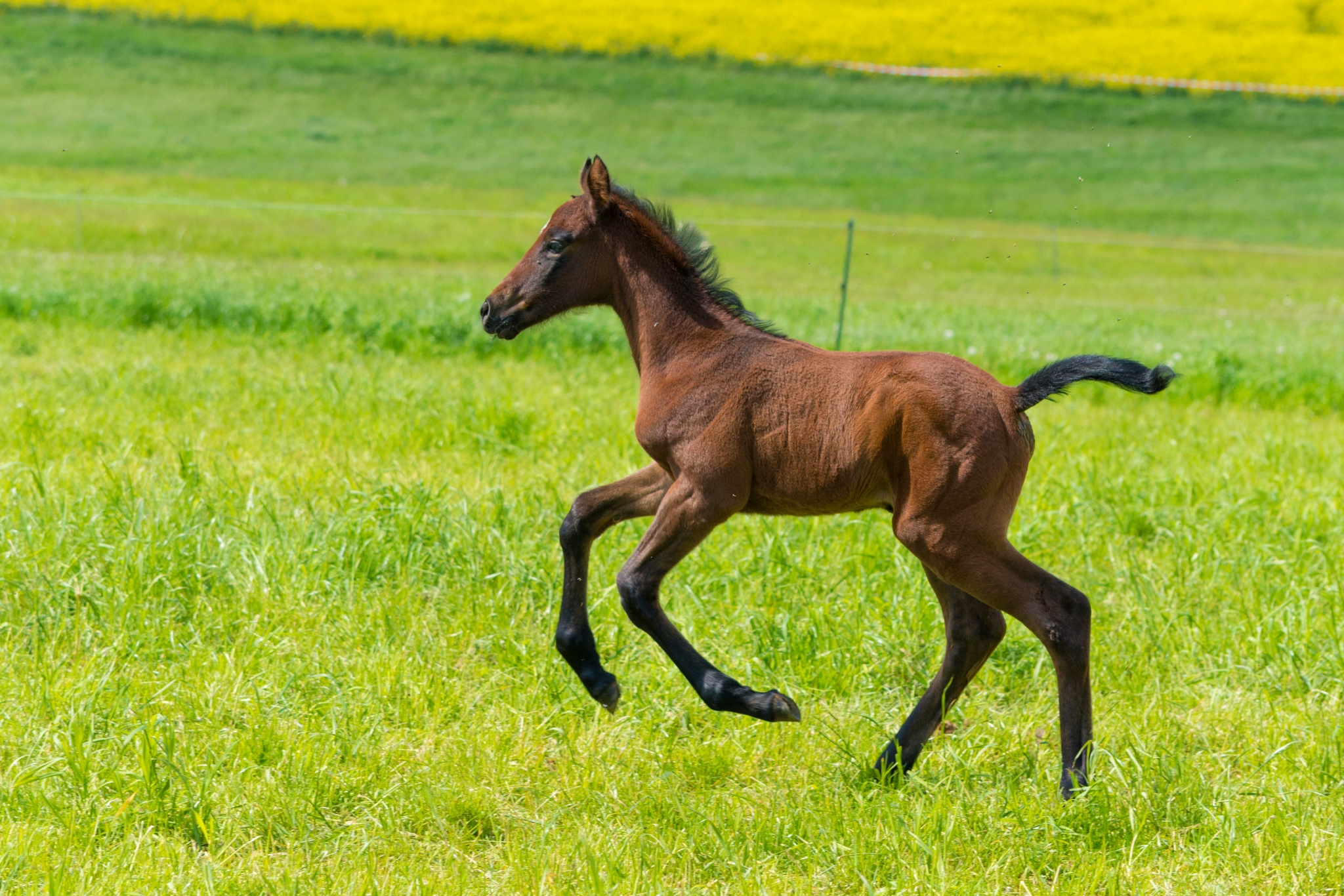
There’s nothing quite like foal season. From wobbly first steps and impossibly long legs to the boundless confidence of a newborn discovering the world, it’s one of the most exciting times on any horse farm.
But alongside all the excitement comes a steady stream of conversations about growth, development, and soundness. If you’ve spent time around breeders, veterinarians, or young sport horse programs, you’ve probably heard the term OCD come up more than once—often in discussions about prepurchase exams, radiographs, or the future athletic potential of a promising youngster.
So what exactly is OCD in foals, and why does it seem to be such a common topic in the horse world?
Let’s take a closer look at what OCD is, why it develops, and what it can mean for a growing horse—without getting lost in the veterinary jargon.
So, What Exactly Is OCD?
At its core, osteochondrosis dissecans (OCD) is a developmental orthopedic condition that affects the cartilage and underlying bone within a young horse’s joints.
As a foal grows, the cartilage within its joints is gradually transformed into bone through a normal process called endochondral ossification. This process helps build the strong, stable skeletal framework needed to support a horse as it matures.
With OCD, however, that process doesn’t proceed as smoothly as it should. Areas of cartilage may fail to mineralize properly, leaving behind patches of thickened or weakened tissue. In some cases, these abnormal areas can crack or separate from the underlying bone, creating loose fragments of cartilage or bone within the joint.
A simple way to picture it is to imagine a floor tile that was never fully secured. At first, everything appears normal. But over time, pressure and movement cause the tile to loosen and lift. And in a horse’s joint, that unstable piece can create inflammation, discomfort, and mechanical interference—especially once the horse begins more intense work.
The result can range from a radiographic finding that never causes problems to a lesion significant enough to affect performance, soundness, or long term joint health.
Which Joints Are Most Commonly Affected?
One of the defining features of OCD is that it tends to occur in specific joints rather than appearing randomly throughout the body. Certain locations are affected far more frequently than others, and patterns can vary somewhat between breeds and athletic disciplines.
|
Another important characteristic of OCD is that it is often bilateral, meaning the same joint on both sides of the body may be affected. That’s why veterinarians typically recommend evaluating the corresponding joint whenever a lesion is identified. If OCD is found in one hock, for example, radiographing the opposite hock is often a sensible next step to make sure nothing is missed.
The Usual Suspects and Risk Factors
Like many developmental conditions, OCD doesn’t have a single cause. Instead, it appears to arise from a combination of genetic, nutritional, environmental, and management factors that influence how a young horse’s joints develop during periods of rapid growth.
While researchers continue to study the condition, several risk factors consistently emerge:
Genetics
Genetics is widely considered one of the most significant contributors to OCD risk. Certain bloodlines appear to have a higher predisposition, which is why OCD screening has become a routine part of many Warmblood inspections, breeding evaluations, and Thoroughbred sales programs.
For breeders, patterns matter. When a stallion or mare consistently produces offspring with OCD lesions, that information carries weight and should be carefully considered in future breeding decisions.
Growth and Nutrition
Growth rate and nutrition also play an important role.
Foals that grow too quickly—often due to high-calorie feeding programs—can place extra stress on developing joints and bone. Imbalances in nutrition, like an off calcium to phosphorus ratio or low copper levels, have also been linked to a higher risk of developmental orthopedic disease.
This is one reason veterinarians place such emphasis on balanced broodmare nutrition and carefully managed feeding programs for growing foals. Good nutrition isn’t simply about maximizing growth—it’s about supporting healthy skeletal development.
Exercise and Mechanical Stress
Movement matters, too.
Research shows that balance matters. Too much confinement can limit normal skeletal development, while too much hard impact or repetitive stress during growth periods may put extra strain on developing joints.
The goal is generally consistent, age appropriate exercise on suitable footing, allowing young horses to develop strength and coordination without excessive physical stress.
Season of Birth and Growth Rate
Some studies have also identified associations between OCD and factors such as birth month and early growth patterns.
Foals born early in the season and those that experience particularly rapid growth during their first months of life often appear more frequently in OCD populations. While these factors alone do not cause OCD, they may influence the overall risk profile when combined with genetics, nutrition, and management practices.
Taken together, the research points to an important takeaway: OCD is rarely the result of one mistake or decision. It’s usually the product of multiple factors working together during a foal’s most important stages of growth.
What Does It Look Like Clinically?
Here’s where OCD becomes especially complex—and, in many cases, deceptively quiet: many foals with OCD show no visible lameness at all. In fact, the condition is usually discovered incidentally on pre-purchase radiographs, at yearling inspections, or during routine developmental screenings.
|
One of the most challenging aspects of OCD is that radiographic appearance doesn’t always match clinical reality. A large looking lesion may produce little to no lameness, while a smaller fragment can sometimes cause significant discomfort and performance issues.
Diagnosis Rads First, Always
Radiographs are still the gold standard for diagnosing OCD, which is why more performance horse programs are now doing routine imaging at weaning. Finding lesions early simply gives you more time to evaluate your options and make informed decisions.
Ultrasound can serve as a helpful complement, particularly when evaluating soft tissue involvement or the integrity of the cartilage surface.
In more complex cases—such as stifle involvement or ambiguous findings—advanced imaging like MRI or CT may be recommended, but these are typically reserved for select cases or pre-surgical planning.
Treatment The Conservative vs. Surgical Conversation
Once OCD is confirmed, the discussion typically splits into two main pathways: conservative management or surgical intervention.
|
Conservative Management
Surgical Intervention
|
Timing really matters here. Treating clinically significant lesions in a yearling before training starts is often better than waiting until performance is affected or secondary changes develop.
In most cases, earlier intervention makes surgery cleaner and recovery more straightforward.
The Sales and Inspection Angle
If you’re preparing young horses for sale or inspections, OCD is part of the conversation whether you like it or not.
Disclosure standards vary widely—from strict radiograph requirements at European Warmblood inspections to a more variable approach in domestic sales—but transparency is generally both the ethical and strategic choice.
Experienced veterinarians will find these lesions. A disclosed, successfully treated hock lesion is a very different conversation than an unexpected finding on a pre-purchase exam.
Many horses with a history of OCD go on to sell well and perform successfully. The stigma has eased over time as veterinary understanding, treatment options, and buyer education have improved.
The Takeaway
OCD is not a death sentence for a performance career, nor is it a reflection of poor farm management. It is a developmental condition with a genetic component, influenced by nutrition and management—and, importantly, highly treatable when identified and addressed appropriately.
The foal with a hock lesion may very well be completely sound a year from now. The key lies in early detection, a strong working relationship with your equine veterinarian, and resisting the urge to either catastrophize or dismiss the finding altogether
Growing up is hard—even when you’re a horse.
|