15 Fun and Easy Ways to Improve Your Parrot’s Welfare (That Actually Make a Difference)
Is your parrot bored, stressed, or unhappy? Discover fun, vet approved enrichment ideas that make a real difference to your bird’s quality of life.
- Why Parrot Welfare Matters More Than You Think
- Introduce Foraging Opportunities Every Single Day
- Rotate Toys Regularly to Prevent Boredom
- Offer a Diverse, Species-Appropriate Diet
- Use Positive Reinforcement Training
- Provide Adequate, Quality Sleep
- Allow Supervised Out of Cage Time Daily
- Offer Natural Branch Perches in a Variety of Diameters
- Engage in Daily Social Interaction
- Provide Bathing Opportunities
- Create Environmental Complexity in the Cage
- Play Species-Appropriate Sounds or Nature Recordings
- Teach Your Parrot to Step Up and Handle Stress Gracefully
- Monitor for Early Signs of Illness
- Respect Your Parrot’s Autonomy and Body Language
- Consider Environmental Enrichment Outside the Cage
- Welfare Is a Practice, Not a Destination
Parrots are some of the brightest, most emotionally in-tune companions you can share your home with. In the wild, their days are full of flying, problem solving, foraging, and flock time—so home life, even the coziest kind, is quite the change of pace.
Without enough enrichment and stimulation, parrots can become bored, frustrated, and even develop unwanted behaviors.
But the good news is that you don’t need a need a total lifestyle makeover to keep your parrot happy and thriving. A few small, consistent tweaks can make a big difference.
Whether you have a cute petite budgie or a show stopping macaw, these simple tips will help you create a more engaging world for your feathered friend.
Why Parrot Welfare Matters More Than You Think
Before diving in, it’s important to understand why enrichment is such a big deal for parrots.
These are highly intelligent, long lived animals with complex emotional and cognitive needs. In the wild, nearly every hour of their day is spent thinking, exploring, foraging, and interacting with their flock.
When that level of mental and physical engagement disappears in a home setting, it doesn’t just lead to boredom—it creates a genuine welfare gap.
Without appropriate outlets for their energy and intelligence, parrots can struggle to cope, often developing behaviors like feather plucking, chronic screaming, aggression, or repetitive motions. These aren’t “bad habits”—they’re signs that something important is missing.
Enrichment isn’t just a nice extra—it’s absolutely essential for parrots.
1. Introduce Foraging Opportunities Every Single Day
In the wild, parrots spend up to 70% of their waking hours foraging for food—when you simply fill a bowl and walk away, you’re eliminating one of the most natural and mentally engaging activities in your bird’s behavioral repertoire.
Try This Instead:
- Hide pellets or treats inside paper cups, wrapped in paper, or tucked into pine cones to create a little scavenger hunt
- Use foraging toys with compartments where your bird has to open, twist, or explore to get the goodies
- Scatter food around the bottom of your parrot’s cage or inside a dedicated foraging tray filled with safe materials like shredded paper or dried leaves
PRO TIP: Start easy! If your bird’s new to foraging, keep treats a little visible at first. As they get the hang of it, you can make things more challenging and interesting.
2. Rotate Toys Regularly to Prevent Boredom
A toy your parrot has ignored for six months can suddenly become the most exciting thing in the world after being out of sight for a few weeks.
Novelty is enriching in itself—a quick break can make it feel brand new again.
How to Make it Happen:
- Keep a rotation of toys tucked away on a shelf or in a storage bin
- Swap out a couple toys every 7 to 10 days to keep things feeling fresh
- Introduce and mix in different textures—think wood, leather, acrylic, rope, cork, and cardboard—for a fun sensory experience
QUICK NOTE: Don’t be discouraged if your bird doesn’t immediately engage with a new toy—Some parrots just need a little time (days or even weeks!) to warm up to something new.
3. Offer a Diverse, Species-Appropriate Diet
Seed only diets are super common, but they’re not doing your parrot any favors since there are high in fat and miss a lot of key nutrients. Mixing up your parrot’s diet doesn’t just support better health—it also keeps your bird mentally engaged and curious.
How to Upgrade Their Menu:
- Transition toward a base of high quality pellets—aim for around 50% to 70% of the diet for most species
- Offer a daily rotation of fresh vegetables—leafy greens, bell peppers, carrots, cooked sweet potato, and cucumber are excellent choices
- Introduce fruits in moderation—they’re high in sugar but can make great training treats
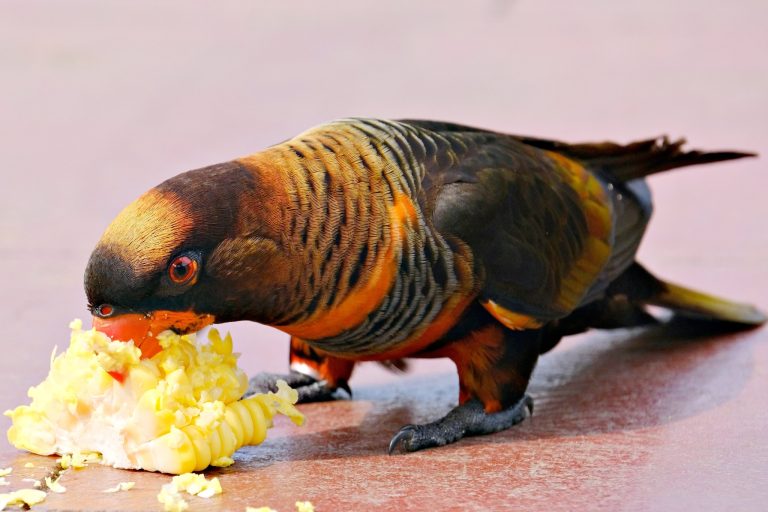
- Include safe whole foods that require work to eat—like pomegranates, corn on the cob, or sprouted legumes
Always double check that any food you offer is safe for your parrot. Some everyday items—like avocado, onion, chocolate, and anything with caffeine—are actually toxic for them, so it’s best to keep those completely off the menu and out of reach.
4. Use Positive Reinforcement Training
Training isn’t just for dogs. Regular training sessions are one of the single best things you can do for your parrot’s welfare. They build trust, provide mental stimulation, reduce fear responses, and give your bird a sense of control and agency.
How to Get Started:
- Keep sessions short—about 5 to 10 minutes, once or twice a day
- Use a high value treat your bird loves and save it just for training time
- Start simple with target training (teaching them to touch a stick or your hand with their beak), then build from there
- Always end on a positive note—even if that means making the last step super easy
Training also makes things like vet visits and handling much less stressful for both you and your bird
5. Provide Adequate, Quality Sleep
Most parrots need 10 to 12 hours of uninterrupted sleep each night. When they don’t get it, it can seriously affect their wellbeing, leading to hormonal imbalance, behavior changes, and a weakened immune system
How to Set Up Healthy Sleep Habits:
- Cover your bird’s cage at the same time each evening to create a clear bedtime routine
- If your household stays active late, move your parrot to a quieter room for the night
- Keep your bird’s sleep area dark, calm, and free from noise or flashing lights
A predictable, consistent routine—with the same bedtime and wake time each day—helps lower stress and supports a healthy internal rhythm.
6. Allow Supervised Out of Cage Time Daily
Cage size definitely matters, but no cage—no matter how spacious—can replace the freedom of time outside it. Out of cage time supports exercise, social bonding, environmental exploration, and the expression of natural behaviors.
How to Make It Work:
- Aim for at least 2 to 4 hours of out of cage time daily, but more is always better!
- Create a fully bird-safe space—think cover mirrors, secure windows, remove toxic plants, turn off ceiling fans, and keep other pets out of the room
- Set up a play gym or dedicated perch station so your bird always has a safe, familiar landing zone
7. Offer Natural Branch Perches in a Variety of Diameters
Foot health is often overlooked in captive parrots, but it really matters. Uniform dowel perches—the kind that usually come with starter cages—can lead to foot fatigue and may even contribute to pressure sores or arthritis over time.
How to Improve It:
- Swap or supplement smooth, identical perches with natural branches of different diameters and textures
- Safe wood options include manzanita, willow, apple, pear, and eucalyptus (always double check suitability for your specific species)
- Place perches at varying heights to encourage movement and natural climbing throughout the cage
PRO TIP: Natural branches don’t just support healthier feet—they also give your bird a safe, enriching outlet for chewing and stripping bark, which is a totally normal and satisfying natural behavior.
8. Engage in Daily Social Interaction
Parrots are flock animals, and in the wild they’re almost never alone—because of that, isolation can be a real welfare stressor. Regular, meaningful interaction with you—part of their “human flock”—is absolutely essential.
How to Do It:
- Talk to your parrot throughout the day, even if it’s just narrating what you’re doing
- Spend time nearby while you read, work, or relax—your presence alone is enriching
- Make eye contact, use their name, and respond when they vocalize
Quality matters more than quantity here—even 15 minutes of focused, attentive interaction can mean more than hours of passive background time together.
9. Provide Bathing Opportunities
Bathing is one of those simple joys most parrots really love, and it also plays an important role in keeping feathers healthy, skin comfortable, and overall well-being supported. Many birds genuinely enjoy it—and watching them splash around is one of the most delightful parts of sharing your home with a parrot.
How to Do It:
- Offer a shallow dish of lukewarm water a few times a week
- Try a gentle misting with a spray bottle for birds who prefer a lighter touch
- Some birds enjoy joining you in the shower on a perch, or standing under a very soft stream of water
Every parrot has their own preferences, so it’s worth experimenting a little to find what they enjoy most—there’s no single “right” way.
PRO TIP: Always make sure your bird can dry off afterward in a warm, draft-free room so they stay comfortable and don’t get chilled.
10. Create Environmental Complexity in the Cage
A well designed cage isn’t just about size—it’s about complexity. Multiple levels, different textures, climbing opportunities, and quiet places to retreat all help create a much richer, more engaging environment.
How to Do It:
- Include at least one “privacy” spot like a corner, tent, or partially enclosed area where your bird can relax and feel secure
- Add plenty of climbing options—ropes, ladders, and cargo nets all encourage healthy movement
- Place food and water in different locations so your bird has to move around to access them
- Offer destructible items like soft wood blocks or palm fronds that they can safely chew and shred
11. Play Species-Appropriate Sounds or Nature Recordings
Many parrots respond positively to hearing recordings of their own species or natural environmental sounds. This can be especially helpful for birds that spend time alone during the day.
How to Get Started:
- Play soft recordings of wild parrots or natural birdsong in the background
- Some birds also enjoy music—try different genres and pay attention to how your bird reacts
- Avoid loud, harsh, or chaotic sounds, which can be stressful rather than enriching
12. Teach Your Parrot to Step Up and Handle Stress Gracefully
A parrot that’s comfortable with handling and stepping up is generally a safer, calmer bird—especially during emergencies, vet visits, or routine cage care. Being at ease with human hands is an important welfare skill.
How to Do It:
- Practice step-up requests daily, using a calm voice and pairing each success with a reward
- If your bird is nervous about hands, start with gradual desensitization—just place your hand near the cage without asking for interaction
- Never force contact—trust builds slowly, and it can be undone quickly
13. Monitor for Early Signs of Illness
Parrots instinctively hide illness — a survival behavior that can make health problems hard to spot until they become serious. Proactive monitoring is one of the most important welfare practices.
What to Watch For:
- Any changes in droppings (color, consistency, or amount)
- Fluffed feathers or a hunched posture lasting more than a few minutes
- Loss of interest in food or treats
- Reduced vocalization or unusual lethargy
- Discharge from the eyes or nostrils
- Weight changes (weigh your bird weekly using a gram scale)
PRO TIP: It’s a smart move to establish a relationship with an avian vet—not just a general veterinarian—before you ever need urgent care.
14. Respect Your Parrot’s Autonomy and Body Language
One of the most powerful welfare improvements costs nothing: learning to read your parrot’s body language—and respecting what it’s telling you. Forcing interaction when a bird is uncomfortable can erode trust and create ongoing stress.
Key Signals to Learn:
- Pinning pupils, raised feathers, or a crouched posture often indicate agitation or fear
- A relaxed bird that’s gently puffed and standing on one foot is usually content
- A slow, steady beak grind (often heard before sleep) typically signals comfort and relaxation
The more fluent you become in your parrot’s language, the stronger your trust, understanding, and cooperation will be.
15. Consider Environmental Enrichment Outside the Cage
Enrichment doesn’t stop at the cage door. Extending safe, interesting experiences into the wider home can significantly expand your parrot’s world and daily stimulation.
How to Make It Work:
- Set up a window perch so your bird can safely watch the outside world
- Bring in safe, pesticide-free branches from outdoors for chewing and exploration
- Offer simple, novel items like boxes, paper bags, and cardboard tubes for endless play and curiosity
- If your climate allows, consider a secure outdoor aviary or carefully trained harness use for controlled outdoor time (Harness training takes time and should never be rushed)
Welfare Is a Practice, Not a Destination
Improving your parrot’s welfare isn’t something you “finish”—it’s an ongoing process of observing, adjusting, and learning.
Every bird has their own personality and needs, and what works beautifully for one may be completely ignored by another.
The most important thing you can bring to the relationship is genuine curiosity about who your bird is. Pay attention, respond to what you notice, and stay open to trying new things.
Parrots are incredibly rewarding companions when their needs are truly met. The effort you put into their care is returned many times over in a bird that is vibrant, engaged, and genuinely happy to share your life.