Cherry Shrimp 101 Tank Setup, Feeding, and Breeding Explained
New to cherry shrimp? This complete care guide covers tank setup, water parameters, feeding, molting, and breeding tips for a thriving colony.
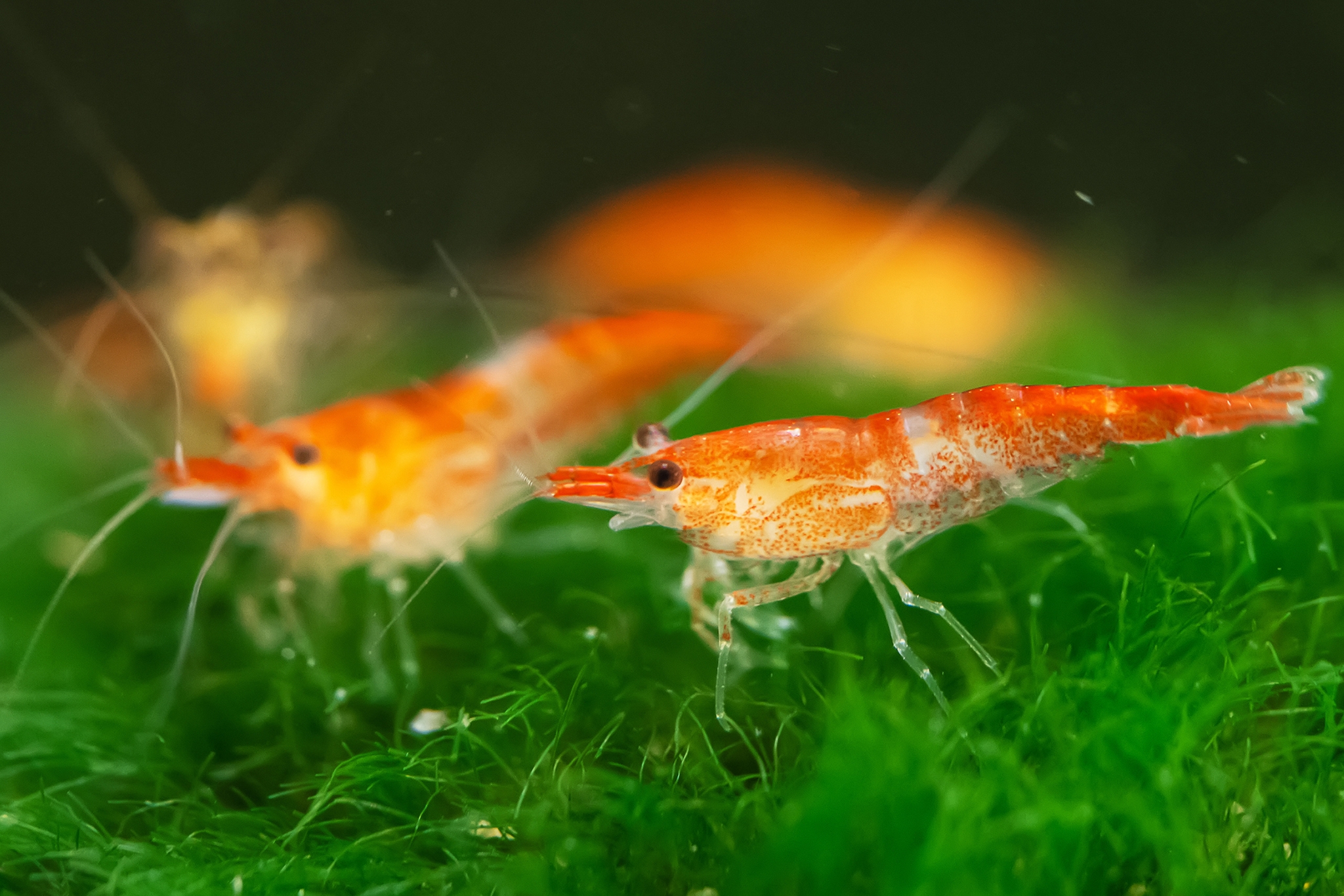
If you’ve ever watched an aquascaping video and noticed tiny colorful specks zipping through a planted aquarium, you’ve probably seen cherry shrimp.
These colorful freshwater invertebrates have become one of the most popular beginner friendly shrimp in the aquarium hobby because they’re small, peaceful, fun to watch, relatively low maintenance, and once their environment is stable, they can reproduce surprisingly quickly.
With that said, “beginner friendly” doesn’t mean you can skip the research. Cherry shrimp can be more sensitive to changes in water chemistry than most common aquarium fish, and sudden shifts in temperature, minerals, or water parameters can cause serious problems for an entire colony.
But the good news is that once you understand what cherry shrimp need, keeping them becomes much more straightforward.
This guide covers the essentials, from choosing and setting up the right aquarium to managing water quality, feeding, breeding, and avoiding the common mistakes that can threaten an otherwise healthy colony.
What Are Cherry Shrimp?
Cherry shrimp (Neocaridina davidi, sometimes listed as Neocaridina heteropoda in older sources) are small freshwater shrimp native to Taiwan.
In the wild, they’re naturally much less colorful than the bright red and other colorful varieties found in home aquariums—their original coloration tends to be brownish or olive, and its help them blend into their natural surroundings.
The vivid colors seen in the aquarium trade are actually the result of selective breeding. Over many generations, hobbyists and breeders repeatedly selected the most intensely colored shrimp and bred them together, gradually producing the striking color varieties that are available today.
And red is only the beginning. The modern Neocaridina hobby includes a wide range of color morphs, including:
- Cherry Red – the classic variety, ranging from lighter “sakura” shades to deeper Fire Red and Painted Fire Red
- Yellow Shrimp – bright, solid yellow coloration that stands out especially well against dark substrate and green plants
- Blue Dream / Blue Velvet – blue varieties ranging from rich cobalt to deeper navy tones
- Chocolate – dark brown to nearly black coloration
- Rili – a distinctive pattern with sections of translucent body and solid coloration, often creating a banded or “windowed” appearance
- Snowball / White Pearl – opaque white shrimp that can look especially striking in heavily planted aquariums
The important thing to understand is that these aren’t different species—they’re all color variations of the same Neocaridina species, which makes the hobby especially interesting for breeders and aquarists who want to experiment with different colors.
That shared genetics also matters when you’re choosing which shrimp to keep together. Mixing different Neocaridina color morphs can result in offspring with less predictable coloration, and over generations, some mixed colonies can gradually produce more wild type or muted colors.
Lifespan and Size
Cherry shrimp are genuinely tiny, which is a big part of their appeal. Fully grown adults typically reach around 1 to 1.5 inches in length, with females generally growing larger and often displaying stronger more vibrant coloration than males.
Their lifespan is relatively short compared with many aquarium fish. Most cherry shrimp live around 1 to 2 years, although individuals kept in mature stable aquariums with excellent water quality can sometimes live longer.
Because they don’t live for many years (but can reproduce regularly), a healthy colony doesn’t stay the same group of shrimp for very long. Instead, you’ll have adults reproducing, juveniles growing, and new generations gradually replacing older individuals.
And that’s one of the most enjoyable parts of keeping cherry shrimp long term. What starts as a small group can eventually become a constantly changing colony, with tiny juveniles appearing among the plants and older shrimp gradually reaching the end of their natural lifespan.
Once your colony is established and the aquarium is stable, you may find yourself watching several generations develop at the same time.
Setting Up a Cherry Shrimp Tank
Getting the aquarium setup right is probably the most important part of keeping cherry shrimp successfully.
They’re small and relatively easy to care for once established, but they don’t handle sudden changes in their environment well. A stable, mature tank gives them a much better chance of thriving than a brand new aquarium with constantly shifting water parameters.
Tank Size
Technically you can keep a small colony in a 5 gallon aquarium, but 10 gallons is a much more forgiving choice for beginners.
Smaller tanks can experience faster swings in temperature, pH, and water chemistry, leaving your shrimp with very little room for error.
While a larger volume of water is generally more stable, which makes maintaining consistent conditions easier. It also gives your colony more room to grow as the shrimp reproduce.
Water Parameters
Water quality is one of the biggest factors in shrimp keeping. Many losses aren’t caused by disease at all—they happen because of unstable or unsuitable water chemistry.
Cherry shrimp generally do well with:
- Temperature: 65°F to 80°F, with consistency being more important than hitting one exact temperature
- pH: 6.5 to 8.0, with neutral to slightly alkaline conditions often working well
- GH (general hardness): Around 6 to 8 dGH, providing the minerals shrimp need for healthy exoskeleton development and successful molts
- KH (carbonate hardness): Around 2 to 4 dKH, which helps keep pH from fluctuating dramatically
- Ammonia and nitrite: 0 ppm
- Nitrate: Ideally below 20 ppm
The biggest adjustment for people coming from fishkeeping is understanding just how sensitive shrimp can be to certain contaminants.
Copper and some other heavy metals are particularly dangerous to freshwater invertebrates.
Be careful when using medications, fertilizers, or other aquarium products, and check the ingredients before adding anything to a shrimp tank. If you’re using tap water, it’s also worth knowing what your local water contains and whether your plumbing could contribute metals.
Cycling the Tank
Never add cherry shrimp to a brand new uncycled aquarium!
Shrimp need an established biological filter to process toxic ammonia and nitrite, and they don’t have much tolerance for mistakes during this stage.
You need to cycle the aquarium before introducing your colony and test regularly to make sure ammonia and nitrite remain at zero.
Substrate and Plants
Cherry shrimp aren’t particularly demanding about substrate. Fine gravel or sand works well and it gives them plenty of surface area to explore and forage.
Live plants on the other hand, are extremely useful. Plants such as Java moss, Java fern, and Anubias provide places for shrimp to hide, surfaces where biofilm can grow, and cover for young shrimp after they’re born. Plants also contribute to a more stable and natural feeling aquarium environment.
Leaf litter, such as Indian almond leaves, can also be a useful addition. As the leaves break down, they provide another surface for biofilm and give shrimp additional places to graze and shelter. They can also release tannins into the water, which may slightly alter its appearance and chemistry.
Filtration
For a dedicated shrimp tank, a sponge filter is one of the safest and simplest choices. It provides biological filtration while creating relatively gentle water movement, and the sponge itself becomes another surface where biofilm can grow.
Traditional filters can work too, but exposed intake tubes can pull in tiny baby shrimp. If you’re using a hang on back (HOB) or other filter, cover the intake with a suitable pre-filter sponge to prevent juveniles from being sucked inside.
Feeding Cherry Shrimp
Cherry shrimp are opportunistic omnivores and natural scavengers, which makes them excellent cleanup crew members in a planted aquarium.
They spend most of their day grazing on algae, biofilm, decaying plant material, and tiny bits of organic matter growing on surfaces throughout the tank.
In a mature heavily planted aquarium, a healthy colony can find a surprising amount of food on its own. But that doesn’t mean supplemental feeding is unnecessary. Offering a small amount of additional food helps make sure your shrimp are getting a varied diet, particularly in tanks with a large colony or limited natural growth.
Good Foods for Cherry Shrimp:
- Algae wafers and sinking shrimp pellets provide a convenient staple food and are easy to portion.
- Blanched vegetables, such as zucchini or leafy greens, can add variety. Offer small pieces and remove anything uneaten after a few hours so it doesn’t begin decomposing in the tank.
- Botanical foods, including Indian almond leaves and alder cones, provide surfaces for biofilm to develop and can give your shrimp something to graze on.
- Occasional protein rich foods, such as appropriately prepared frozen foods, can be offered in small amounts—but keep in mind that shrimp don’t need large quantities of animal protein to thrive.
Don’t Overfeed!
One of the easiest mistakes to make with cherry shrimp is assuming that because they’re small, they need to be fed frequently. In reality, overfeeding is far more dangerous than slightly underfeeding in an established planted tank.
Uneaten food can quickly break down and contribute to poor water quality, which is particularly problematic in a small aquarium.
Offer only what your colony can reasonably consume within a couple of hours and remove leftovers rather than letting it sit in the substrate.
You can also occasionally skip a feeding, especially in a mature planted tank with plenty of biofilm and natural grazing surfaces. Your shrimp will spend most of their time foraging on their own, so they don’t need a large meal every day.
Molting What’s Normal and What’s Not
Because cherry shrimp have an exoskeleton instead of an internal skeleton, they have to periodically shed their old shell, or molt, as they grow.
So don’t worry, just know that it’s completely normal to find a translucent shrimp shaped shell lying in the aquarium from time to time. It can look surprisingly convincing, especially if you’re new to shrimp keeping, but a shed shell doesn’t mean you’ve lost a shrimp.
In most cases, leave the molt in the tank. Shrimp will often pick at and consume the discarded shell, recycling some of the minerals and nutrients it contains. There’s usually no reason to remove it unless it becomes visibly contaminated or starts causing a problem.
The period immediately after a molt is when shrimp are particularly vulnerable. Their new exoskeleton is still soft, so they may hide among plants, moss, wood, or other cover for a day or so while it hardens.
This is one reason a well planted aquarium is so valuable—dense vegetation gives freshly molted shrimp places to retreat and helps them feel secure.
If you notice repeated problems with your shrimp getting stuck during a molt, that’s something worth investigating rather than simply accepting as normal. Water hardness and mineral availability are particularly important, since shrimp need adequate calcium and other minerals to build and maintain their exoskeletons. Testing your GH is a good place to start if you’re seeing frequent failed molts, although other water quality or health issues can also contribute.
Breeding Cherry Shrimp
This is one of the things that surprises many new shrimp keepers: cherry shrimp can easily reproduce readily in a mature home aquarium without much intervention.
If the water parameters are stable, the adults are healthy, and the tank provides plenty of food and cover, breeding can happen naturally.
Here’s what the process generally looks like:
- A female carrying eggs is called “berried”—and you’ll be able to see a cluster of eggs tucked underneath her abdomen, where she holds and protects them.
- The eggs develop for roughly 2 to 4 weeks, but the exact timing can vary with temperature and other environmental conditions.
- The female regularly fans and cleans the eggs with her swimmerets. This helps keep them oxygenated and free of debris.
- The babies hatch as miniature shrimp. Unlike some freshwater shrimp species, cherry shrimp don’t go through a free swimming larval stage. The young emerge as tiny fully formed shrimp and begin foraging almost immediately.
- Newborn shrimp are extremely small. During the first couple of weeks, they can be difficult to spot, especially in a planted aquarium. If you’re trying to confirm that your female has successfully released her young, look closely through moss, dense plants, and other hiding areas.
It’s also important to protect your shrimp from equipment and tankmates. Use a sponge filter or cover filter intakes with a suitable pre-filter sponge, and avoid adding fish that are likely to see tiny shrimp as food.
Tank Mates Who’s Safe and Who Isn’t
This is one of the first questions new shrimp keepers ask, and the honest answer is that most community fish are a risk to baby cherry shrimp. A fish may completely ignore adult shrimp while happily eating tiny juveniles that are small enough to fit in its mouth.
If your priority is building a large, self sustaining colony, choosing tankmates carefully is essential.
Better Tankmates:
- Nerite snails are generally peaceful and won’t prey on shrimp or their babies.
- Mystery snails can also work in an appropriately sized, well maintained aquarium, but their larger size and waste production should be considered when planning the tank.
- Other peaceful Neocaridina shrimp are generally compatible. If you’re trying to maintain a particular color line, however, avoid mixing different color morphs because their offspring can develop unpredictable or less vibrant coloration over generations.
- Carefully selected small, peaceful fish can sometimes be kept with cherry shrimp, particularly in a mature, heavily planted aquarium with plenty of hiding places. However, there is no guarantee that baby shrimp will be safe.
Tankmates to Avoid:
- Bettas are usually a poor choice for a breeding shrimp colony. Individual personalities vary, but most many bettas will hunt shrimp (especially small juveniles).
- Larger or more aggressive community fish can easily view shrimp as food.
- Predatory species and fish known for actively hunting small invertebrates are best kept out of a shrimp focused aquarium.
If your main goal is to build a thriving colony and watch generations of baby shrimp grow up, a shrimp only aquarium is usually the simplest option. When you do this you eliminate one of the biggest sources of juvenile losses and don’t have to constantly balance the needs of fish against those of your shrimp.
Common Cherry Shrimp Problems
Even in a well maintained aquarium, cherry shrimp can occasionally run into health or environmental problems. And because they’re sensitive to changes in water chemistry, the first place to look when something seems wrong is usually the tank itself.
Before freaking out, check your water parameters and think about anything that has recently been added or changed.
1. Sudden Colony Crash or Mass Die-Off
If multiple shrimp die within a short period, water quality or contamination should be one of your first suspects.
Ammonia or nitrite spikes, sudden pH changes, contaminated water, copper exposure, or a problematic aquarium product can all cause serious losses.
You’ll want to test the water immediately and review anything that changed recently. Think about new plants, decorations, fertilizers, medications, cleaning products, or even a recent water change.
If the timing lines up with a new addition, remove or isolate the suspected source if it’s safe to do so.
2. Shrimp Look Pale or Lose their Color
Color loss can happen for several reasons, including stress, age, environmental changes, or inadequate nutrition.
Start by checking the basics: temperature, pH, GH, KH, ammonia, nitrite, and nitrate.
If the water is stable, look at the shrimp’s diet and make sure they’re getting a varied source of nutrition rather than relying on a single food.
Color can also naturally fluctuate, so a slightly less vibrant shrimp isn’t necessarily sick. Look for other signs of stress or illness before assuming something is seriously wrong.
3. White Patches or Unusual Growths
Cloudy white patches, fuzzy growths, or other unusual changes on a shrimp can have several possible causes, including bacterial, fungal, or parasitic problems. These conditions can be difficult to diagnose by appearance alone.
If possible, separate an obviously affected shrimp from the main colony and avoid adding random medications to the entire tank without identifying the problem first.
Shrimp can be particularly sensitive to aquarium medications, and some treatments that are safe for fish are harmful or fatal to invertebrates.
4. No Breeding Activity
If your shrimp aren’t reproducing, don’t automatically assume there’s a problem. A new colony may simply need time to settle in and mature.
If the tank has been established for a while with no breeding, check for unstable water parameters, inadequate food, temperature issues, or insufficient biofilm.
A mature aquarium with stable conditions, plenty of grazing surfaces, and healthy adult shrimp will generally provide a much better environment for breeding than a brand new setup.
The important thing is to troubleshoot systematically. Test the water first, look for recent changes, and avoid making several major adjustments at once. With sensitive animals like cherry shrimp, stability is often more valuable than constantly trying to make the aquarium “perfect.”
Is a Cherry Shrimp Colony Right for You?
Cherry shrimp can be a fantastic choice if you’re looking for a pet that’s quiet, compact, and fascinating to watch without requiring constant hands-on attention. They’re especially appealing if you enjoy planted aquariums and like the idea of creating a small ecosystem that gradually develops its own rhythm.
They’re a particularly good fit if you want:
- A low noise, low footprint pet that doesn’t require daily handling or interaction.
- A colorful living planted aquarium where shrimp, plants, biofilm, and other small organisms all become part of the ecosystem/
- An easy introduction to shrimp keeping and aquascaping, with plenty of room to learn and experiment as your colony grows.
They’re less ideal if you’re looking for an interactive pet that recognizes you or enjoys being handled. Cherry shrimp aren’t going to greet you at the glass or sit in your hand—they’re animals you’ll mostly appreciate by observing their natural behavior.
Their appeal comes from watching them graze, molt, reproduce, and move through a planted environment rather than from physical interaction.
For the right person, that’s exactly what makes them so enjoyable. A healthy shrimp tank can become a miniature ecosystem that changes constantly, with new babies appearing among the plants, adults displaying their colors, and the colony gradually becoming more established.
Once you get the basics right, there’s something surprisingly satisfying about simply sitting back and watching the whole thing come to life.