Koi, Goldfish, or Something Else? How to Pick the Right Fish for Your Backyard Pond
Not sure what fish to stock in your pond? Compare koi, goldfish, and more with hardiness, size, and climate tips for every pond type.
- What to Consider Before You Stock Your Pond
- Koi
- Goldfish
- Orfe
- Fathead Minnows
- Mosquitofish
- Sarasa Comet
- Butterfly Koi
- Channel Catfish
- Bluegill and Other Sunfish
- Grass Carp
- Sturgeon (Select Species, Large Ponds Only)
- Native Minnows and Dace
- Matching Fish to Your Pond Type
- Common Mistakes That Kill Pond Fish
- Frequently Asked Questions
A backyard pond without fish can be a great water feature, but add the right fish and suddenly you’ve got a beautiful ecosystem.
Aside from adding beauty, fish can also help control mosquito larvae, contribute to algae management, and bring a whole new level of activity to an otherwise quiet corner of the yard.
With that said, not every fish is a good fit for every pond. Your climate, pond depth, filtration system, and even local regulations can all affect which species will actually thrive in your backyard.
In this article we’ll break down some of the best backyard pond fish by category so you can choose species that fit your pond and your setup, rather than adding fish and hoping everything works out.
What to Consider Before You Stock Your Pond
Before you start picking out fish, take an honest look at your pond and your local conditions. A fish that thrives in one backyard pond might struggle (or even die) in another.
Here are the big things to consider:
- Pond depth and volume – Anything under about 18 inches can freeze solid in colder climates or heat up quickly in hot weather. For most cold hardy fish, 3 feet of depth is a good minimum for overwintering, while koi generally do better with 4 feet or more.
- Your climate – USDA hardiness zones matter more than many new pond owners realize. A fish that handles winter just fine in Georgia may not survive a Minnesota freeze without enough depth and, in some cases a deicer.
- Filtration and stocking levels – The more fish you have, the more waste your pond has to process. If you don’t have strong biological filtration, keep the stocking level conservative. A common starting guideline is around 1 inch of fish per 10 gallons of water, although a well filtered koi pond can sometimes support a higher stocking density.
- Local regulations – Some fish, including certain types of grass carp and non-native species, are restricted or prohibited in some states because of invasive species concerns. Check with your state wildlife agency before ordering anything.
Once you know what your pond can realistically support, choosing the right fish becomes a whole lot easier.
1. Koi
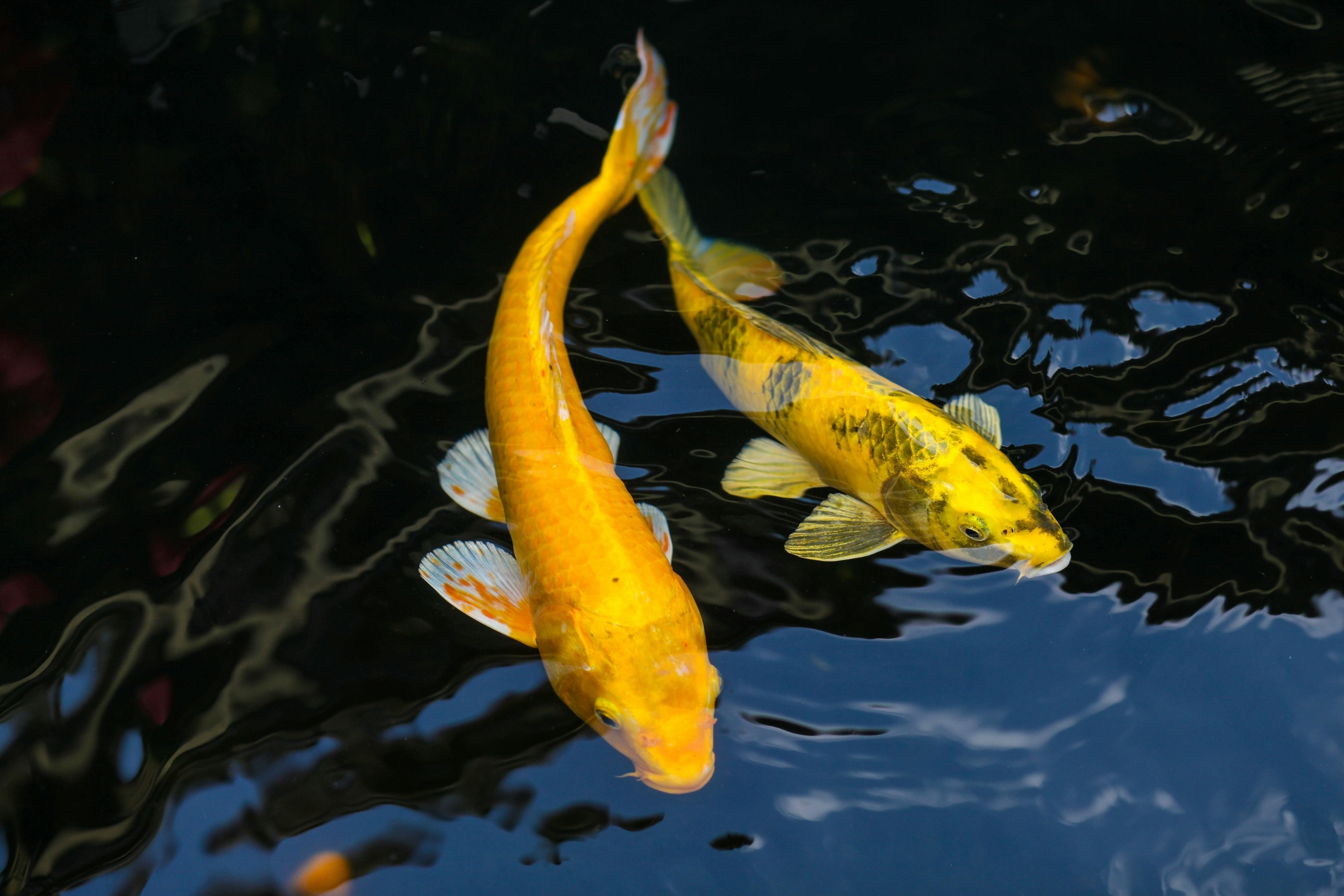
Koi are a classic backyard pond centerpiece. Their colors and patterns make them stand out, and with regular interaction, many of them become surprisingly tame—you may even have them eating right out of your hand within a season or two.
2. Goldfish
Goldfish are probably the most forgiving pond fish you can choose, especially if you’re new to pond keeping. And today’s varieties are much more interesting than the little feeder fish many people picture when they hear “goldfish.”
- Comet goldfish: Fast, hardy, and inexpensive, making them the reliable workhorses of backyard ponds.
- Shubunkins: Known for their beautiful calico coloring, with combinations of blue, black, orange, and white. They’re nearly as hardy as comets and add a lot more visual interest.
- Fantails and other fancy varieties: These have the rounded shapes and flowing fins many people love, but they’re generally less cold tolerant and slower swimmers, which can make them more vulnerable to predators and competition from faster fish.
3. Orfe
Orfe are active schooling fish that spend most of their time near the surface, so they bring plenty of movement and energy to a pond.
They’re also enthusiastic insect eaters, which can make them useful for helping keep mosquito populations down.
4. Fathead Minnows
Fathead minnows are an underrated little workhorse for backyard ponds. They’re inexpensive, extremely cold hardy, and reproduce readily when the conditions are right.
They’re also enthusiastic mosquito larvae eaters, making them a practical choice if you’re looking for a small fish that can contribute to natural mosquito control.
5. Mosquitofish
If mosquito control is your main priority, Gambusia (also known as mosquito fish) are one of the most effective options to consider. They’re voracious mosquito larvae eaters and reproduce quickly, so a healthy population can become self sustaining without much intervention.
With that said, their ability to reproduce so rapidly is also something to take seriously. In areas where they’re considered invasive or are regulated, releasing them into natural waterways can cause ecological problems. It’s important to check your local regulations and keep them contained to your pond.
6. Sarasa Comet
Sarasa comets are a type of comet goldfish known for their striking red and white coloring, which can give you a bit of that koi-like look without the size, cost, or pond requirements that come with keeping koi.
They’re also hardy and relatively easy to care for, making them a nice middle ground option if you want beautiful, active pond fish without committing to a large koi pond.
7. Butterfly Koi
Butterfly koi are koi hybrids known for their long flowing fins, which give them a graceful look that’s especially striking when they glide through a pond.
They come in many of the same colors and patterns as standard koi and can be similarly hardy. However, those extended fins are also more delicate, so they’re more susceptible to damage from aggressive tankmates, rough surfaces, or sharp features around the pond.
If you love the look of koi but want something a little more unusual, butterfly koi can be a beautiful addition… just as long as the pond is set up with their longer fins in mind.
8. Channel Catfish
For larger deeper ponds—typically half an acre or more, although smaller stock ponds can work with light stocking—channel catfish can be a useful addition. They spend most of their time near the bottom, where they help clean up uneaten food and organic debris.
Keep in mind they’re better suited to larger established ponds instead of the typical backyard garden pond, but they can be a practical choice when you have the space and water volume to support them.
9. Bluegill and Other Sunfish
Bluegill and other sunfish are a popular choice because they’re hardy, reproduce readily, and can provide plenty of action if you plan to do some casual fishing.
But they’re usually not the best fit for small ornamental ponds. Bluegill can reproduce quickly, and without enough space or natural predators to keep the population in check, you can end up with far more fish than the pond can comfortably support.
For larger ponds, they’re a reliable and productive option. For a small backyard water garden, you’d generally be better off with a more manageable species.
10. Grass Carp (Sterilized/Triploid Only)
Grass carp can be incredibly effective at keeping submerged vegetation and certain types of algae under control, but they’re not a fish you should add to a pond without checking the rules first.
If they’re legal in your area, sterile triploid grass carp are typically the only ones that should be stocked. Many states require a permit, restrict where they can be used, or ban them altogether because of their potential to become invasive.
Before purchasing any of these fish, check with your state’s wildlife or fisheries agency to find out what’s allowed and what requirements apply to your pond.
11. Sturgeon (Select Species, Large Ponds Only)
Sterlet sturgeon have become a popular choice for large ornamental ponds thanks to their prehistoric appearance and calm graceful nature. But keep in mind that these fish are definitely more of a specialist fish, rather than a beginner friendly option.
They need cold, clean, well-oxygenated water and plenty of depth, along with strong filtration to maintain good water quality. If your pond can meet those requirements, a sterlet can be a fascinating centerpiece… but they’re not a good match for a small or shallow backyard pond.
12. Native Minnows and Dace
If you’re looking for a low maintenance option that’s also environmentally responsible, consider minnow species native to your region.
Native fish are already adapted to your local climate and conditions, and they can support the surrounding food web without introducing the invasive species concerns that can come with non-native fish.
The best choices will depend on where you live, so check with a local fish hatchery, extension office, or fisheries agency to find out which species are native and appropriate for your pond.
Matching Fish to Pond Type
(Under 500 gal)
(500 to 2,000 gal)
(0.25+ acre)
Focused
(Zone 5 and below)
(Zone 8+)
Common Mistakes That Kill Pond Fish
Adding fish to your pond is exciting, but a few common mistakes can quickly turn into water quality problems, stressed fish, or unnecessary losses.
The good news is that most of these mistakes are easy to avoid if you take things slowly and plan around your pond’s size, filtration, and seasonal changes.
Adding too many fish too soon.
A brand new pond hasn’t had time to develop the beneficial bacteria and biological filtration needed to handle a full fish population.
Start with a small number and add fish gradually over several weeks as the ecosystem establishes.
Skipping quarantine.
New fish can carry parasites or diseases that aren’t immediately obvious.
Quarantining new fish for 2 to 4 weeks before introducing them to an established pond gives you a chance to spot potential problems and helps protect the fish you already have.
Forgetting about winter prep.
As water temperatures drop, a fish’s metabolisms slow down and they need less food.
Once temperatures are around 50°F or below, feeding should generally be reduced or stopped depending on the species and local conditions. Leftover food can quickly foul cold water and contribute to health problems, so don’t risk your fish during this time.
Mixing fish without considering compatibility.
Not all pond fish make ideal tankmates. Fast competitive feeders like koi can easily outcompete slower swimming fish when it comes to food. It’s best to choose species that can comfortably share the same environment and resources.
Frequently Asked Questions
1. Can koi and goldfish live in the same pond?
Generally, yes. Koi and goldfish have similar temperature and water quality needs, so they can coexist quite happily. Just remember that koi get much larger and can eventually outcompete smaller goldfish for food.
2. How many fish can my pond support?
A common starting guideline is around 1 inch of fish per 10 gallons of water, but don’t treat that as a hard rule. Your pond’s filtration, oxygen levels, plant coverage, and overall water quality all affect how many fish it can comfortably support. If filtration is limited, it’s safer to stock more lightly.
3. Do pond fish need a heater in winter?
Usually not. Cold hardy fish like koi and goldfish are built to handle winter temperatures without a pond heater. The bigger concern is making sure the pond is deep enough—around 3 feet or more in colder climates—so it doesn’t freeze solid. If ice forms across the surface, a floating deicer or similar setup can help maintain an opening for gas exchange.
4. What’s the easiest fish for a first time pond owner?
Comet goldfish are a great choice for beginners because they’re hardy, relatively inexpensive, and can handle a wide range of temperatures, making them pretty forgiving while you’re still getting the hang of managing a pond.
5. Are grass carp legal everywhere?
No—regulations vary quite a bit by state. Some states allow only sterile triploid grass carp, while others restrict or prohibit them entirely. Before buying any, check your state’s wildlife or agriculture regulations to make sure they’re legal where you live.