How to Become an Equine Massage Therapist
Learn what it really takes to become an equine massage therapist — including certification options, realistic pay, and how to build a your client base.
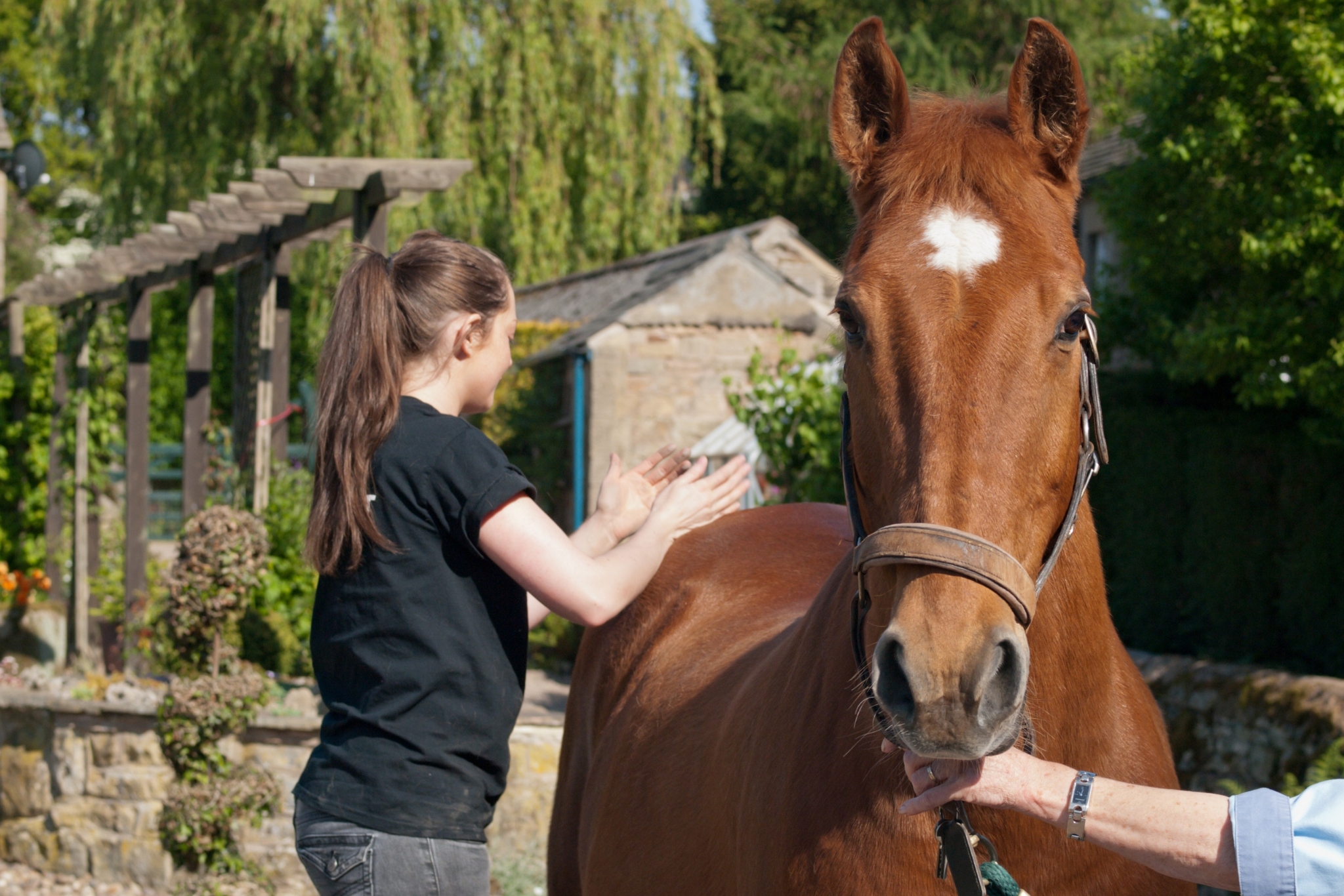
There’s something pretty compelling about watching a horse completely relax under a skilled therapist’s hands—the head drops, the lips softens, and suddenly a tense horse looks like a different animal.
It’s easy to see why equine massage therapy appeals to people who love horses and want a career working with them. What started as more of a niche service has grown into a legitimate part of the equine wellness world, with trainers, competition barns, and everyday horse owners increasingly seeking out bodywork for their horses.
But the reality of making a living from it is more complicated than the polished social media version. There are rewarding moments, but there’s also the physical work, the driving, the business side, and the challenge of building a client base one horse at a time.
What Does an Equine Massage Therapist Actually Do?
Equine massage therapists work with a horse’s soft tissues—the muscles, tendons, ligaments, and fascia—to help relieve tension, support circulation, improve range of motion, and help the horse recover from normal work or injury.
It’s important to understand that massage isn’t veterinary medicine or chiropractic adjustment. Instead, equine massage is another piece of the horse’s overall care, and many therapists work alongside veterinarians, chiropractors, trainers, and other professionals.
A typical session might look something like this:
- Start with an assessment. Before putting their hands on the horse, the therapist may watch them move and look for things like asymmetry, sensitivity, stiffness, or changes in how they’re carrying themselves.
- Move into hands-on bodywork. Depending on what they find, the session may include techniques such as effleurage, petrissage, trigger point work, or myofascial release, all adapted to the horse’s anatomy.
- Add stretching when appropriate. Controlled stretches of the neck, back, and legs may be used to support flexibility and comfortable movement.
- Document what they find. Many therapists keep notes after each session so they can track changes over time and share relevant observations with the owner, trainer, or veterinarian.
The horses themselves can be just as varied as the reasons their owners seek out massage. You might work with a high performance jumper, dressage horse, or racehorse recovering from the demands of competition. You might also work with a trail or pleasure horse whose owner simply wants to keep them comfortable, or an older horse dealing with the stiffness that comes with age.
That’s part of what makes the field interesting—every horse (and every session) can be a little different.
Is Equine Massage Therapy in Demand?
Yes—but where you live makes a big difference.
As more horse owners invest in things like chiropractic care, saddle fitting, therapeutic farriery, and other forms of bodywork, massage has become part of a larger approach to keeping horses comfortable, healthy, and performing well. It’s no longer necessarily viewed as an occasional luxury.
But the market can look completely different from one area to another. A therapist located near a major show circuit or a cluster of breeding and training barns may have a steady stream of potential clients. Someone in a more rural area, where horse owners are spread out and most horses are backyard or pleasure horses, may have to work much harder to build that same client base.
That’s why it’s worth looking at your local market before you invest in training.
How to Become an Equine Massage Therapist
In the United States, there isn’t one national license that you need to become an equine massage therapist. Instead, regulations vary by state, and some states have specific requirements around who can legally perform therapeutic work on animals, including requirements for veterinary referral or oversight.
That lack of uniform regulation can make it easier to enter the field, but it also means the quality of training programs varies considerably.
Your certification is only part of what establishes credibility—your horse experience, professionalism, and relationships within the local equine community matter too.
Step 1: Get comfortable around horses first
This is an important step that can be easy to overlook.
A certification program can teach you massage techniques, anatomy, and assessment skills, but it can’t replace the experience of being around horses. You need to be comfortable reading body language, handling horses safely, understanding herd behavior, and recognizing when a horse is uncomfortable, frightened, or in pain.
If your horse experience is limited, spend some time working, volunteering, grooming, or helping out at a barn before investing in a certification program. You’ll get much more out of the training once you’re comfortable with horses.
It also matters when you’re trying to build a business. Horse owners are often going to want to know about your experience with horses—not just where you earned your certificate.
Step 2: Choose your training program carefully
Certification programs can vary dramatically in length, cost, and depth. You may come across:
- Short intensive programs: Typically five to seven days, with a strong focus on hands-on technique and practical work with horses.
- Weekend or evening programs: Spread over several months and often combining anatomy coursework with hands-on sessions.
- College or certificate programs: Programs connected to equine science or broader equine studies, where massage may be part of a more comprehensive curriculum.
Don’t choose a program based on the marketing alone. You want to look closely at what’s actually included.
Ask how much hands-on time you’ll get with horses. Find out how thoroughly they cover anatomy, pathology, assessment, and contraindications—not just massage techniques. Look at the instructors’ backgrounds and experience, and see whether graduates are actually working in the field.
If possible, talk to a few graduates. Find out what they thought of the training and whether it prepared them for the realities of working with clients.
Step 3: Learn the business side too
This is one of the biggest things new therapists underestimate.
Knowing how to work on a horse is only part of running an equine massage business. You also need to figure out pricing, scheduling, marketing, bookkeeping, liability insurance, taxes, client communication, and how to develop repeat business and referrals.
A certification can teach you the hands-on skills, but it doesn’t automatically teach you how to fill your calendar.
The strongest programs may include some business education, but if yours doesn’t, make a point of learning those skills separately.
Step 4: Get insurance and understand your state’s requirements
Working around a 1,200 pound animal comes with real physical and financial risks. A horse can react unexpectedly, and mistakes can affect both the horse and the practitioner.
Professional liability insurance is an important part of setting up a legitimate practice, and some boarding facilities may require proof of insurance before allowing outside practitioners to work on their property.
You also need to understand the rules where you plan to practice. Animal bodywork regulations aren’t the same everywhere, and some states may require veterinary referral, supervision, or other conditions before certain therapeutic services can be performed. Always check your state’s current veterinary practice laws before accepting clients.
Step 5: Start building your client base
This is often the slowest and hardest part of getting established.
Being certified doesn’t mean clients will automatically start calling. Most new therapists have to build their reputation gradually, one horse, one owner, and one referral at a time.
A few ways you can get those first clients include:
- Offer introductory sessions. Discounted sessions at a local barn can give you a chance to build experience, get comfortable working with different horses, and start generating word of mouth referrals.
- Build relationships with trainers. Trainers can become some of your most valuable referral sources because they’re constantly working with horse owners and are often the first to notice when a horse isn’t moving or performing quite right.
- Get involved with local shows. Competition barns and show circuits can be good places to meet owners who are already investing in performance care and may be looking for bodywork before or after competition.
- Develop relationships with veterinarians and chiropractors. A veterinarian or chiropractor who knows your work and trusts your judgment may refer appropriate cases to you. Those professional relationships can become an important part of a growing practice.
The goal in the beginning isn’t necessarily to fill your calendar immediately. It’s to become someone people trust enough to recommend. And once those relationships start generating referrals, your client base can begin to grow much more naturally.
What Does Equine Massage Therapy Pay?
How much you can earn as an equine massage therapist is largely a reflection of how well you build and run the business, not just how good you are at the hands-on work.
A few things are worth keeping in mind:
- Session pricing can vary widely. A typical session might run anywhere from around $90 to $150 or more, depending on your location, the length of the session, your experience, and whether you’ve developed a specialty or strong reputation.
- Income potential varies just as much. Someone doing a few sessions a week as a side business is going to have a very different income than a therapist with a full schedule traveling between multiple barns. Developing a specialty (such as competition horses, rehabilitation support, or breeding farms) can also open the door to higher value clients and referrals.
- Starting part time is common. Many therapists build their practice alongside other horse industry work, such as grooming, training, or barn management. As their client list and demand grow, they can gradually make the transition to full time.
- Location can make a huge difference. A therapist working around a busy competition circuit with established sport horse owners may have a very different earning potential from someone serving a rural area with mostly backyard horses.
If income is an important part of your decision, don’t rely too heavily on broad national averages. Instead, look at the market you’re actually planning to enter, talk to local practitioners, find out what they’re charging, learn how far they’re traveling, and get a feel for how much demand exists in your area.
The difference between a small side practice and a thriving full time business can be substantial—and a lot of that comes down to the market you choose and how intentionally you build the business.
The Realistic Pros and Cons
For the right person, equine massage can be incredibly rewarding. You’re not sitting behind a desk wondering whether your work made a difference—you can often see the change in a horse right in front of you.
What makes people love this career:
- You can see the impact. Watching a horse become more comfortable, relaxed, or willing to move after a session can be incredibly satisfying.
- You can build a flexible schedule. Once you have an established client base, there’s usually more freedom to decide when and where you work.
- The overhead can be relatively low. You don’t need a storefront or a huge amount of equipment to get started. Your biggest investments are generally your training, insurance, supplies, and your time.
- You can develop a specialty. Over time, you can focus on the kind of work that interests you most—performance horses, rehabilitation support, senior horses, or another niche within the industry.
At the same time, loving horses doesn’t necessarily make the work easy. Like any hands-on career, equine massage comes with some challenges that are worth understanding before you commit to it.
What makes people quit:
- It’s physically demanding. You’re doing hands-on work with a large animal, often for several hours a day. Your own body takes a beating over time, especially if you don’t pay attention to ergonomics, conditioning, and workload.
- Income can be unpredictable at first. Building a steady client base takes time, and the first year or two can be especially inconsistent while you’re establishing yourself and developing referral relationships.
- Travel can eat into your day. If your clients are spread across rural areas, you can spend a surprising amount of time driving between barns rather than actually working with horses.
- The business side can be harder than the massage side. Learning the techniques is only part of the job. Figuring out pricing, marketing, scheduling, client retention, referrals, self employment taxes, and bookkeeping takes just as much effort.
- There is a physical safety risk. You’re working close to horses, sometimes horses that are uncomfortable or in pain. Even a normally quiet horse can react unpredictably, so good horse handling skills and knowing your limits are essential.
Is It the Right Career for You?
Equine massage therapy tends to be a natural fit for people who already have a strong background with horses and want to turn a skill they’ve been developing for years into a profession. Grooms, riders, trainers, barn managers, and other experienced horse people often already have that feel for horses and want to build on it with formal training and credentials.
That doesn’t mean you can’t enter the field without years of horse experience, and anyone can learn equine massage techniques. The bigger challenge is building the kind of trust that makes horse owners comfortable putting their horses in your hands. Your massage certification matters, but so does your overall knowledge of horses and your ability to understand and handle them confidently.
If you can, shadow an established equine massage therapist and pay attention to what happens before the actual massage begins. Watch how they approach a horse, read its body language, communicate with the owner, and decide what they’re seeing before they ever put their hands on the horse.
And ask the questions that don’t always show up in certification program brochures: Like how long did it take to build a solid client base? What does their slow season look like? Where do most of their referrals come from? And what do they wish they’d known before they invested in training?
Frequently Asked Questions
1. Do I need to be a licensed human massage therapist first?
No—most equine massage certification programs don’t require you to hold a human massage therapy license. With that said, having a background in human massage or another form of bodywork can give you a solid foundation and may add to your credibility. Some more advanced programs may also prefer applicants who already have experience in areas such as bodywork, chiropractic care, or physical therapy.
2. Can equine massage therapists work alongside veterinarians?
Absolutely! In fact, some of the strongest practices are built around collaboration. Equine massage therapists can develop referral relationships with local veterinarians, chiropractors, trainers, and other professionals involved in a horse’s care. Rather than working in isolation, you become part of a larger wellness and rehabilitation team.
3. How long does certification take?
It depends on the program. Some intensive courses can be completed in a week, while more comprehensive programs can take several months. Generally, the longer programs go beyond hands-on massage techniques and spend more time on anatomy, pathology, assessment, and the business side of working with clients.
4. Is equine massage a full time career or more of a side business?
It can be either. A lot depends on your location, network, and how quickly you build your client base. Many people start part time while working in another area of the horse industry, then gradually grow their massage practice as their reputation and referrals build.
5. What’s the biggest mistake new equine massage therapists make?
Focusing too much on additional certifications and not enough on building the business.
Learning your craft matters, but so do pricing, marketing, client communication, and building relationships with trainers, owners, and veterinarians. Technique helps you become good at the work. Referrals, trust, and reputation are what turn that skill into a sustainable business.