Why Do Pet Kinkajous Get Rehomed So Often? The Real Problems Nobody Talks About
Most pet kinkajous end up rehomed multiple times. Discover the 10 common problems owners face — from severe biting and bathroom disasters to nocturnal schedules and massive expenses — and why these adorable animals usually don’t work as pets.
- The Heartbreaking Reality of Kinkajou Rehoming
- Problem #1: The 18 Month Transformation
- Problem #2: The Nocturnal Nightmare
- Problem #3: Bathroom Chaos You Can’t Train Away
- Problem #4: The Housing Challenge
- Problem #5: The Financial Burden
- Problem #6: The 25 Year Commitment (Or Longer!)
- Problem #7: Legal Complications
- Problem #8: Health and Safety Concerns
- Problem #9: Social Media Illusion vs. Reality
- Problem #10: They’re Wild Animals, Not Domesticated Pets
- Before You Commit: The Reality Check You Need
If you’ve spent any time scrolling through social media, you’ve probably stumbled across those irresistibly cute kinkajou videos – big sparkling eyes, buttery golden fur, and that sweet little “honey bear” charm that makes them look like the ultimate snuggle companion.
But here’s the part that almost never makes it into those viral clips: most pet kinkajous don’t stay in their original homes.
In fact, many kinkajous are rehomed not just once, but multiple times throughout their lives.
So let’s have a real (and very necessary) chat about why this happens – and what anyone considering a pet kinkajou absolutely needs to understand before making such a major life shaping commitment.
The Heartbreaking Reality of Kinkajou Rehoming
Exotic animal rescues and long time kinkajou owners see the same devastating pattern over and over again: someone falls in love with an adorable baby kinkajou, brings it home with the best intentions, and within just a few years, the animal is surrendered.
Kinkajous are surprisingly easy to find in the U.S. exotic pet trade, but finding accurate reliable care information? Not so much.
This information gap leads to misunderstandings, improper care, and ultimately a tragic cycle of rehoming.
Here’s the hard truth: once a kinkajou bonds with a person, rehoming is extremely stressful and rarely successful. Many kinkajous that are rehomed develop behavioral challenges that make safe interaction difficult (if not impossible).
The result? It’s heartbreaking… kinkajous bouncing from home to home, never fully settling, experiencing chronic stress, and living a life far more turbulent than their cute social media moments ever reveal.
Problem #1: The 18 Month Transformation
One of the biggest reasons pet kinkajous end up being rehomed is what experienced owners call the “18 month mark” or the “terrible twos.”
As babies, kinkajous are unbelievably charming – they’re gentle, sweet, curious, and oh so easy to fall in love with. But around 18 months of age (sometimes as early as 12 months), puberty arrives… and everything changes.
That once adorable cuddle bug may suddenly become territorial, reactive, and unpredictable.
Biting can start seemingly out of nowhere… and this isn’t a tiny nip. A kinkajou’s strong jaws can lock onto a body part like a vice, causing deep serious wounds that can damage nerves or lead to infection. Their sharp claws only add to the potential for scratches and injury, which can become a daily challenge for owners who’s kinkajou isn’t too happy to see them.
Spaying or neutering can help reduce some of these tendencies, but it won’t get rid of them completely and many natural behaviors will remain.
Sadly, many owners (especially those who purchase from pet stores or inexperienced breeders) aren’t warned about this massive transformation, leaving them unprepared for the dramatic changes that come with adolescence.
Problem #2: The Nocturnal Nightmare
Here’s a reality check most people never hear: kinkajous are fully and unapologetically nocturnal. Their prime “let’s go!” hours are usually between 7 PM and sunrise, and during this time they are anything but quiet.
While you’re winding down for bed, your kinkajou is just getting started.
Think: leaping from furniture, crashing into shelves, zooming across the room, vocalizing, exploring, climbing, and generally living their rainforest best life… inside your home.
For anyone with a normal daytime schedule, this lifestyle can quickly become exhausting. Pet kinkajous need 3 to 6 hours of dedicated interaction every single night to stay properly socialized.
Miss too many evenings, and your kinkajou may start slipping into fearfulness, reactivity, decreased socialization, or even increased aggression.
And let’s talk about the noise.
Those adorable kinkajou videos don’t show the high pitched shrieks, chattering, and nighttime chaos that can easily echo through walls. Apartment dwellers? Close neighbors? Light sleepers? It’s a recipe for complaints and conflict.
In short, their natural nightlife isn’t just inconvenient… it’s one of the most common reasons overwhelmed owners start thinking about rehoming.
Problem #3: Bathroom Chaos You Can’t Train Away
Here’s a tough reality check: kinkajous cannot be litter trained.
Kinkajous aren’t naturally latrine animals like cats. Instead, they climb to the highest spot they can reach and relieve themselves from above, creating a mess that drips and splashes down onto everything below.
Some kinkajous prefer to use the same perch consistently, which at least makes the mess predictable. Others discover that their kinkajou prefers to use them as that “safe perch,” which… is not ideal to say the least.
Daily spot cleaning is mandatory, and full deep cleaning of their enclosure is required at least once a week (often times more).
Problem #4: The Housing Challenge
Kinkajous need massive amounts of space – far more space than most people realize. Unfortunately, many pet kinkajous end up in enclosures that are much too small, which often leads to stress, aggression, and a range of behavioral issues.
These are true arboreal animals – wild kinkajous can travel several miles each night climbing, exploring, and foraging. A small cage isn’t just inadequate… it’s inhumane.
Most experienced owners and exotic animal specialists recommend dedicating an entire room to your kinkajou. This space should be filled with sturdy climbing structures, branches, enrichment items, and furniture that can withstand their claws and mess.
Setting up proper housing can easily cost thousands of dollars, and even then, a kinkajou still can’t be confined all night. They require supervised time outside their room to roam and explore.
But here’s the catch:
When they’re out, nothing fragile or valuable can be in reach. Kinkajous will climb on every surface (including you), wrap their prehensile tails around anything they can grab (including your neck) and cause a level of lively chaos that most homes simply aren’t prepared for.
Their high energy levels, climbing instincts, and nonstop motion make them a tough fit for traditional household environments.
Problem #5: The Financial Burden
Buying a pet kinkajou is just the tip of the iceberg. Captive bred babies typically cost $2,500 to $3,500+, but the ongoing expenses quickly add up:
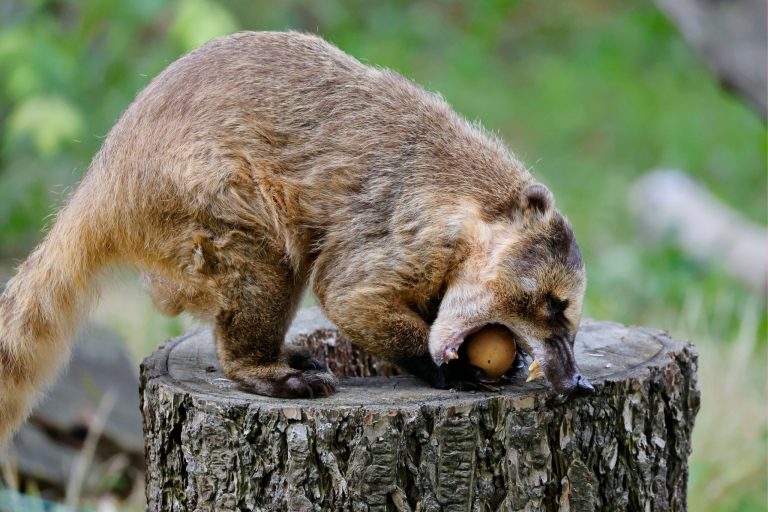
- Kinkajous need a highly specialized diet – roughly 80% tropical fruits and 20% protein sources like eggs, insects, and primate biscuits. They eat a lot of fresh fruit every day… and we’re talking expensive tropical options like papaya, mango, and pomegranate, not just bananas and apples.
- Veterinary Care: Finding a vet experienced with exotic animals is difficult… and pricey. Routine checkups, spaying/neutering (essential for curbing aggression), and emergencies can easily exceed $1,000 per year, and in many areas, qualified vets are nearly impossible to find.
- Housing and Enrichment: Ongoing costs for maintaining and replacing toys, bedding, climbing structures, and other necessities adds even more to the monthly costs.
Many owners realize too late that while the initial purchase price is steep, the lifetime cost of care is far greater – and if money was tight at the start, keeping a pet kinkajou long term can quickly become unmanageable.
Problem #6: The 25 Year Commitment (Or Longer!)
Kinkajous can live 20 to 25 years in captivity, with some reaching 40 years – a lifetime that spans decades of life changes! Think about where you were 20 years ago and how much your life has changed since then.
Life happens…
- People move to states or cities where kinkajous are illegal.
- They change jobs to ones with schedules incompatible with nocturnal pet care.
- They start families and realize their toddler can’t safely interact with a kinkajou.
- Relationships end, living situations change, or health issues arise.
What happens to the kinkajou then? Because kinkajous form strong bonds with one person and don’t rehome easily, sudden life changes can create serious problems.
Rescues and sanctuaries are often full, and private rehoming risks placing them with someone unqualified.
Many kinkajous end up in a cycle of abandonment, moving from home to home, stressed and increasingly difficult to manage.
Owning a kinkajou is truly a decades long responsibility, not a short term commitment, and prospective owners must be prepared for the full scope of that obligation.
Problem #7: Legal Complications
Kinkajou ownership varies dramatically by location. They’re illegal in many U.S.A. states and even where state laws allow them, local counties, cities, or municipalities may have additional bans or require permits.
Laws can change at any time, meaning a pet kinkajou that’s perfectly legal today could become illegal tomorrow, leaving owners with the difficult choice of relocating or surrendering their pet. On top of that, homeowner associations and rental agreements often have exotic pet restrictions that many owners only discover after it’s too late.
Legal hurdles are a serious factor to consider before committing to a pet kinkajou, as compliance is non-negotiable and failure can have major consequences for both owner and pet.
Problem #8: Health and Safety Concerns
Kinkajous aren’t just a bite risk – they can also carry parasites and diseases. One notable example is Baylisascaris procyonis, the raccoon roundworm, to which kinkajous are highly susceptible.
While infections are rare, this parasite can be transmitted to humans and cause serious neurological issues. Kinkajous that are housed outdoors are at a higher risk than those kept indoors, making regular fecal testing essential for the safety of both your pet and your household.
Their unique physiology also adds more challenges: kinkajous have a lower than average metabolic rate, making them prone to obesity and diabetes if overfed or insufficiently exercised.
They’re also highly sensitive to temperature extremes, experiencing heat stress above 91°F and cold stress below 59°F. Ensuring a stable, appropriate environment is critical – and another reason why kinkajou care is far from simple.
Problem #9: Social Media Illusion vs. Reality
Here’s something experienced pet kinkajou owners desperately want you to understand: adorable online videos show maybe 5% of what life with a kinkajou is really like. Social media captures the highlights – it shows the playful antics, sweet cuddles, and quirky behaviors.
What it doesn’t show are the hard realities like:
- Another 3 AM cleaning session after a bathroom accident, they got into something, they broke something, etc.
- Emergency room visits for bites
- Their destroyed and shredded furniture
- All the sleepless nights dealing with a nocturnal animal
- The thousands of dollars spent on specialized food, enrichment, toys, veterinary care, etc.
Problem #10: They’re Wild Animals, Not Domesticated Pets
This is arguably the most important point: kinkajous are not domesticated animals, they’re captive bred wild animals.
Domestication takes multiple generations of selective breeding, and no matter how “tame” a baby kinkajou seems, it still retains strong wild instincts.
This means kinkajous can be unpredictable. They can startle easily, become territorial around food, and may tolerate handling one day but bite aggressively the next. Even long term owners report that aggressive incidents can happen completely out of the blue, making them very different compared to traditional pets like cats or dogs.
Before You Commit The Reality Check You Need
Exotic animal experts and seasoned kinkajou owners agree: kinkajous are not suitable pets for most people.
If you’re thinking about bringing a kinkajou into your home, honestly ask yourself:
- Can I dedicate 3 to 6 hours of interaction every night for the next 25+ years?
- Do I have thousands of dollars for initial setup and ongoing care?
- Am I prepared to be bitten and scratched?
- Do I have access to qualified exotic animal veterinarians?
- Is my living situation stable and legal for kinkajou ownership?
- Can I handle the dramatic behavioral changes after 18 months?
- Can I manage the nocturnal schedule and noise?
- Do I have the space and resources for proper housing, enrichment, diet, etc.?
If you answered “no” or “I’m not sure” to any of these, a kinkajou is not the right pet for you – and that’s perfectly okay! Admiring these incredible animals from afar, supporting sanctuaries, or contributing to conservation efforts are responsible and meaningful ways to appreciate them without adding to the rehoming crisis.
The kindest thing we can do for kinkajous is be honest about the challenges of keeping them and think carefully before bringing one home. These animals deserve better than a life passed from owner to owner, struggling to fit into a domestic world they aren’t built for.
If you’re currently struggling with a pet kinkajou and can no longer care for it, reach out to specialized rescues like Kinkatopia or other local exotic animal organizations for support and rehoming assistance. And if you’re just beginning your research, please keep learning, talk to long term kinkajou owners (not just breeders trying to make a sale), and seriously consider whether you could truly meet their needs, or whether you’d become part of the heartbreaking cycle of kinkajou rehoming.