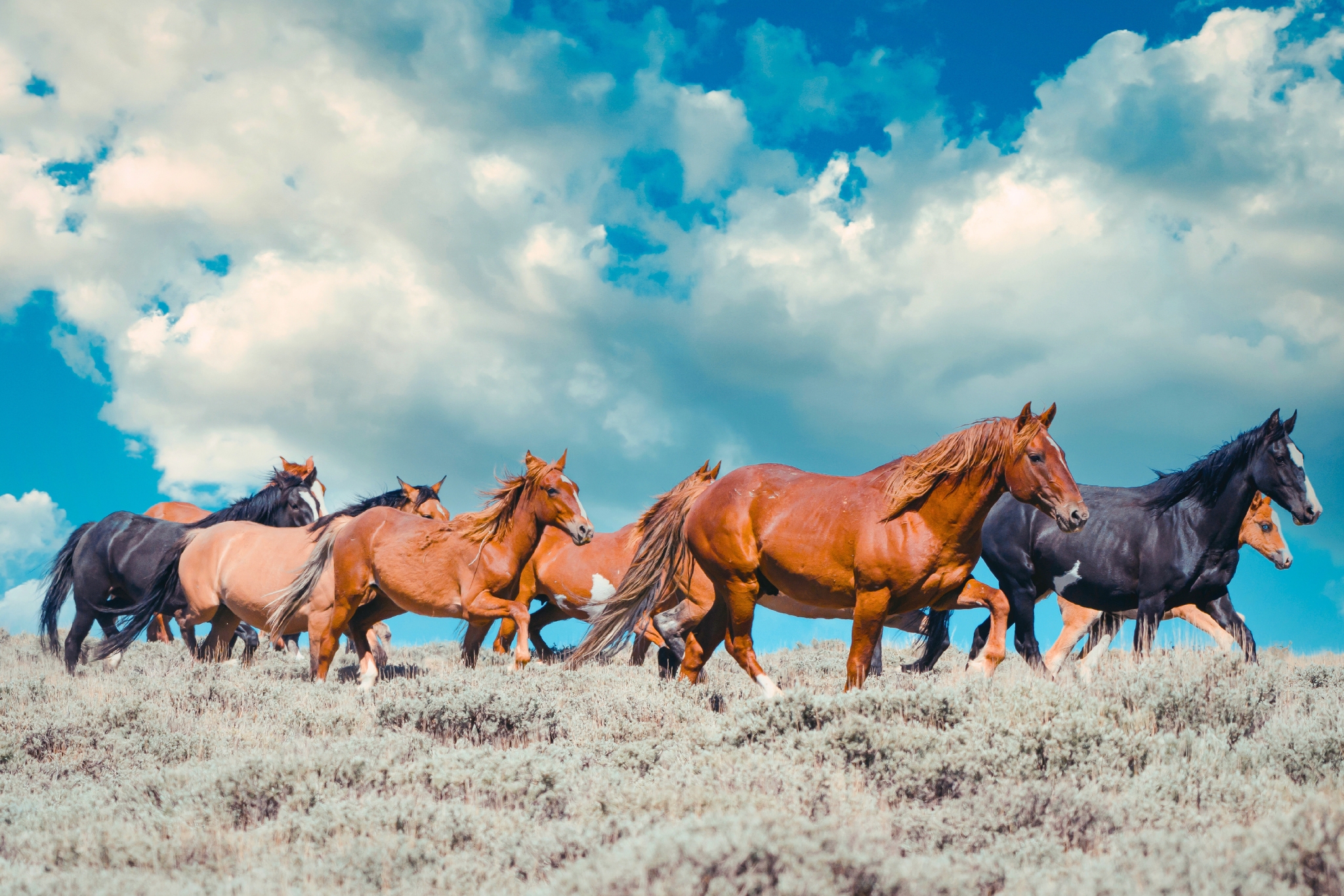
10 Best Places in the World to See Wild Horses Before They Disappear
See wild horses the way they’re meant to be—free spirited, windswept, and totally untamed. From coastal dunes to wide-open plains, discover 10 of the world’s most unforgettable destinations for spotting these incredible animals in their natural element.
- What You Need to Know Before You Go
- Nevada, USA — The Virginia Range
- Assateague Island, Maryland/Virginia, USA
- Theodore Roosevelt National Park, North Dakota, USA
- Salt River, Arizona, USA
- Outer Banks, North Carolina, USA
- Camargue, France
- Dartmoor National Park, England
- Sable Island, Nova Scotia, Canada
- Kosciuszko National Park, Australia
- Namib Desert, Namibia
- Tips for Watching Wild Horses Responsibly
- Final Thoughts on the Best Places to See Wild Horses
There’s something undeniably magical about watching a herd of wild horses gallop across the landscape, manes flying, totally unbothered, and living their best untamed lives.
Whether you’re a devoted wildlife traveler or just captivated by one of nature’s most romantic, movie worthy moments, wild horses can still be found on nearly every continent (everywhere but Antarctica)—if you know where to look.
Think of this as your go-to guide to the most iconic places on Earth where wild horses still roam free—from where to go and when to visit to what makes each herd so unique, it’s just enough inspiration (and insider detail) to help you plan a trip that feels equal parts elevated and unforgettable.
What You Need to Know Before You Go
A quick note for the the purists: technically, there aren’t any truly “wild” horses left today—the American mustangs, Australian brumbies, and even the Przewalski’s horse of the Mongolian steppe all trace their lineage back to domesticated horses.
Scientists may label them as “feral,” but spend even a moment watching a herd sweep across a desert basin or wander through a coastal marsh, and it’s clear—they’re wild in every way that counts.
Today, there are roughly 60,000 free roaming horses across the United States and Canada alone, with millions more found around the globe.
If seeing them in their element is on your list, these are the destinations that truly deliver.
1. Nevada, USA — The Virginia Range
Nevada is the undisputed wild horse capital of America—and it absolutely lives up to the title. The state is home to nearly half of the country’s free roaming horses, many of them part of the iconic Virginia Range herd that roams the high desert just outside of Reno.
The largest group, known as the Virginia Range herd, includes close to 2,000 mustangs and is most easily spotted between Reno and Virginia City. These horses carry a legacy as captivating as the landscape itself—they’re often called “Annie’s Horses,” a nod to Velma Johnston, whose decades long advocacy helped protect wild horses across the American West.
- When to go: It’s a year round destination, but spring and fall are especially lovely, with milder temperatures that are perfect for exploring.
- How to see them: For the best chance at a sighting, head to watering holes just east of Reno, or elevate your experience with a guided tour from a local outfitter who knows exactly where the herds like to roam.
2. Assateague Island, Maryland/Virginia, USA
Assateague Island National Seashore is home to the legendary Assateague horses, a herd that has thrived here for centuries—wandering freely across 37 miles of windswept beaches, salt marshes, and coastal forests. It’s one of those rare places where wild horses and ocean views come together in the most effortless, cinematic way.
These iconic ponies first captured the world’s attention thanks to Marguerite Henry’s beloved 1947 novel Misty of Chincoteague, and they’ve been enchanting visitors ever since. Today, more than 300 horses roam the island, divided into two distinct herds: the Maryland group, managed by the National Park Service, and the Virginia herd, which grazes within Chincoteague National Wildlife Refuge and is cared for by the Chincoteague Volunteer Fire Company.
If you can time your visit right, don’t miss the annual Chincoteague Pony Swim each July, when the herd makes its iconic crossing to Chincoteague Island. It’s equal parts charming and unforgettable—a time-honored tradition that’s been delighting visitors for nearly a century
- Best time to visit: It’s beautiful year round, but visiting in the off-season means fewer crowds and a more relaxed, up-close experience with the horses.
3. Theodore Roosevelt National Park, North Dakota, USA
Set where the sweeping Great Plains meet the rugged Badlands, Theodore Roosevelt National Park is easily one of the most striking places in the country to spot free roaming horses. Come summer, you’ll often see them grazing across the open landscape—or even catch a glimpse right from Interstate 94, which runs alongside the park.
The mustang has long been a symbol of the American West, and here, that spirit feels especially alive. Spanning more than 70,000 acres, the park is home to roughly 100 to 200 wild horses, often seen moving gracefully through the dramatic, sunlit badlands.
- When to go: Summer offers the easiest sightings, especially along the park’s scenic drives.
- Pro tip: Bring binoculars and admire from a distance—these horses may look dreamy, but they’re truly wild
4. Salt River, Arizona, USA
The Salt River wild horses of Arizona have a history that feels as rich as the landscape itself, with roots tracing back to the 17th century. Many believe they descend from Spanish colonial horses, and today, around 300 of them roam a protected stretch of the Tonto National Forest just outside Phoenix.
Spotting them feels effortlessly adventurous—you might catch a glimpse while hiking desert trails, floating down the river, or cruising along the quiet back roads northeast of the city. They tend to gather near the water, especially in the softer light of morning and evening, which only adds to the magic.
- Best time to visit: Spring is especially beautiful, with the best chances of seeing bands of horses, though they can be spotted year round near the riverbanks.
5. Outer Banks, North Carolina, USA
The exquisite Outer Banks is one of the most enchanting places to spot Colonial Spanish Mustangs in the wild. These resilient horses are believed to be descendants of early Spanish shipwreck survivors, and they’ve adapted beautifully to life along this ever changing stretch of barrier islands—weathering storms, shifting dunes, and centuries of coastal winds.
Today, the famous Corolla wild horses—also known as Banker horses—still roam freely across the dunes of Corolla and Corova. Their protection is carefully overseen by the Corolla Wild Horse Fund, which was founded in 1989 to monitor and safeguard the small but iconic population of roughly 100 individuals.
- When to go: Spring through fall offers the best conditions for sightings, when the weather is warm and the horses are most active. Guided Hummer tours are a popular (and conservation-friendly) way to explore their habitat and increase your chances of an unforgettable encounter.
6. Camargue, France
Europe has its own wild horse wonder tucked away in the south of France. The Camargue region is famous for its striking white horses that roam freely across marshes and open wetlands—it’s so iconic that the area has even been nicknamed “the Wild West of France.”
At the heart of it all is Camargue Regional Nature Park, a surreal landscape where wild horses, pink flamingos, and shimmering salt flats all share the same horizon. It’s one of Europe’s largest river deltas and a protected UNESCO biosphere reserve, known not just for its beauty but for its extraordinary biodiversity.
The legendary Camargue horse is instantly recognizable thanks to its pale coat and graceful build, often seen moving in small herds through the wetlands. The park is also a dream for bird lovers, with more than 400 species recorded, including its famous rosy pink flamingos.
- When to go: Spring is especially magical, when the wetlands are lush and flamingos gather in large numbers across the delta.
- How to see them: Guided 4×4 safari tours run throughout the region and offer one of the best ways to explore the horses’ watery world in style.
7. Dartmoor National Park, England
Dartmoor National Park is home to the famed Dartmoor ponies, set across 368 square miles of wild, open moorland in southwest England. It’s a landscape of rolling heather, granite tors, ancient stone circles, and misty horizons that feels almost unchanged for centuries.
The Dartmoor pony is one of Britain’s oldest native breeds, with a presence on the moors believed to stretch back around 3,500 years. Today, these hardy ponies still roam freely, grazing among prehistoric ruins and boggy trails—an enduring symbol of England’s wild, untamed heritage.
Every sighting feels a little more meaningful, as the breed is considered vulnerable and carefully managed—making each encounter on the moor feel like a quiet, unforgettable glimpse into Britain’s living heritage.
- When to go: Dartmoor is compelling in every season—foggy winters, blooming springs, golden summers, and moody autumns all have their own charm. Summer, however, offers the easiest walking conditions and best access to the trails where ponies are often spotted.
8. Sable Island, Nova Scotia, Canada
Sable Island is home to around 500 protected wild horses living on a remote, wind swept beach island far out in the Atlantic. Getting there is part of the magic—accessible only by small aircraft or boat, the island’s isolation keeps visitor numbers low and the experience wonderfully untouched.
The horses here have lived in seclusion for centuries and are among the most genetically distinct feral horse populations in the world. The result is something almost otherworldly: herds moving across endless sand dunes with nothing but crashing surf and open sky for miles in every direction.
The Sable Island horses offer one of the most dramatic wildlife encounters anywhere on Earth—raw, quiet, and completely unforgettable.
- Best time to visit: Late spring through early fall, when weather conditions are most favorable for travel to the island.
9. Kosciuszko National Park, Australia
Kosciuszko National Park is home to the resilient Brumby—Australia’s answer to the wild horse dream. Descended from escaped and released settlers’ horses, they roam a vast, ever changing landscape that stretches from alpine meadows to eucalyptus forest across more than 2,600 square miles of protected wilderness.
It’s a place of striking contrasts, where snow dusted peaks give way to open valleys and winding rivers, and where the Brumbies have long been part of the region’s rugged identity.
That said, their future in the park is changing: due to concerns about impacts on the fragile alpine ecosystem, management efforts are underway to significantly reduce their numbers in the coming years, which may make sightings far less common.
- When to go: Summer (December to February) is ideal, when alpine trails are open and the high country is at its most accessible.
10. Namib Desert, Namibia
For something truly otherworldly, the wild horses of the Namib Desert are unlike anything else on the planet. This is one of the most extreme environments on Earth—yet the horses still manage to survive across its harsh, shifting landscape, and their exact origins are still uncertain, adding to their sense of intrigue and mystery
These small, remarkably hardy horses are most often seen near the waterhole at Garub, just outside the town of Aus. Here, against a backdrop of towering red dunes and endless desert horizon, they gather at sunrise in a scene that feels almost surreal—quiet, stark, and unforgettable.
- Best time to visit: The cooler dry season, from May through October, offers the most comfortable conditions and the best chance of seeing the horses at the waterhole.
Tips for Watching Wild Horses Responsibly
Wherever you go to see wild horses, a few simple guidelines help protect both the animals and the experience for everyone
- Keep a respectful distance of at least 50 to 100 feet. Wild horses may look calm, but they’re still unpredictable animals.
- Never feed wild horses—human food can harm their health and disrupt their natural behavior.
- Choose reputable guided tour operators that support local conservation and responsible wildlife viewing.
- Always follow the rules set by national parks and wildlife refuges
- And finally, leave no trace—take everything you bring with you, so these landscapes stay just as wild for the next visitor.
Final Thoughts on the Best Places to See Wild Horses
Wild horses are living symbols of freedom, resilience, and the wilder edges of a world that still refuses to be fully fenced in. From the salt flats of southern France to the sun scorched Namib Desert, these animals thrive in places that would challenge most other animals.
Wherever you encounter them—thundering across a badlands mesa or standing motionless in the morning mist at the edge of the sea—the moment stays with you. It’s one of those rare travel experiences that feels both grounding and unforgettable.
Start planning your wild horse adventure. The herds are still out there, waiting.