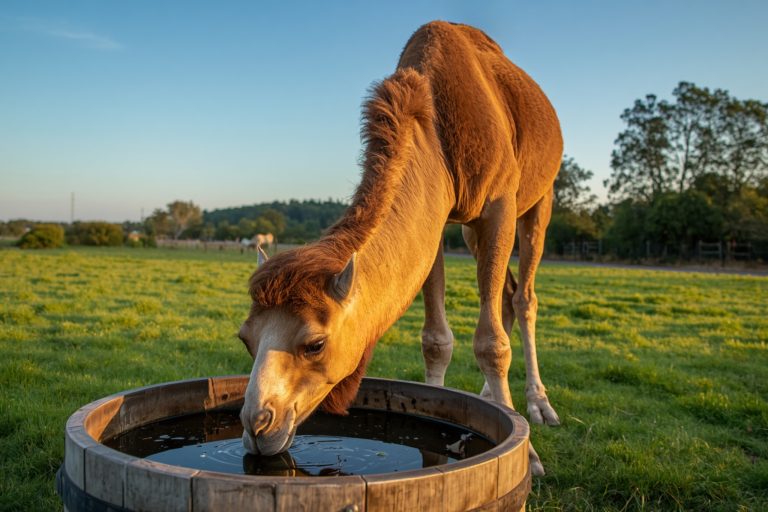
Wild Horses Cause 1% of Land Damage on Public Lands So Why Is the Government Spending $100+ Million a Year to Remove Them?
Wild horses aren’t destroying public lands—subsidized cattle are. Learn the truth behind the controversial and costly BLM roundup program.
- What the BLM Doesn’t Want You to Know About Wild Horses
- The Land Numbers Tell the Real Story
- The PEER Report: Livestock Are the Real Land Destroyers
- The Subsidy Scandal: Welfare Ranching on Your Dime
- Who’s Really Funding the Roundups?
- The Roundup Machine: Billions Spent, No End in Sight
- There Is a Better Way — But the BLM Won’t Use It
- The Wild Horse is a Scapegoat
- What You Can Do to Help
Every year, the Bureau of Land Management (BLM) spends hundreds of millions in taxpayer dollars rounding up wild horses from public lands—animals that are, notably, protected under federal law.
Meanwhile, the far more significant drivers of rangeland degradation continue to graze largely unchecked, supported by the same system funding the removals.
It’s a dynamic that raises an obvious question: Where is the money going—and why?
What the BLM Doesn’t Want You to Know About Wild Horses
If you’ve followed mainstream coverage of America’s wild horses and burros, you’ve likely heard a familiar storyline: populations are out of control, the land is suffering, will horses are starving, and federal managers have little choice but to step in.
That narrative is not only incomplete—it’s also completely manufactured.
The Bureau of Land Management sets what it calls an “Appropriate Management Level” (AML) for wild horses and burros at roughly 26,690 animals across the entire American West.
That means the agency believes only 1 wild horse or burro per roughly 1,000 acres is acceptable on the lands legally designated as their habitat.
Meanwhile, privately owned livestock graze over 10 times more public acreage—with virtually no population caps.
If you think that imbalance sounds intentional, you’re not wrong. It’s a disparity that raises legitimate questions about how these lands are allocated—and whose interests ultimately shape those decisions.
The Land Numbers Tell the Real Story
Here’s what emerges when you line up the Bureau of Land Management’s own numbers side by side:
- The BLM manages roughly 245 million acres of public land
- Livestock are allowed to graze on 155 million of those acres
- Wild horses are restricted to just 25.6 million acres—about 10.5% of BLM managed land
Let that sink in.
Wild horses, which are federally protected under the 1971 Wild Free Roaming Horses and Burros Act, are confined to a small fraction of the very lands Congress said they had a right to roam.
Meanwhile, privately owned cattle and sheep dominate the majority of it.
The disparity becomes even clearer when you look at the terms of use. In 2021, authorized livestock grazing on BLM lands totaled 8.3 million Animal Unit Months (AUMs)—roughly equivalent to nearly 700,000 cow-calf pairs. Wild horses and burros, by contrast, accounted for about 306,000 AUMs, or roughly 25,500 animals.
That means livestock are authorized to consume more than 25 times the forage allocated to wild horses on public land—yet public debate often frames mustangs as the primary strain on the land.
And perhaps most telling: more than 80 percent of BLM grazing allotments have no wild horses present at all.
So the next time someone blames mustangs for degraded grazing land, it’s worth asking them a simple question: Were wild horses ever there to begin with?
Livestock Are the Real Land Destroyers The PEER Report
In 2024, a damning report by Public Employees for Environmental Responsibility (PEER) added a striking data point to the wild horse debate.
Reviewing the Bureau of Land Management’s own land health assessments, the report revealed that wild horses were identified as a contributing factor in just 1% of cases.
Just one percent.
That’s the documented footprint of an animal the BLM says justifies spending over $100 million per year on roundup and holding operations.
The BLM agency has known this. Advocates have known this. It’s not new information—but Congress has largely looked the other.
The Subsidy Scandal Welfare Ranching on Your Dime
The financial arrangement between the federal government and public lands ranchers is one of the most underreported subsidy systems in the country—and one of the most consequential.
According to the latest data from the Congressional Research Survey, the cost to graze on privately owned land out West averages around $23 per Animal Unit Month (AUM).
On federal land—under the BLM’s Public Lands Grazing Program—ranchers can rent public land for just $1.35 per cow and calf pair.
Taxpayers fund more than 90% of the cost for commercial ranchers to graze their private livestock on public land.
When administrative and environmental costs are factored in, public lands grazing represents a net loss of at least $123 million annually—and potentially more than $500 million when indirect impacts are included.
And all of this supports a system that contributes less than 2 percent of the nation’s beef supply.
So America is hemorrhaging at least half a billion dollars a year to subsidize a program that produces less than 2% of the country’s beef—while simultaneously funding the removal of federally protected wild horses to make room for those same cattle.
The distribution of those benefits is also uneven. A small fraction of livestock producers participate in the program, and a disproportionate share of subsidies flows to an even smaller group within that pool.
The ranching industry that portrays itself as the rugged backbone of the West is, in reality, propped up by your tax dollars—and they are actively lobbying to remove wild horses to protect their cut.
This isn’t conservation—it’s a rigged system.
Who’s Really Funding the Roundups?
At the center of the debate is a powerful and persistent interest: the livestock industry’s access to public land grazing. Ranching groups have long worked to preserve that access—often at heavily subsidized rates—on federally managed rangelands.
Within that context, the Bureau of Land Management’s Wild Horse and Burro Program removes thousands of animals each year from designated herd areas. The stated goal is to manage forage, water, and overall rangeland health—especially during periods of drought. Critics, however, argue that these removals disproportionately benefit livestock operators who rely on the same resources.
In other words, the roundup program exists largely to clear the range for ranchers who are already paying pennies on the dollar for the privilege of grazing there.
The BLM—the agency legally mandated to protect wild horses—has been captured by the very interests it’s supposed to regulate alongside.
Legal battles reflect that divide. When BLM lists “litigation” on the roundup schedule, they often mean litigation from livestock interests—counties and livestock boards. BLM usually jumps into a quick settlement when courts rule against them on livestock-related cases. But when advocates challenge roundups in court, the agency fights back or finds workarounds.
In the end, the issue isn’t just about horses or cattle. It’s about how public land is managed—and who gets to decide.
The Roundup Machine Billions Spent, No End in Sight
The economics of the roundup program tell their own story—and it’s an expensive one.
In fiscal year 2024, the Bureau of Land Management allocated roughly $142 million to its Wild Horse and Burro Program. Of that, about $101 million—nearly three quarters of the budget—went to off-range holding costs.
In practical terms, most of the program’s funding is spent maintaining horses in corrals—not managing them humanely on the range, not investing in fertility control, and certainly not returning them to the land they’re legally entitled to occupy.
As of that same fiscal year, more than 28,000 wild horses and burros were being held in overcrowded corral facilities. These are animals whose only crime was living on land a rancher wanted.
Critics argue that the system has become cyclical: horses are removed from the range, placed into long term holding, and the costs continue to compound year after year. It’s a model that raises a fundamental question—whether current policy is solving the problem, or simply sustaining it at significant public expense.
There Is a Better Way But the BLM Won’t Use It
What makes this scandal even harder to accept is that an alternative, cost effective solution has already existed for decades.
Fertility control vaccines like PZP (porcine zona pellucida) have been proven safe and effective at slowing herd growth without the trauma of helicopter roundups, without the ongoing cost of long term holding, and without the death toll that comes with aggressive capture operations.
Yet funding has not followed that path. Since 2007, the Bureau of Land Management has allocated only a small fraction of its Wild Horse and Burro Program budget—generally well under 5 percent—toward fertility control and other on-range management strategies, even as spending on removals and holding has continued to climb.
Population modeling has consistently shown that a real commitment to fertility control—implemented alongside any necessary and targeted removals—is the only realistic path to stabilizing herd growth, reducing long term costs, and actually protecting the animals the law demands be protected.
Instead, the BLM has chosen the most expensive, most inhumane, and least effective strategy available: catch them, hold them, and repeat—year after year—while ranchers continue grazing at your expense.
The Wild Horse is a Scapegoat
America’s mustangs remain one of the most enduring symbols of the West—and one of its most convenient scapegoats. At the heart of the issue isn’t just population management, but a broader contest over how public lands are used and who gets to shape those decisions.
Focusing blame solely on wild horses and burros—while sidelining the impacts of livestock grazing, energy development, road building, mining, recreation, and climate pressures—offers an incomplete picture of rangeland health. On many allotments, privately owned livestock outnumber wild horses by wide margins, yet public debate often centers on the latter.
That imbalance reflects a deeper dynamic. The wild horse debate is, in many ways, a story about competing priorities and influence: which uses of public land are emphasized, which are subsidized, and which are constrained.
Right now, critics argue, those priorities remain uneven—raising difficult questions about fairness, stewardship, and the long term future of both the land and the species that depend on it.
What You Can Do to Help
The BLM roundup program continues because most Americans don’t know it exists—or don’t know of the policy and funding structures behind it.
For advocates, awareness is the first step toward change.
Beyond that, they point to civic engagement: contacting Congressional representatives, asking for greater transparency in how Wild Horse and Burro Program funds are allocated, and supporting organizations such as American Wild Horse Conservation, Return to Freedom, and Wild Horse Education, which focus on alternative, science based approaches to management.
Supporters also encourage broader questions about public land policy itself—particularly how grazing subsidies are structured and how decisions are made about land that is federally owned and shared by all Americans, including the wild horses that have long inhabited it.
The mustang doesn’t need to be saved from overpopulation—it needs to be saved from politics.