12 Crazy Octopus Facts That Prove They’re Basically Aliens
Think you know octopuses? These mind blowing facts about their intelligence, abilities, and weird biology will totally change your perspective.
- Octopuses Have 3 Hearts (Yes, Really!)
- Their Blood Is Blue (Not Red)
- Octopuses Are Ridiculously Smart
- They Can Change Color in Milliseconds
- Each Arm Has a Mind of Its Own
- Octopuses Are Masters of Escape
- They Have Built-In Invisibility Cloaks
- Most Octopuses Are Loners with Short Lives
- They Can Regenerate Lost Arms
- Octopuses Might Dream
- They Use Tools
- The Plural Is Actually “Octopuses” (Not Octopi)
- Why Octopuses Should Blow Your Mind
If you think octopuses are just squishy sea creatures with eight arms, prepare to have your mind absolutely blown.
These fascinating marine animals are honestly some of the coolest, most intelligent, and downright weirdest creatures on our planet.
From their alien-like abilities to their surprisingly sophisticated behaviors, octopuses are way more amazing than most people realize.
1. Octopuses Have 3 Hearts (Yes, Really!)
Okay, so here’s something that sounds totally made up but isn’t: octopuses have 3 hearts.
Two of these hearts pump blood to the gills, while the third pumps blood to the rest of the body.
And here’s the kicker, when an octopus swims, the heart that delivers blood to the body actually stops beating. That’s why octopuses prefer crawling along the ocean floor rather than swimming. They literally can’t afford to be cardio enthusiasts!
2. Their Blood Is Blue (Not Red)
Speaking of hearts, let’s talk about that blood. Instead of hemoglobin like humans have, octopuses use a copper based protein called hemocyanin to transport oxygen throughout their bodies.
This copper based blood is what gives them their distinctive blue color. It’s actually more efficient than hemoglobin in cold, low oxygen environments, which is pretty brilliant if you’re living deep in the ocean.
3. Octopuses Are Ridiculously Smart
When we say octopuses are intelligent, we’re not just talking about basic survival instincts.
These creatures can solve complex puzzles, use tools, and even recognize individual human faces.
They’ve been observed opening childproof containers, navigating mazes, and playing with objects for what appears to be pure entertainment.
Some octopuses have even escaped from aquariums by unscrewing tank lids and squeezing through tiny gaps. They’re basically the Houdinis of the sea!
Scientists believe octopuses experience boredom (just like us humans!), which is why enrichment is so important for captive octopuses. They need excessive amounts of mental stimulation, just like primates do.
4. They Can Change Color in Milliseconds
You’ve probably heard that octopuses can camouflage themselves, but the speed and complexity of this ability is absolutely bonkers.
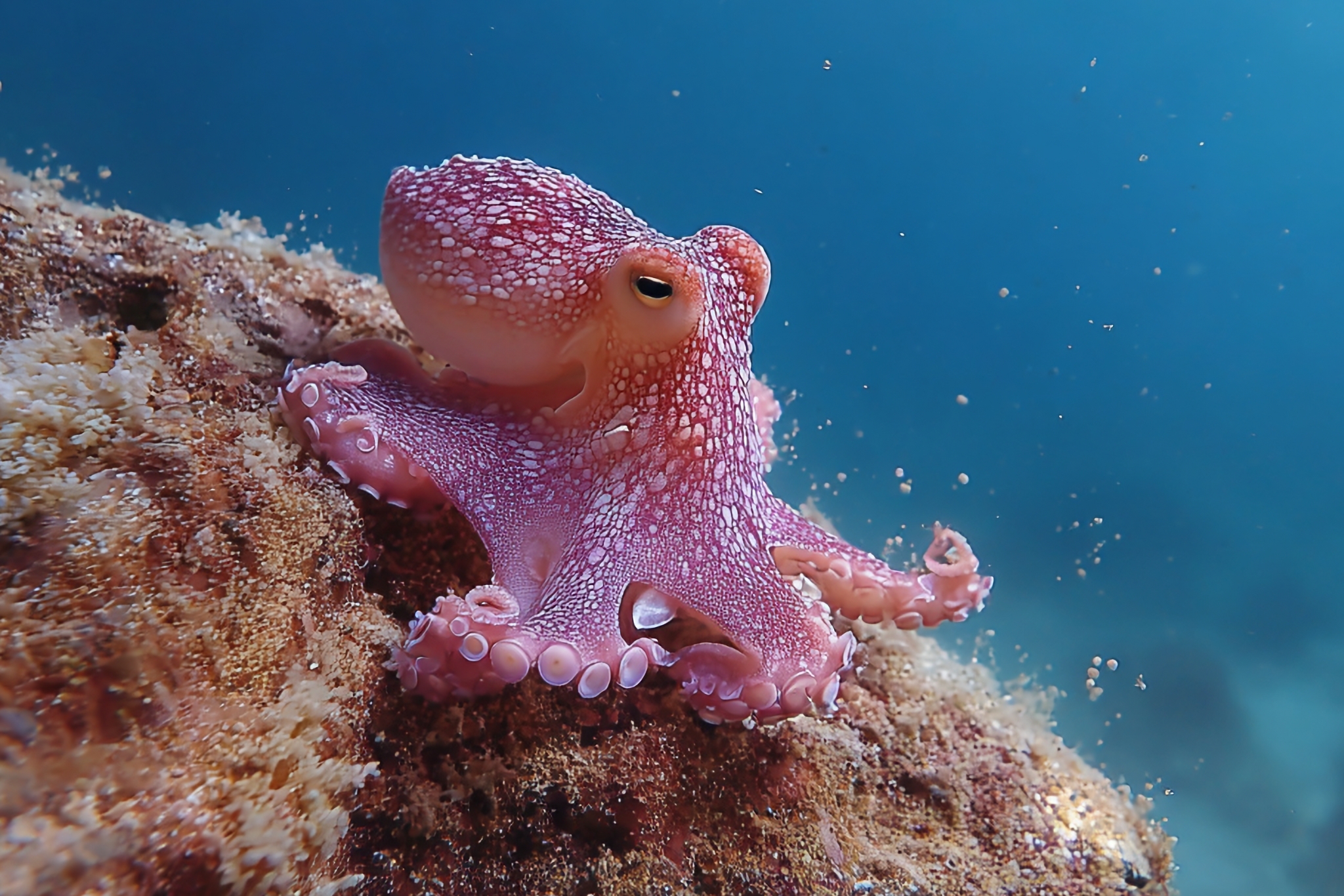
Octopuses can change their color, pattern, and even the texture of their skin in less than a second.
They have special cells called chromatophores that contain different pigments, and they can control each one individually. That’s like having millions of pixels that you can adjust instantly to match your surroundings.
But here’s the really wild part: octopuses are actually colorblind! Scientists believe they might “see” with their skin itself, detecting light through special proteins in their skin cells. It’s still a bit of a mystery, which makes it even cooler.
5. Each Arm Has a Mind of Its Own
This is where things get seriously weird. About two-thirds of an octopus’s neurons are actually in its arms (not its brain).
This means each arm can act somewhat independently, making decisions without consulting the central brain.
An octopus arm can continue moving, responding to stimuli, and even reaching for food even after it’s been severed from the body. It’s like each arm is its own little creature!
This distributed intelligence allows octopuses to multitask in ways that would be impossible for animals with centralized nervous systems.
While one arm is exploring a crevice, another might be working on opening a shell, and yet another could be changing colors to warn off a predator.
6. Octopuses Are Masters of Escape
The escape artist abilities of octopuses are legendary in the marine biology world.
They can squeeze through any opening larger than their beak, which is the only hard part of their body—this means a 100 pound octopus can potentially fit through a hole the size of a lemon.
They’ve squeezed through drain pipes, navigated ductwork, and even traveled across dry land to reach other tanks.
There are countless stories of octopuses escaping aquariums at night, raiding nearby tanks for fish, and then returning to their own tanks before morning. They’re basically running covert missions while the humans sleep!
7. They Have Built-In Invisibility Cloaks
Beyond just changing colors, octopuses can actually manipulate the texture of their skin to match their surroundings.
They can create bumps, ridges, and spikes to mimic coral, rocks, or sand. Some species can even mimic other sea creatures, like lionfish or sea snakes, to scare away predators.
The mimic octopus, found in the Indo-Pacific, can impersonate up to 15 different species.
8. Most Octopuses Are Loners with Short Lives
Despite being so intelligent, most octopus species are completely solitary creatures. They only come together to mate, and even that’s risky because the females sometimes eat males after mating. Talk about a tough dating scene!
Sadly, octopuses also have incredibly short lifespans. Most species only live for one to two years, with even the largest octopuses rarely making it past five years.
After laying eggs, female octopuses stop eating entirely and dedicate themselves to protecting their eggs, often dying shortly after the babies hatch. It’s both heartbreaking and beautiful.
9. They Can Regenerate Lost Arms
If an octopus loses an arm to a predator or an accident, no problem—they can just grow a new one!
The regeneration process can take several months, but the new arm will be fully functional, complete with all those independent neurons we talked about earlier.
Some octopuses have even been observed with arms that are slightly different in size, suggesting they’ve regrown them at different times.
10. Octopuses Might Dream
This one’s still being researched, but it’s incredibly fascinating.
Scientists have observed octopuses changing colors and textures while they sleep, suggesting they might be experiencing REM sleep and are possibly dreaming.
Imagine what an octopus dreams about—maybe perfect hiding spots or epic escapes?
11. They Use Tools
Tool use is considered one of the hallmarks of intelligence, and octopuses definitely have this skill down.
They’ve been observed collecting coconut shells, stacking them, and then carrying them around to use as portable shelters later. This shows not just intelligence but also planning for future needs, which is pretty sophisticated behavior.
Some octopuses also use rocks as shields or weapons, positioning them to block the entrances to their dens or throwing them at threatening fish or even at pesky divers!
12. The Plural Is Actually “Octopuses” (Not Octopi)
Okay, this isn’t about the animals themselves, but it’s a common misconception worth clearing up! The word “octopus” comes from Greek, not Latin, so the proper plural is “octopuses,” not “octopi.”
You can also say “octopodes” if you want to get really fancy with your Greek plurals, but “octopuses” is perfectly correct and most commonly used.
Why Octopuses Should Blow Your Mind
After learning all these crazy facts, it’s impossible to look at octopuses the same way.
These aren’t just weird sea blobs—they’re highly intelligent, adaptable, and complex creatures with abilities that seem almost alien.
They challenge our understanding of intelligence, showing us that big brains and long lifespans aren’t the only paths to sophisticated behavior.
Next time you’re at an aquarium or watching a nature documentary, take a moment to really observe these incredible animals. Behind those otherworldly eyes is a mind that’s solving problems, making decisions, and experiencing the world in ways we’re only beginning to understand.
The ocean is full of amazing creatures, but octopuses? They’re in a league of their own.
These eight armed geniuses remind us that intelligence comes in many forms, and sometimes the most extraordinary creatures are hiding right under the surface, constantly surprising us with abilities we never knew were possible.
Who knew that some of the smartest animals on Earth don’t even have a backbone?