Montana Wildlife Guide 15 Amazing Animals You Can Actually See in Big Sky Country
Ready to see wolves, bison & bald eagles in the wild? Here are 15 Montana animals you can spot — plus exactly where and when to find them.
- Why Montana Is a Wildlife Watcher’s Dream Destination
- Grizzly Bear
- Gray Wolf
- American Bison
- Elk
- Mountain Goat
- Bighorn Sheep
- Moose
- Mountain Lion (Cougar)
- Black Bear
- Wolverine
- Bald Eagle & Golden Eagle
- Great Gray Owl
- Pronghorn
- River Otter
- White-Tailed & Mule Deer
- Best Times to Visit Montana for Wildlife Viewing
- Quick Tips for Responsible Wildlife Watching in Montana
- Montana Wildlife Is the Real Deal
If Montana isn’t already on your wildlife bucket list, consider this your official sign to add it immediately. Known as Big Sky Country, Montana is easily one of the most breathtaking places in the U.S. to see animals thriving in their natural habitat—no zoo visits required.
From wide open valleys to stunning mountain landscapes, wildlife sightings here feel straight out of a nature documentary.
Whether you’re a seasoned wildlife lover or planning your very first outdoor adventure, Montana delivers unforgettable views, cozy cabin vibes, and major main character energy for every kind of traveler.
So grab your binoculars, throw on favorite flannel, and get ready to discover the incredible wildlife waiting for you on your next Montana getaway.
Why Montana Is a Wildlife Watcher’s Dream Destination
Montana is home to more than 100 species of mammals, over 400 species of birds, and some of the most breathtaking wilderness in all of North America.
One of the best things about wildlife watching in Montana is that you don’t have to be some expert outdoorsy person to enjoy it. Many of Montana’s most iconic animals are spotted all the time by regular visitors simply slowing down, looking around, and soaking it all in.
Between Glacier National Park, Yellowstone’s northern range, the National Bison Range, and millions of acres of wide open public land, the variety of landscapes here is seriously incredible. Think alpine meadows, rushing river valleys, dense pine forests, and endless prairies—all creating the perfect backdrop for an unforgettable wildlife experience.
1. Grizzly Bear
Okay, let’s start with the ultimate Montana icon: the grizzly bear. Seeing one in the wild is the kind of bucket list moment you never forget—it’s equal parts breathtaking, thrilling, and slightly heart stopping in the best way possible.
Montana is one of the last true strongholds for grizzly bears in the lower 48 states, with around 2,000 grizzlies living throughout the Greater Yellowstone Ecosystem and the Northern Continental Divide Ecosystem, which includes Glacier National Park. Basically, if there’s anywhere in the U.S. where your grizzly dreams might come true, it’s here.
Where to spot them:
- Glacier National Park
- Bob Marshall Wilderness
- Yellowstone’s Lamar Valley near the Montana border
- Your best chances are usually at dawn or dusk when wildlife is most active
PRO TIP: Always carry bear spray—and make sure you actually know how to use it before heading out on the trail.
2. Gray Wolf
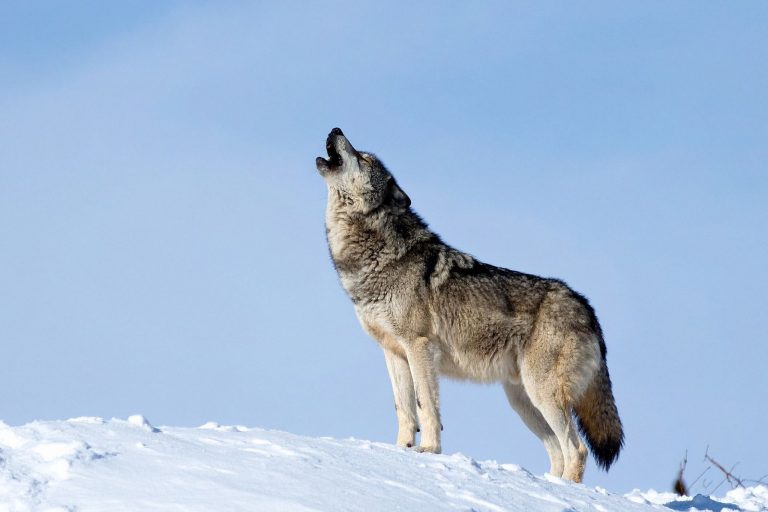
Few things feel more magical than hearing a wolf howl echo through a Montana valley at dusk—it’s one of those unforgettable moments that gives you full body chills.
Gray wolves were reintroduced to Yellowstone in 1995, and since then, their populations have steadily expanded into Montana. Watching a wolf pack interact in the wild—playing, communicating, and moving together so effortlessly—is kind of like witnessing nature’s smartest group chat in real life.
Where to spot them:
- The Lamar Valley near Gardiner, Montana is basically legendary among wolf watchers around the world
3. American Bison
There’s something truly unforgettable about watching bison roam across Montana’s wide open plains. Massive, powerful, and completely unbothered, these animals feel like living pieces of American history.
Once numbering in the tens of millions across North America, bison were nearly driven to extinction—which makes seeing them thriving in the wild today feel even more special.
Montana is one of the few places where you can still experience genuinely wild bison herds roaming freely through breathtaking landscapes, and it’s the kind of moment that makes you stop and just take it all in.
Where to spot them:
- The National Bison Range near Moiese is an absolute must see for wildlife lovers
- Yellowstone’s northern areas near Gardiner are also amazing for year round bison sightings, especially if you’re hoping for those iconic wide open prairie views
4. Elk
Montana’s elk are absolutely stunning year round, but the fall is when they truly steal the show. During the rut—aka elk mating season in September and October—bull elk let out their famous bugles, and hearing that haunting call echo through a misty mountain meadow is genuinely one of the most magical sounds in nature. Instant chills. Every single time.
It’s dramatic, wild, a little cinematic, and basically the ultimate Montana autumn experience. If you’re visiting in the fall, catching an elk bugling at sunrise should absolutely be on your bucket list.
Where to spot them:
- The Gallatin Valley and Bitterroot Valley are both incredible for elk sightings, along with much of western Montana
- Just over the border, the National Elk Refuge in Jackson Hole also attracts elk from Montana’s Greater Yellowstone region during the colder months
5. Mountain Goat
Perched improbably on sheer cliff faces like they’re not even thinking about it, mountain goats are one of Montana’s most awe-inspiring sights. Their snowy-white coats and quiet confidence are absolutely iconic. These animals are built for terrain that would send most creatures tumbling, and watching them navigate vertical rock is endlessly impressive.
Where to spot them:
- Glacier National Park is the ultimate destination for mountain goat sightings, especially around Logan Pass and the Highline Trail
6. Bighorn Sheep
Rocky Mountain bighorn sheep are the rugged, curly horned icons of Montana’s mountain wildlife scene. They’ve got that effortlessly wild, windswept look that feels straight out of a nature editorial.
During the fall rut, the rams put on an unforgettable show—dramatic head to head clashes that echo across the mountains and honestly feel like something you’d only ever see in a wildlife documentary. But even outside of the action, spotting a herd carefully picking their way along a narrow ridgeline is just as breathtaking in its own quiet way.
Where to spot them:
- The upper Stillwater River corridor
- Bighorn Canyon National Recreation Area
- The Many Glacier area of Glacier National Park
7. Moose
Enormous, slightly awkward, and completely magnificent — moose are the gentle giants of Montana’s wildlife world. Surprisingly, they’re not always easy to find despite their size, preferring willow thickets and marshy areas where they blend in better than you’d expect for an animal that can weigh 1,000 pounds.
Where to spot them:
- The Yaak River Valley in far northwestern Montana is a top-tier moose destination
- The Bitterroot region and river corridors throughout Glacier National Park is another strong location
- Early mornings near water are your absolute best bet for a sighting
8. Mountain Lion (Cougar)
Full transparency: you probably won’t see a mountain lion—these breathtakingly elusive big cats are absolute masters of staying hidden, which is exactly what makes them so fascinating.
Montana has a healthy mountain lion population, and there’s something undeniably humbling about hiking through their habitat knowing they could be nearby… even if you never actually spot one—bu that sense of mystery is part of the experience.
Where to spot them:
- Mountain lions are found throughout western Montana, but sightings are extremely rare and usually completely accidental
- Wildlife trail cameras do capture them more regularly in areas like the Bitterroot and Flathead drainages, which just adds to their secretive, almost mythical reputation
9. Black Bear
Smaller and generally a bit shyer than their grizzly cousins, black bears are actually more commonly spotted in Montana thanks to their wider range and adaptability.
And fun fact—they don’t just come in black! You’ll also see cinnamon and even blonde color phases, which can definitely surprise first time wildlife watchers. The easiest way to tell them apart from grizzlies is to look for their more rounded ears and the lack of a pronounced shoulder hump.
Where to spot them:
- Forested regions across western and northwestern Montana are your best bet
- Spring and fall are especially great times to look, since bears are actively foraging to prepare for—or recover from—winter
10. Wolverine
Spotting a wolverine in the wild is so rare it almost feels mythical—which is exactly what makes it one of the most coveted wildlife sightings in all of Montana.
These tough, compact predators roam massive stretches of high alpine terrain and are famously elusive. Wolverines really embody Montana’s deep wilderness: they’re wild, self sufficient, and completely uninterested in being seen.
Where to spot them:
- The backcountry of Glacier National Park and the Bob Marshall Wilderness Complex offer your best (very slim) chances
- Even if you don’t see one, winter tracking surveys sometimes reveal their prints in fresh snow—and honestly, finding those tracks alone still feels pretty magical
11. Bald Eagle & Golden Eagle
Montana skies are eagle country. Both bald and golden eagles soar effortlessly over rivers, prairies, and mountain ranges, and you can spot them throughout the state in truly impressive numbers.
There’s something unforgettable about watching a bald eagle swoop down toward a river, lock onto a fish, and rise back into the sky talons first, wings stretched wide. It’s one of those wildlife moments that makes you stop mid-thought and just watch in awe.
Where to spot them:
- The Bitterroot and Clark Fork Rivers are incredible bald eagle hotspots, especially in winter when they gather near open water
- The Blackfoot River corridor is another solid option for stunning bald eagle sightings
- Golden eagles, on the other hand, prefer wide open prairie and high ridgelines across eastern and central Montana, where the views (and the hunting grounds) are endless
12. Great Gray Owl
For bird lovers, the great gray owl is one of the ultimate dream sightings. Montana is home to one of the more accessible breeding populations of this ghostly, oversized owl in the lower 48, which makes it an especially special place to look for them.
With their enormous, round faces, piercing yellow eyes, and completely silent flight, they feel almost otherworldly. And unlike many raptors, they can be a bit more tolerant of human presence—but they’re still very much wild animals and unpredictable.
Where to spot them:
- Forest edges and meadow openings around the Missoula area are great in late spring and early summer
- The Seeley-Swan Valley is another well-known hotspot, especially for patient observers willing to quietly watch and wait
13. Pronghorn
The pronghorn is North America’s fastest land animal, capable of sustained speeds up to 55 mph—and Montana’s wide open eastern plains are pretty much their personal racetrack.
Watching one break into a full sprint across the prairie is one of the most exhilarating wildlife moments you can experience… and it happens fast. Blink and you might miss it.
Where to spot them:
- Eastern Montana’s vast grasslands, especially the stretches between Billings and the North Dakota border, are prime pronghorn territory
- The Charles M. Russell National Wildlife Refuge is also an incredible destination for spotting them, along with a whole cast of other iconic prairie wildlife
14. River Otter
Few animals are as genuinely joyful to watch as river otters. They play, slide, wrestle, groom each other, and then dart through the water at what feels like impossible speed. It’s chaotic in the cutest way, and it’s hard not to smile if you catch a group at play.
Montana’s cold, clean river systems support healthy otter populations, and spotting a family gliding, splashing, and tumbling through the current is one of those wildlife moments that instantly brightens your whole day.
Where to spot them:
- The Flathead River, the Clark Fork, and McDonald Creek in Glacier National Park are all excellent places to look
- Early mornings along quiet riverbanks give you your best chance—just move slowly and keep your eyes on the water
15. White-Tailed & Mule Deer
No Montana wildlife list would be complete without the deer that basically welcome you the moment you cross the state line.
White-tailed deer are everywhere in river bottoms and forest edges across western Montana, while mule deer tend to favor the more open, rolling landscapes of the east. They’re abundant, elegant, and somehow still never lose that “wow” factor, even when you see them constantly.
Where to spot them:
- Virtually everywhere
- Early mornings along rural roads, at the edges of national forests, in river valleys, and across ranch lands throughout the state
- Just keep your eyes up at dawn and dusk—chances are, they’ll be there
Best Times to Visit Montana for Wildlife Viewing
- Spring (April to May): Everything feels brand new. You’ll see newborn animals everywhere, bears emerging from their winter dens, and migratory birds returning in full force. It’s soft, quiet, and genuinely magical.
- Summer (June to August): Peak wildlife watching season, especially in the high alpine areas where snow has melted and animals are active across the landscape. Long days, big views, and tons of opportunity for sightings.
- Fall (September to October): Arguably the most spectacular season. Elk rut season brings haunting bugles across the valleys, bison are active, bears enter hyperphagia as they prepare for winter, and the fall colors are absolutely stunning.
- Winter (November to March): A quieter, more dramatic side of Montana. Think wolf tracking in the snow, bald eagle gatherings near open water, and guided wolf howl programs in Yellowstone’s gateway communities.
Quick Tips for Responsible Wildlife Watching in Montana
- Give animals serious space — this is one of the most important parts of wildlife watching in Montana. A good rule of thumb is 100 yards for bears and wolves, and at least 25 yards for all other large animals.
- Stay on established trails whenever possible to help protect fragile habitats and keep the landscape as undisturbed for the animals that live there.
- Never feed wildlife — it’s dangerous for both people and animals, and it’s strictly illegal in national parks. Wildlife that becomes food conditioned often ends up in harm’s way.
- Bring binoculars or a spotting scope so you can enjoy incredible views without needing to get close. The better your optics, the more respectful (and rewarding) your experience tends to be.
- Hire a local guide — Montana’s wildlife guides are incredibly knowledgeable, and they can seriously increase your chances of meaningful, well-timed sightings while helping you understand the landscape on a deeper level.
Montana Wildlife Is the Real Deal
There’s truly nowhere quite like Montana when it comes to wildlife watching in the continental United States. The blend of intact ecosystems, strong conservation efforts, and sheer geographic scale creates encounters that feel wild, authentic, and genuinely humbling. This isn’t a theme park—it’s the real thing.
Whether you’re road tripping through Glacier, camping near the Yellowstone border, or just driving through the Bitterroot Valley on a crisp October morning, it pays to keep your eyes open.
Montana has a way of delivering unforgettable wildlife moments to people who are simply present and paying attention.
Bring patience, respect the wildness around you, and get out there. Big Sky Country is waiting—and so are its animals.