Do Giant Otters Still Exist? The Precarious Survival of the Amazon’s River Wolf
With as few as 2,000 left in the wild, giant otters are in crisis. Learn where they survive and what’s being done to protect them.
If you’ve ever wondered whether giant otters still glide through the rivers of South America, the answer is yes… but just barely.
Once dominant across vast waterways, these remarkable animals are now holding on in a world that has, within a single human lifetime, dramatically reduced their habitat.
This article explores the current status of the giant otter – where they live, how many remain, and why their survival matters far beyond the shrinking rivers they call home.
What Is a Giant Otter?
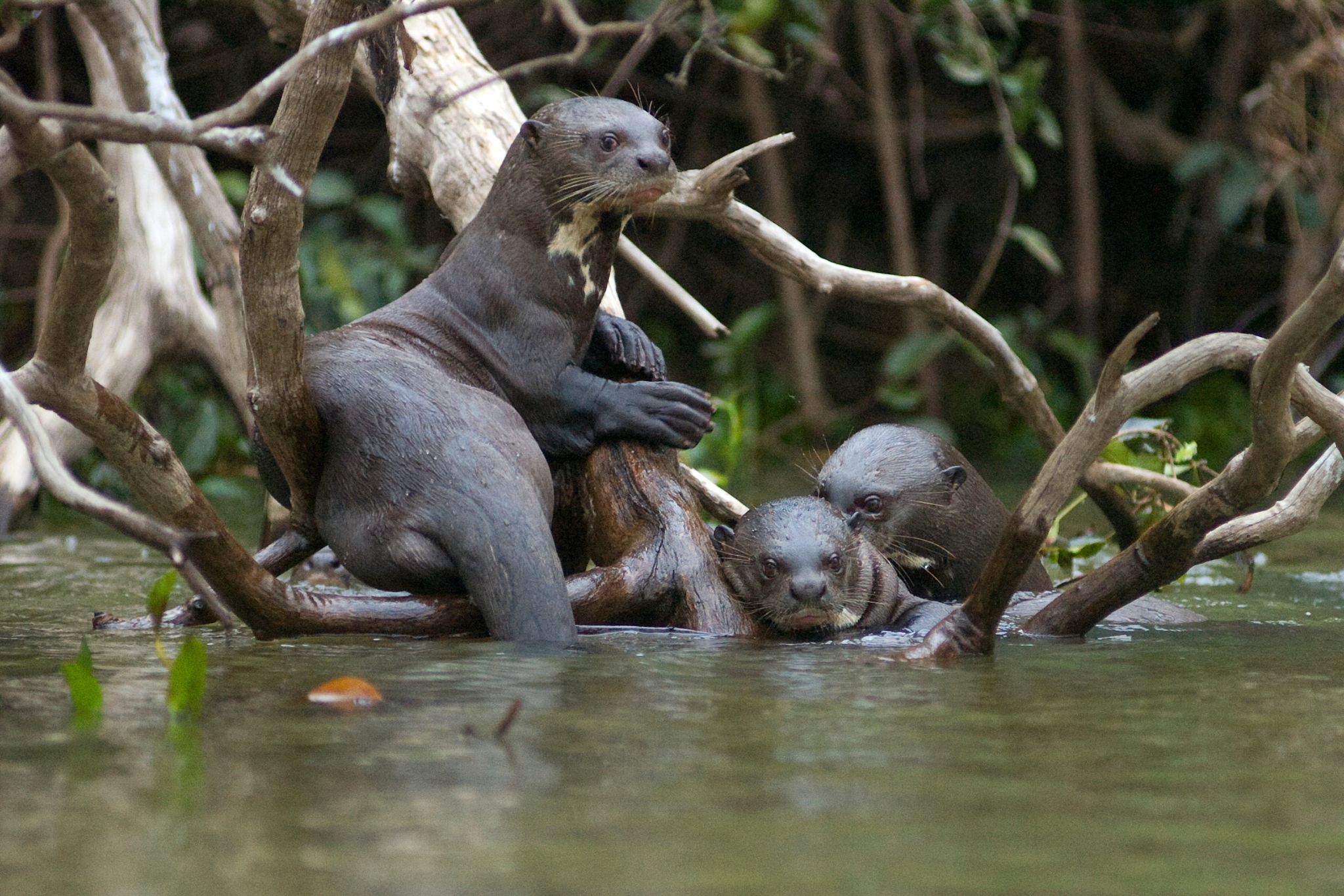
The giant otter (Pteronura brasiliensis) is anything but typical. As the largest member of the weasel family (Mustelidae), it can reach lengths of up to 6 feet and weigh as much as 70 pounds – making it nearly twice the size of all other otter species.
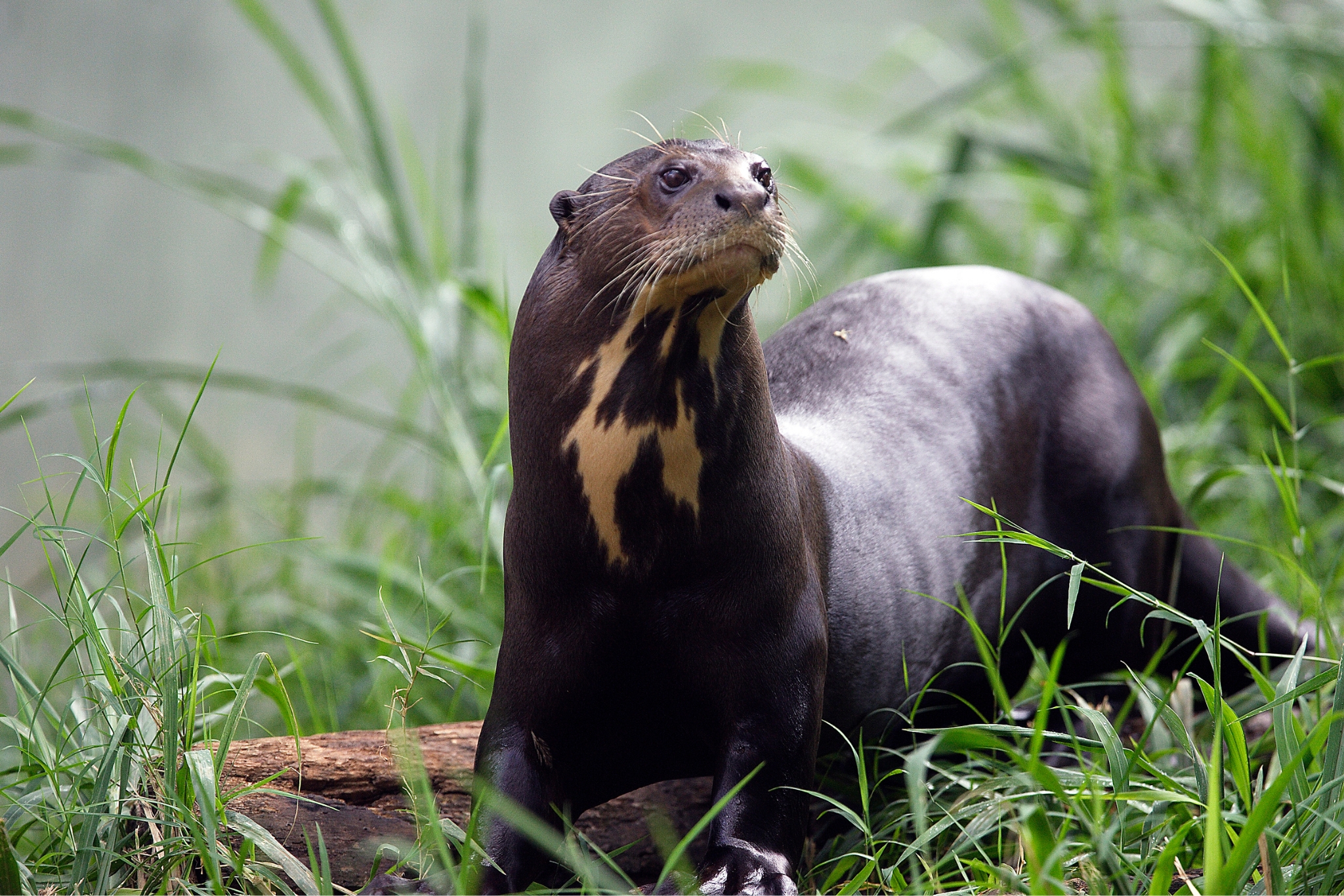
Their rich, chocolate-brown fur is so dense that water can’t penetrate it — and each individual has unique cream-coloured throat markings, like a natural fingerprint.
But what truly sets giant otters apart is their social nature. They live in close-knit family groups of 3 to 8 individuals, usually centered around a dominant breeding pair. These groups are highly cooperative – hunting together, raising cubs as a unit, and maintaining strong social bonds. They’re also incredibly vocal, using a wide range of sounds to communicate everything from danger to reassurance, making them the most talkative of all otter species.
In short, giant otters are bold, intelligent, and deeply social animals – which makes their current struggle for survival all the more striking.
River Wolf
Are Giant Otters Still Alive Today?
Yes – but their situation is genuinely fragile. Giant otters are currently listed as Endangered on the IUCN Red List, reflecting a steep decline in their populations across South America.
Today, it’s estimated that only around 2,000 giant otters remain in the wild, with the majority found in Brazil. To put that into perspective, there are fewer giant otters than giant pandas worldwide – yet they receive far less global attention and conservation funding.
The Guianas represent one of the species’ last strongholds, while the Peruvian Amazon also supports important populations. In fact, Peru holds the largest recorded concentration in a single area, with around 250 individuals observed in one location.
While they haven’t disappeared, their numbers are low – and their future depends heavily on continued protection and awareness.
Where Do Giant Otters Live?
The giant otter’s range spans north-central South America, primarily along the Amazon River and within the Pantanal. However, this range has shrunk dramatically over time and is now fragmented rather than continuous.
Historically, giant otters were found in 12 South American countries. Today, they have disappeared from large portions of that range, with populations in countries like Argentina and Uruguay long considered extinct. That said, there is some encouraging progress – after more than 40 years, giant otters have been reintroduced to Argentina, where a small family group has been released into Iberá as part of an ongoing rewilding effort.
Within their remaining habitats, giant otters are selective. They prefer slow-moving rivers in forested regions, swamps, and marshes – typically areas with clear water, gently sloping banks, and dense, overhanging vegetation. They may also inhabit lakes and reservoirs, provided the conditions support their hunting and social behaviors.
While their footprint across the continent has diminished, targeted conservation and reintroduction efforts offer cautious hope for their return.
Why Did Giant Otters Almost Disappear?
The story of the giant otter’s decline is largely a human story – and not a flattering one.
How We Nearly Lost the
River Wolf — And Still Might
The Fur Trade That Nearly Finished Them Off
A single giant otter pelt was worth more than a year’s wages for a local resident. Otters are deeply inquisitive — groups would approach canoes to investigate, making them easy targets for hunters. Between 1950 and 1970, Peru alone exported 20,000 otter pelts. In 1973, giant otters were listed on Appendix I of CITES, prohibiting all trade. That legal protection helped — but it was far from the end of the threats.
Habitat Destruction & Fragmentation
An estimated 80% of their historical South American range has been lost. Deforestation, agricultural expansion, and dam construction destroy den sites, disrupt foraging areas, and isolate populations from one another. Habitat destruction is suspected to have caused a population decline of more than 50% in the past 15 years — with a potential further reduction of 50% or more over the next 15 years.
Mercury Poisoning from Illegal Gold Mining
Illegal gold mining introduces mercury into aquatic environments throughout the Amazon basin. The mercury contaminates the fish that giant otters depend on — leading to chronic poisoning, reproductive failure, and long-term population decline. As mining operations expand deeper into protected areas, this threat is accelerating.
These are not abstract projections. They represent the genuine possibility of extinction within a single human generation.
Listed as Endangered since 1999. Without decisive action, the giant otter may be functionally extinct in the wild within decades.
What Is Being Done to Save Giant Otters?
Thankfully, the conservation outlook isn’t entirely bleak. Across South America, researchers, governments, and conservation groups are actively working to protect and restore giant otter populations.
A recent collaborative report from more than 50 researchers across 12 countries has identified 22 priority areas for giant otter conservation – some spanning vast regions of critical habitat. Encouragingly, over a third of these key areas are now under legal protection.
Protected regions such as Peru’s Manu National Park and Brazil’s Cantão State Park serve as vital refuges where giant otter populations can stabilize and recover. These areas provide the habitat security and environmental conditions the species depends on.
Ecotourism is also playing an important role. Giant otters are not only essential to maintaining healthy fish populations, but they’re also a major draw for visitors. When local communities benefit economically from otter-focused tourism, they gain a strong incentive to protect both the animals and the ecosystems they rely on.
While challenges remain, these combined efforts offer real hope for the future of this remarkable species.
Why Giant Otters Matter
Beyond their intrinsic value as a remarkable keystone species, giant otters are powerful indicators of ecosystem health. As apex predators in freshwater environments, they help regulate fish populations and serve as a signal of a functioning river system – if giant otters are present, typically it’s a good sign that the habitat is in good condition.
Although they have no true natural predators, they still face competition from species like jaguars and crocodilians. But the most significant threat by far has come from humans. Habitat destruction, hunting, and environmental degradation have taken a heavy toll on their populations.
The irony is striking: an animal with no natural predators is still at risk of disappearing… because of us.
The River Wolf Needs Our Help
Giant otters still exist – but their future is far from secure. With fewer than 2,000 individuals remaining in the wild and populations scattered across an increasingly threatened landscape, they exist in a fragile space between recovery and decline.
Conservation efforts across South America offer real hope, and rewilding projects – like the reintroduction in Argentina’s Iberá wetlands – show that meaningful recovery is possible with sustained commitment.
What happens next will depend largely on human choices: how land is managed, how industries like mining are regulated, how protected areas are enforced, and how much value we place on preserving biodiversity.
The majestic river wolf still moves through the waterways of the Amazon. The question is whether we will ensure those rivers remain healthy enough for it to survive.