Meet Your New Favorite Marine Mammal: The Manatee (And Learn How You Can Save Them)
Meet the gentle manatee: explore their habitat, behavior, diet, and the conservation efforts helping protect these beloved marine mammals.
- What Exactly Is a Manatee?
- The Three Types of Manatees
- What Makes Manatees So Special?
- Manatee Behavior and Lifestyle
- Where Do Manatees Live?
- Why Manatees Need Your Help Right Now
- Major Threats to Manatee Populations
- The Shocking Numbers
- How You Can Help Save the Manatees
- Amazing Manatee Facts to Share at Your Next Gathering
- A Hopeful Future for Manatees
- Your Manatee Journey Starts Now
- Take Action Today
If you’ve ever watched a manatee glide through Florida’s crystal clear springs, you know just how unforgettable the experience can be. Calm, curious, and surprisingly graceful, these gentle giants have a way of capturing everyone’s heart.
With their round bodies, whiskered snouts, and sweet personalities, it’s easy to see why manatees are one of America’s most beloved marine mammals.
Even so, life isn’t easy for these peaceful animals. From habitat loss to boat strikes, manatees face a number of challenges that make conservation more important than ever.
Whether you’re planning to see one in the wild or simply want to learn more about these incredible creatures, here’s everything you need to know about manatees—and why protecting them matters.
What Exactly Is a Manatee?
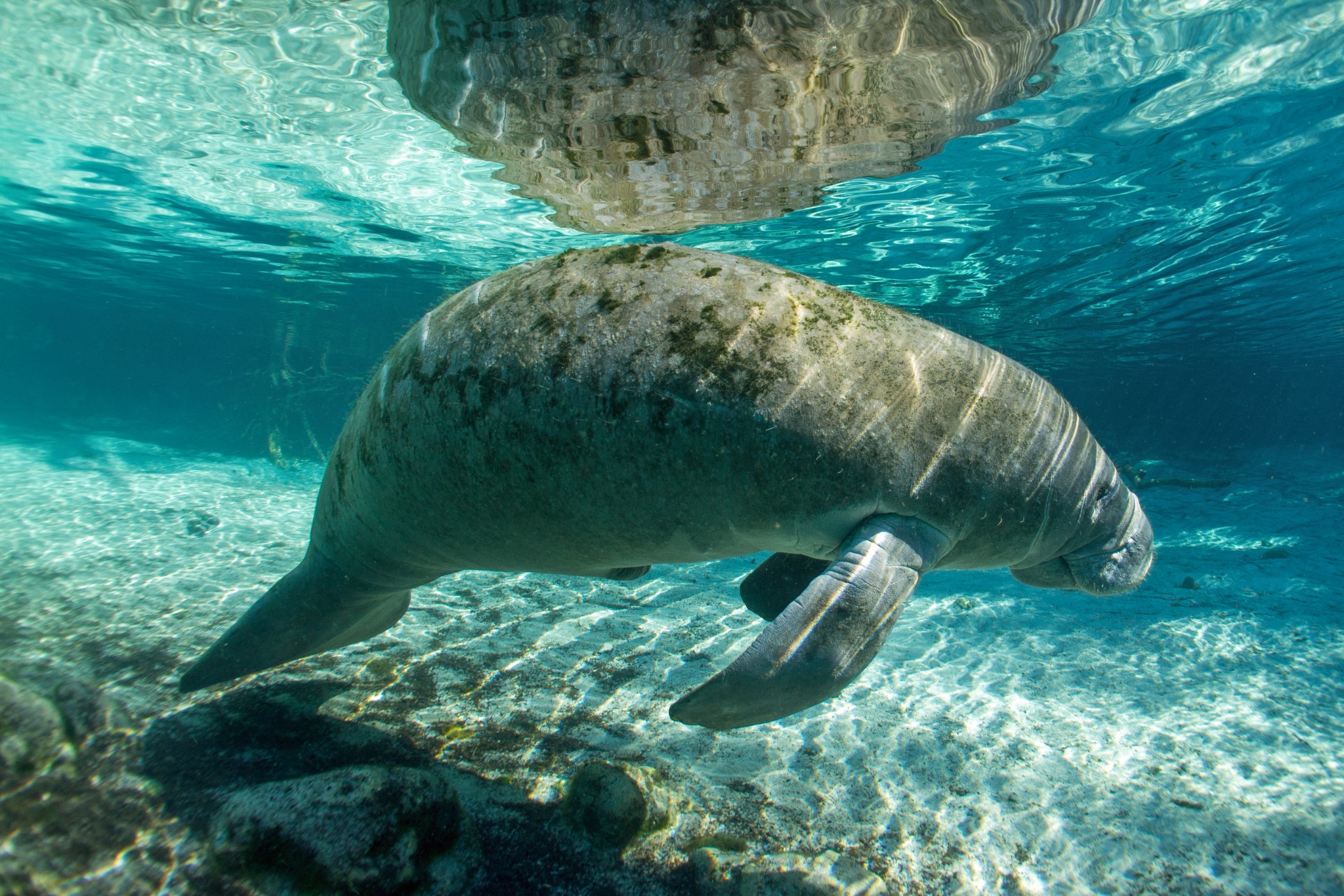
Manatees are large, plant eating marine mammals that belong to the order Sirenia—the same group that inspired legends of mythical sirens.
Despite their name, there’s actually nothing mysterious or dangerous about them. In fact, manatees are famously gentle, curious, and incredibly peaceful.
Often nicknamed “sea cows,” these slow moving mammals spend most of their day grazing on seagrass and other aquatic plants in warm shallow waters.
Their relaxed lifestyle and calm temperament have made them one of the most beloved animals in coastal ecosystems.
The 3 Types of Manatees
While we’re focusing on American manatees today, it’s fun to know that there are actually 3 species of manatees found around the world.
1. West Indian Manatee: found throughout Florida and the Caribbean (our American favorite!)
- Florida manatee subspecies
- Antillean manatee subspecies
2. Amazonian Manatee: native to the rivers and waterways of the Amazon Basin, where they spend their days peacefully grazing among aquatic plants
3. West African Manatee: found along the coastal waters and rivers of West Africa
|
What Makes Manatees So Special?
Manatees are the perfect mix of impressive and adorable. These gentle giants may be large, but their calm personalities and curious nature are what make them so lovable. Here’s what makes them truly unique:
Size and Weight
- Adult manatees usually grow to around 10 to 12 feet long and weigh between 800 and 1,200 pounds
- Some larger individuals can even exceed 3,500 pounds!
- Despite their impressive size, they have a famously gentle and peaceful nature
Flippers and Tail
- Those paddle shaped flippers aren’t just cute—they’re also incredibly useful. Manatees use them to steer, move along the bottom of waterways, and interact with their surroundings.
- Their powerful, flat tails help them glide through the water with surprising elegance
Skin and Coloring
- Manatees are typically gray or brown, with thick, wrinkled skin that gives them their signature look
- Some even appear slightly greenish thanks to algae that can grow on their backs
- While their skin can be up to 2 inches thick in places, it’s actually very sensitive and helps them sense the world around them
Those Whiskers Though
- One of their most charming features is their whiskered snout
- Their tiny, sensitive bristles help manatees locate food and explore their environment—adding even more personality to these already lovable creatures
Manatee Behavior and Lifestyle
Manatees are truly the definition of taking life at their own pace. These gentle giants spend their days eating, exploring, and enjoying the calm waters they call home.
Here’s what a typical day looks like:
Eating Machines
Manatees spend up to 8 hours a day grazing on seagrass, algae, and other aquatic plants.
They can eat around 10 to 15 percent of their body weight every day—which is a lot of greenery! For comparison, that’s like a 150 pound person enjoying 15 to 22 pounds of salad daily.
Slow and Steady
Manatees are not built for rushing. They usually glide through the water at a relaxed 3 to 5 miles per hour, but they can pick up the pace and reach 15 to 20 miles per hour in short bursts when needed.
Social (When They Feel Like It)
Although manatees are often found swimming solo, they’re also surprisingly social.
They gather during mating season and often come together in warm water areas during cooler months, creating peaceful groups known as aggregations.
Expert Breath Holders
Like all mammals, manatees need to surface for air—but they’re impressive breath holders.
When resting, they can stay underwater for up to 20 minutes. But when they’re active, they usually come up for a breath every few minutes before diving back in.
Where Do Manatees Live?
Florida manatees make their home in the coastal waters, rivers, and springs of the southeastern United States, with Florida serving as their main hangout spot.
During warmer months, some adventurous manatees even travel farther north to places like Massachusetts and west toward Texas.
Winter Hangouts
When water temperatures drop below 68°F, manatees seek out warmer areas where they can stay comfortable. Their favorite winter retreats include:
- Natural springs, like Crystal River National Wildlife Refuge and Blue Spring State Park
- Warm water discharge areas near power plants
- Other naturally heated waterways that provide a cozy refuge during cooler months
Summer Adventures
When temperatures rise, manatees spread out across Florida’s rivers, springs, and coastal waters. With plenty of warm water and plant life to enjoy, they spend the season exploring, grazing, and soaking up the sunshine.
Why Manatees Need Your Help Right Now
Here’s where we get a little more serious. As gentle and peaceful as they are, manatees face a number of challenges in the wild.
Their size may be impressive, but these slow moving mammals are surprisingly vulnerable to the changes happening in their environment.
Current Conservation Status
The Florida manatee was moved from “Endangered“ to “Threatened” under the Endangered Species Act in 2017.
This was an important conservation milestone and a sign of progress, but it doesn’t mean manatees are out of danger. They still face several threats that continue to impact their populations.
Major Threats to Manatee Populations
Protecting manatees starts with understanding the challenges they face—and supporting the conservation efforts helping these gentle giants thrive for generations to come.
|
The Shocking Numbers
In 2021, Florida experienced one of the most devastating events in recent manatee history.
More than 1,100 manatees died, with many deaths linked to starvation caused by the loss of seagrass in the Indian River Lagoon.
It was the highest annual manatee death toll ever recorded and a powerful reminder that these beloved animals still need protection.
The crisis highlighted the importance of restoring healthy waterways, protecting habitats, and continuing conservation efforts to help manatees recover.
How You Can Help Save the Manatees
Want to help protect these incredible gentle giants? The good news is that even small actions can make a meaningful difference.
Here are some simple ways you can support manatee conservation:
1. Practice Safe Boating
If you spend time on the water—or know someone who does—these habits can help prevent injuries and save manatee lives:
- Follow posted speed zones in manatee areas
- Wear polarized sunglasses to help spot manatees below the surface
- Stay in deeper channels whenever possible
- Avoid boating through seagrass beds
- Slow down and keep a safe distance if you spot a manatee nearby
2. Support Manatee Conservation Organizations
Supporting conservation groups is one of the best ways you can make an impact. These organizations work to rescue, research, and protect manatees:
- Save the Manatee Club: founded in 1981, this organization has long focused on manatee advocacy and conservation
- Florida Fish and Wildlife Conservation Commission (FWC): the state agency responsible for manatee research, management, and protection
- Marine Mammal Conservancy: supports marine mammal rescue and rehabilitation efforts
- Clearwater Marine Aquarium: known for marine animal rescue, rehabilitation, and conservation programs
3. Reduce Your Environmental Footprint
Healthy waterways mean healthier manatees. A few simple everyday choices can help protect their habitat:
- Use less fertilizer to reduce pollution and harmful algal blooms
- Properly dispose of fishing line, nets, and trash
- Choose sustainable seafood options
- Cut back on single use plastics
- Support clean water and habitat restoration efforts
4. Be a Responsible Manatee Viewer
Seeing a manatee in the wild is a magical experience—just remember to admire them respectfully:
- Always look, and never touch
- Never feed manatees or give them water
- Don’t chase, surround, or follow them
- Keep a respectful distance (at least 50 feet)
- Avoid separating mothers from calves
- Report injured or distressed manatees to the FWC Wildlife Alert Hotline
5. Spread the Word
One of the easiest ways to help is by simply sharing what you know. Talk about manatee conservation, share responsible wildlife tips, and help others understand why protecting these animals matters.
6. Adopt a Manatee
Many conservation groups offer symbolic manatee adoption programs. These can make thoughtful gifts for animal lovers and often include fun updates, photos, or certificates while supporting conservation work.
7. Report Violations
Manatees are protected animals. If you see harassment, injury, or harmful activity involving manatees, report it to the FWC Wildlife Alert Hotline.
8. Support Seagrass Restoration
Seagrass is one of the most important resources for manatees. Protecting and restoring healthy seagrass habitats helps ensure these gentle giants have the food and environment they need to thrive.
At the end of the day, every action counts.
Whether you’re exploring Florida’s waterways, supporting conservation organizations, spreading awareness, or volunteering with groups working on seagrass restoration projects, you’re helping create a safer future for manatees.
Even small choices can make a meaningful difference for these gentle giants and the ecosystems they call home.
Amazing Manatee Facts to Share at Your Next Gathering
Want to become the person everyone turns to for fun wildlife facts? Here are some fun things to know about these gentle giants:
|
The more you learn about manatees, the easier it is to see why these peaceful animals have captured so many hearts.
A Hopeful Future for Manatees
Despite the challenges they face, there is still plenty of reason to be hopeful.
Conservation efforts are making a real impact, and manatee populations have shown incredible resilience when they have access to safe habitats, clean waterways, and proper protection.
Recent efforts focused on helping manatees include:
- Restoring seagrass habitats in important feeding areas
- Improving water quality and reducing pollution
- Protecting warm water refuges where manatees gather during colder months
- Expanding public education and awareness programs
- Strengthening boating regulations to reduce injuries and deaths
Protecting the Gentle Giants We Love
The story of the manatee is one of both challenges and hope. These peaceful, fascinating creatures have captured our hearts, and now they need our help to continue thriving.
Whether you’re making more sustainable choices, supporting conservation efforts, practicing responsible boating, or simply sharing what you’ve learned, every action can make a difference.
Protecting manatees is about more than saving one beloved species—it’s about caring for the entire ecosystem they call home.
When we protect manatees, we’re also protecting seagrass meadows, coastal waterways, and the countless plants and animals that rely on these fragile habitats.
So whether you choose to support a conservation group, volunteer, adopt a manatee, or plan a responsible wildlife encounter, you’re becoming part of the solution.
These gentle sea cows are worth protecting, and their future depends on the choices we make today.
Take Action Today
Ready to help? Here are your next steps:
1. Share this post to spread awareness
2. Visit SaveTheManatee.org to adopt a manatee
3. Plan a responsible manatee viewing adventure at Crystal River or Blue Spring State Park
4. Sign up for Fauna Discovery’s newsletter to stay informed
Together, we can ensure a brighter future for America’s most beloved marine mammal. Let’s do this! 🌊💙