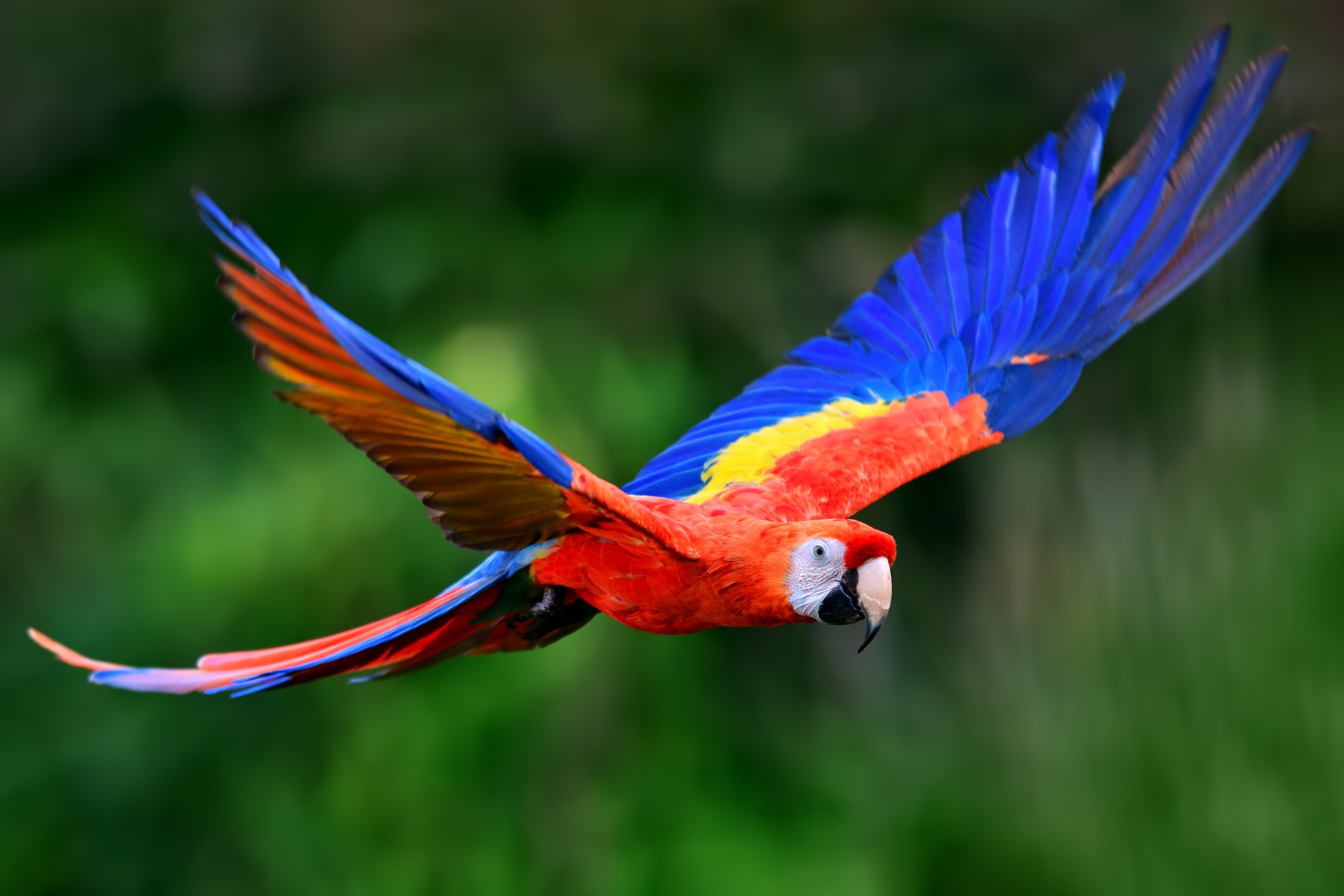
How Loud Are Scarlet Macaws? Decibels, Causes & Coping Strategies
Scarlet macaws scream at 100 to 106 decibels — as loud as a chainsaw or jackhammer. Learn why they’re so loud, how they compare to other parrots, and what you can do about it.
- How Many Decibels Is a Scarlet Macaw?
- Are Scarlet Macaws the Loudest Macaw Species?
- Why Are Scarlet Macaws So Loud in the First Place?
- How Scarlet Macaw Volume Compares to Other Loud Parrots
- What Does a Scarlet Macaw Actually Sound Like?
- Can You Reduce a Scarlet Macaw’s Noise Level?
- Is a Scarlet Macaw Too Loud for You?
If you’ve ever been anywhere near a scarlet macaw when it lets out a scream, you already know that these birds are not exactly quiet.
In fact, these birds are among the loudest parrots you can bring home, so it’s important to understand just how loud they can get (and why) before welcoming one into your family.
How Many Decibels Is a Scarlet Macaw
If you didn’t already know, Scarlet macaws can be really loud.
Their calls typically fall in the 100 to 106 decibel (dB) range, with many measurements landing around 102 to 105 dB at close range.
In one measurement taken from 15 feet away, a scarlet macaw’s scream reached 102 dB. Other sources put some of their contact calls closer to 105 dB, just below the hyacinth macaw’s reported 106 dB.
To give you a better idea of what that sounds like:
- Normal conversation: 60 dB
- Motorcycle engine: ~95 dB
- Scarlet macaw scream: 100 to 106 dB
- Chainsaw or rock concert: ~110 dB
- Jet engine at takeoff: 130+ dB
In other words, a macaw’s scream is seriously loud—roughly in the range of a jackhammer or car horn. And because repeated exposure to very loud sounds can damage your hearing, it’s worth thinking about both the bird’s noise level and where you’ll keep it in your home.
Are Scarlet Macaws the Loudest Macaw Species?
Not quite, but they’re definitely near the top of the noise list. Their calls are naturally powerful and designed to carry over long distances, so they can be seriously loud when you’re standing nearby.
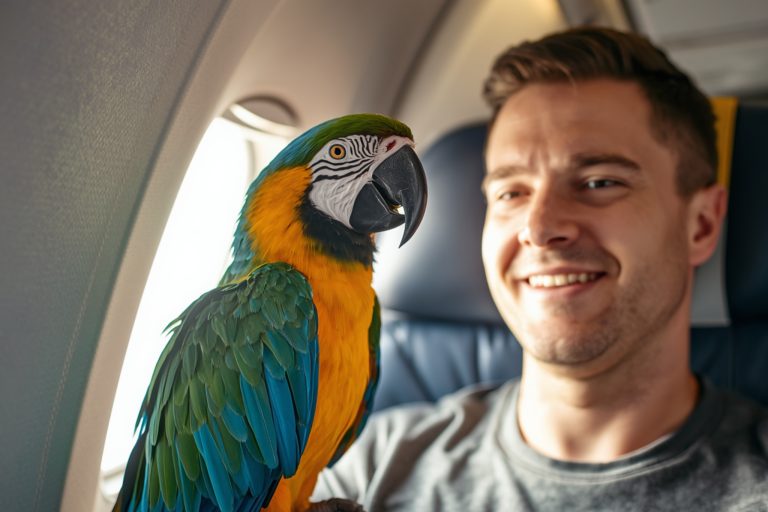
For comparison, blue and gold macaws tend to be a little less piercing, often favoring whistles and trills over the sharp squawks scarlet macaws are known for.
With that said, every bird is different, and even a blue and gold macaw can definitely make itself heard when it wants to.
Why Are Scarlet Macaws So Loud in the First Place?
It’s important to know that the screaming isn’t just random noise. Scarlet macaws are loud for a reason, and most of their vocalizations come from natural behaviors they use in the wild.
1. Keeping in Touch With the Flock
In the wild, scarlet macaws use loud squawks, squeaks, and screams to communicate with their flock over long distances. Their calls are built to carry through dense rainforest, sometimes traveling more than 2 miles.
That kind of volume makes perfect sense in the rainforest—and it doesn’t disappear just because a macaw moves into your living room.
2. Calling for Their People
Many of the loud calls you hear from a pet macaw are actually contact calls.
In the wild, a parrot that gets separated from its flock will call out, and the flock calls back. It’s basically their way of saying, “Where is everyone?”
Pet macaws typically do the same thing when their favorite person leaves the room or the house. And the longer they’re alone, the more persistent those calls can become.
3. Warning of Danger
Macaws also scream when something feels threatening or unfamiliar. A sudden noise, a stranger in the house, or something else that catches them off guard can trigger a loud alarm call.
In the wild, these calls serve an important purpose by warning the rest of the flock that something might be wrong.
4. The Morning and Evening Chorus
Scarlet macaws tend to be especially vocal around sunrise and sunset. This follows the natural rhythm of wild flocks, when birds are getting together in the morning and checking in again before settling down for the night.
If you live in an apartment or have close neighbors, these early morning and evening calls can be the ones that cause the most trouble.
5. Boredom or Loneliness
Sometimes excessive screaming has a less natural cause. A macaw that spends too much time alone or doesn’t have enough toys, activity, or mental stimulation may start screaming simply because it’s bored or lonely.
The good news is that this type of screaming can often improve with more enrichment, interaction, and changes to the bird’s environment.
How Scarlet Macaw Volume Compares to Other Loud Parrots
Scarlet macaws are loud, but they’re not the only birds at the top of the parrot noise chart:
How Loud Is
Too Loud?
The bottom line is that scarlet macaws are firmly in the “extremely loud” category when it comes to pet birds.
But they’re not uniquely loud among large parrots—some cockatoos and even smaller birds like sun conures can reach similar (or even higher) peak volumes.
What Does a Scarlet Macaw Actually Sound Like?
Scarlet macaws have quite a range of sounds, and that’s part of what makes them such fascinating—and sometimes demanding—companions:
- Contact calls: sharp, repeated squawks they use to check in with their flock or their humans
- Alarm screams: sudden, high-pitched calls they make when something scares them or seems threatening
- Chatter and mimicry: softer, more conversational sounds, including words they’ve learned and noises they hear around the house
- Contentment sounds: quiet chuckles, murmurs, and beak-grinding that are much softer than their louder calls
The difference between a scarlet macaw’s quiet moments and a full volume scream can be huge. That’s why new owners can sometimes be caught off guard—their bird may seem perfectly manageable for days, then suddenly let out a scream that makes them realize just how loud a macaw can really be.
Can You Reduce a Scarlet Macaw’s Noise Level?
You can’t—and shouldn’t—try to stop your scarlet macaw from making their natural sounds.
Those vocalizations are an important part of how the bird communicates, but there are ways to reduce how often and how intensely your bird screams:
1. Keep Them Busy
Foraging toys, new enrichment activities, and plenty of time outside their cage can help prevent boredom related screaming.
2. Don’t Reward the Screaming with Attention
Even yelling back or reacting negatively can teach your macaw that screaming is a reliable way to get your attention.
3. Encourage Quieter Sounds
When your bird uses calm chatter or softer calls, give it attention and positive reinforcement. Over time, this can help encourage more of those quieter behaviors.
4. Create a Predictable Routine
Keeping a consistent schedule and managing common triggers around dawn and dusk can help reduce those peak periods of noise, although it won’t eliminate them completely.
5. Know What You’re Signing Up For
A loud macaw can be challenging in an apartment or home with close neighbors. It’s worth thinking honestly about the noise level before bringing one home.
Is a Scarlet Macaw Too Loud for You?
If you live in an apartment, townhouse, or any home with shared walls, a scarlet macaw’s natural volume is something you really need to think about.
It’s more than just an occasional annoyance—it can lead to noise complaints and tension with neighbors.
These birds are generally better suited to detached homes with some distance between them and the neighbors, or with owners who have taken the time to plan for soundproofing and daily noise management.
Scarlet macaws are incredible animals. They’re intelligent, social, and can form very strong bonds with their people… but that social nature is also a big part of why they’re so loud.
A 100+ decibel scream isn’t a flaw or a bad habit—it’s a rainforest sized communication system in an exotic bird that now happens to live in your home.
Those beautiful scarlet feathers are hard to resist, but the noise is something you’ll want to be prepared for too.