Green Iguana Diet The Best Vegetables to Feed (and Which to Avoid)
Kale and spinach aren’t iguana safe staples. Get a full breakdown of the best low oxalate, calcium rich vegetables for a healthy iguana diet.
- Why Vegetable Choice Matters So Much for Iguanas
- Staple Vegetables (Feed Daily — 80% to 90% of Diet)
- Secondary Vegetables (Feed a Few Times a Week — 10% to 15% of Diet)
- Occasional Treats (1 to 2 Times Per Week, Small Portions)
- Vegetables and Greens to Avoid or Strictly Limit
- Getting the Calcium-Phosphorus Ratio Right
- Sample Daily Salad for an Adult Green Iguana
- The Bottom Line
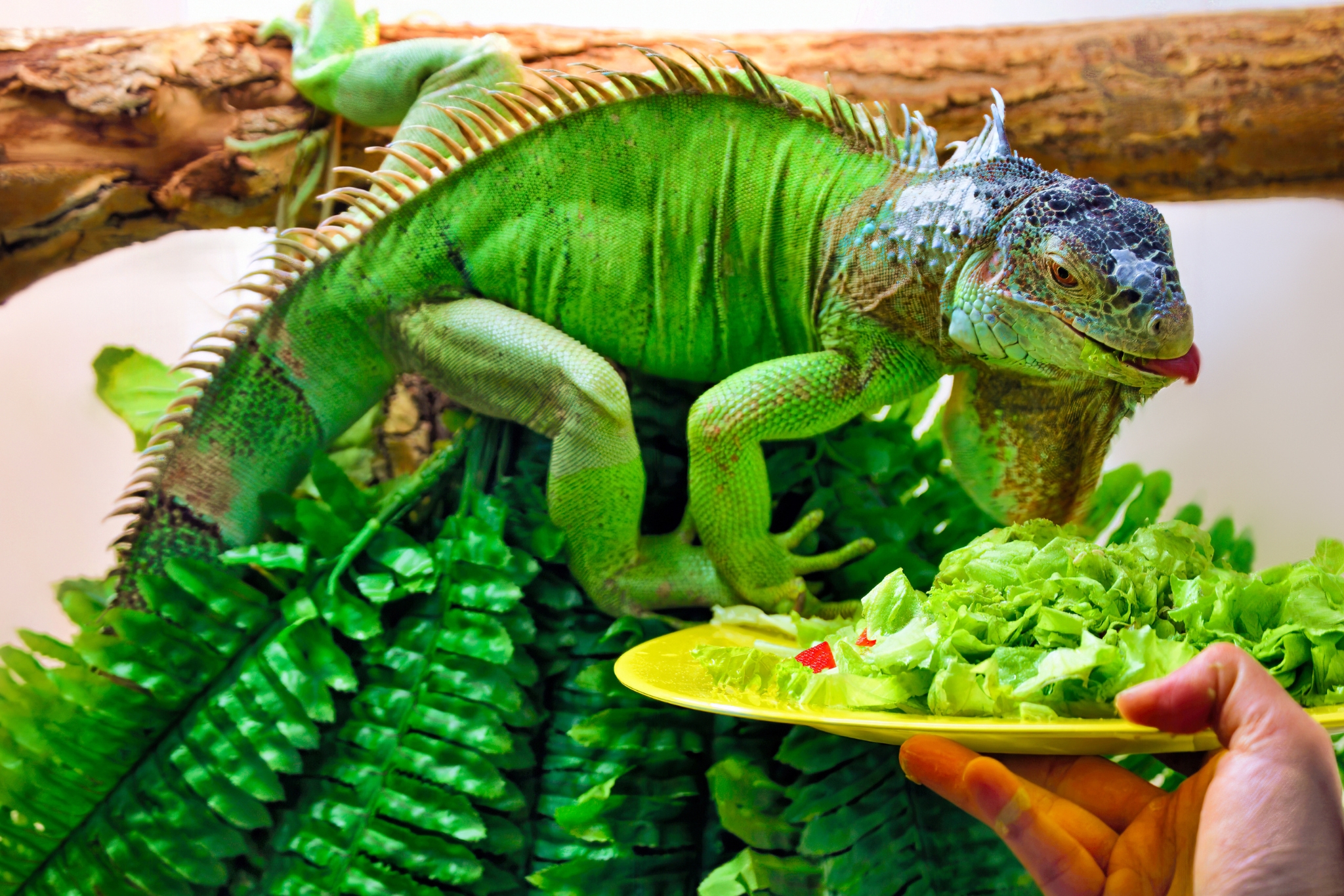
Green iguanas are strict herbivores, which means their diet should be made up entirely of plant based foods throughout their lives.
From tiny hatchlings to fully grown adults, they don’t need insects, meat, or other sources of animal protein. Unlike bearded dragons or leopard geckos, green iguanas are built to thrive on a properly balanced plant based diet.
For new iguana keepers, getting the diet right can be one of the most important parts of long term care. Simply offering a pile of vegetables isn’t enough—some vegetables provide far more nutritional value than others, and feeding the wrong foods too often can contribute to serious health problems over time.
This article breaks down which vegetables should make up the foundation of a green iguana’s diet, which are best offered occasionally, and which foods are better left off the menu entirely.
With the right mix of vegetables and other plant foods, you can build a diet that supports healthy growth, strong bones, and a long healthy life.
Why Vegetable Choice Matters So Much for Iguanas
One of the biggest nutritional concerns for green iguanas is metabolic bone disease (MBD), a serious condition that can develop when an iguana doesn’t receive enough usable calcium, especially when their diet is poorly balanced and UVB exposure is inadequate.
Because calcium is essential for healthy bones and normal muscle and nerve function, getting the diet right is a major part of responsible iguana care.
It’s important to remember that not every vegetable that’s considered “healthy” for people is automatically a good everyday food for an iguana.
Vegetables such as spinach, kale, and broccoli can have nutritional limitations when they’re fed too heavily. Some contain relatively high levels of phosphorus compared with calcium, while others contain oxalates, compounds that can bind to calcium and make it less available for the body to absorb.
When you’re feeding your iguana, the goal isn’t to simply offer plenty of leafy greens. You want to build a varied diet around vegetables and greens that provide a favorable calcium to phosphorus balance, generally aiming for around 2:1 or higher, while rotating different foods rather than relying heavily on one ingredient.
Proper UVB exposure is also as important as dietary calcium. Even a well balanced diet can’t fully compensate for inadequate UVB, since iguanas need appropriate UVB exposure to produce vitamin D3 and properly use the calcium they consume.
For that reason, nutrition and lighting should always be considered together when planning a green iguana’s diet.
Staple Vegetables (Feed Daily — 80% to 90% of Diet)
These greens can form the foundation of your green iguana’s daily meals. Rather than relying on a single vegetable day after day, it’s better to mix and rotate several options. This gives your iguana more variety while helping create a more balanced nutritional profile.
- Collard greens are one of the strongest staple choices for iguanas. They’re rich in calcium, relatively low in oxalates, and generally well accepted by iguanas. For hatchlings and juveniles, chop the leaves into appropriately small pieces that are easy to eat.
- Mustard greens are another excellent option and provide a favorable calcium to phosphorus balance. Their slightly different flavor and texture also help keep meals interesting when they’re rotated with collard greens.
- Turnip greens can be included regularly as another calcium rich choice. Many iguanas enjoy them, and their flavor can be appealing to animals that aren’t enthusiastic about eating collards every day.
- Dandelion greens are a favorite for many iguanas and can provide calcium along with beta-carotene. If you’re feeding dandelions, make sure they’re free from pesticides, herbicides, and other chemicals. Home grown greens or those from a trusted food safe source are the safest options.
- Escarole and endive offer a milder flavor and can be useful for picky eaters that turn their noses up at stronger or more bitter greens. They work well as part of a mixed salad rather than necessarily being the only green offered.
- Watercress can also be included in the rotation to add variety. It’s best used as one component of a mixed salad rather than making up the entire meal.
For a well rounded daily salad, try combining two to four different greens instead of serving just one. Mixing several options not only makes meals more interesting but also helps spread out small nutritional differences between individual foods.
The Bottom Line
A varied salad is generally a better approach than expecting one “perfect” vegetable to meet all of your iguana’s nutritional needs.
Secondary Vegetables (Feed a Few Times a Week — 10% to 15% of Diet)
Once you’ve built your iguana’s meals around calcium rich staple greens, you can add other vegetables to provide more variety, texture, and nutrients.
These foods are useful additions, but they shouldn’t replace the staple greens that form the foundation of the diet.
- Butternut and acorn squash are good sources of vitamin A and fiber. They can be offered raw and finely grated or chopped into manageable pieces.
- Green beans are an easy addition that provides fiber and some variety in texture. They work well mixed into a larger salad.
- Bell peppers (particularly red, yellow, and orange varieties) add color and are a good source of vitamin C. Their bright colors can also make meals more interesting for an iguana.
- Okra can add variety and contributes some calcium, but it’s best rotated with other vegetables rather than fed as a primary food.
- Grated carrot can be offered in small amounts as part of a mixed salad. Because carrots aren’t an ideal staple food, keep them as an occasional addition rather than making them a daily feature.
- Zucchini and yellow squash have a high water content, making them a useful way to add moisture and variety to your iguana’s meals.
- Snap peas are often well accepted and can provide another change in texture and flavor. Offer them as part of a varied salad rather than relying on them as a major nutritional component.
- Alfalfa sprouts can be used occasionally to add variety, but they should remain a small part of the overall diet.
Supporting Cast, Not the Star
Think of these vegetables as supporting players rather than the main course. A good iguana salad starts with appropriate staple greens, then uses vegetables like squash, peppers, beans, and peas to round out the meal and keep things interesting.
Occasional Treats (1 to 2 Times Per Week, Small Portions)
Fruits and edible flowers can add variety to your green iguana’s diet, but they should complement a vegetable based diet rather than take the place of nutrient rich greens.
Many iguanas love the sweetness of fruit, so it’s easy to overdo feeding them. Keeping these foods in moderation helps maintain a balanced diet while still giving your iguana something different to enjoy.
- Papaya is naturally sweet and is usually a favorite with iguanas. It can be offered as part of a varied diet, but because it is still a fruit, it shouldn’t replace the greens and vegetables that make up the bulk of their meals.
- Strawberries can be offered as an occasional treat, but their sugar content makes them better suited to small portions rather than frequent servings.
- Cactus pads (nopales), with all spines carefully removed, are an especially useful addition. They’re a good source of calcium and can be offered more regularly than many other fruits and treats, making them a nutritious option rather than simply an occasional indulgence.
- Hibiscus flowers are a natural favorite for many iguanas and can provide both variety and enrichment. Make sure flowers come from a pesticide free source and haven’t been treated with chemicals.
- Rose petals can also be offered when they’re free of pesticides and other treatments. They provide a safe way to add edible flowers and variety to your iguana’s meals.
Vegetables and Greens to Avoid or Strictly Limit
Not every vegetable belongs in your iguana’s salad. Some foods can interfere with calcium absorption when they’re fed too often, while others offer very little nutritional value or may be unsafe altogether.
The key is to avoid letting less suitable foods become a major part of the diet. Veterinary guidance generally recommends a varied diet built around appropriate leafy greens rather than relying heavily on any single vegetable.
- Spinach, Swiss chard, and beet greens should be limited rather than used as everyday staples. These greens contain oxalates, which can interfere with the absorption of calcium and other minerals. They can still appear in a varied diet in small amounts, but they shouldn’t make up a significant portion of your iguana’s meals.
- Kale, broccoli, cabbage, and other cruciferous vegetables are better treated as occasional additions rather than the foundation of the diet. Some of these vegetables contain goitrogenic compounds that may interfere with thyroid function when consumed excessively. The important distinction is frequency and quantity—these vegetables don’t necessarily need to be completely eliminated, but they shouldn’t crowd out more suitable staple greens.
- Iceberg lettuce is best skipped as a regular food. It’s mostly water and provides relatively little nutritional value compared with darker leafy greens. If you’re filling your iguana’s salad bowl, there are much more nutrient dense choices available.
- Avocado should not be offered to your iguana. It’s best to keep it completely off the menu rather than taking a chance with a food that isn’t considered appropriate for reptiles.
- Rhubarb should also be avoided. In particular, rhubarb leaves contain potentially harmful oxalates and other compounds, making rhubarb an inappropriate food for a pet iguana.
- Onions, garlic, and other alliums are also foods to leave out of your iguana’s diet. There’s no nutritional reason to include them, and avoiding questionable ingredients altogether is the safest approach when preparing a meal for a herbivorous reptile.
The overall takeaway is simple: don’t judge a vegetable solely by whether it’s considered healthy for humans.
Green iguanas have very different nutritional requirements, particularly when it comes to calcium and mineral absorption. Building meals around appropriate leafy greens and rotating a variety of vegetables is a much safer approach than relying on a handful of familiar human foods.
Getting the Calcium-Phosphorus Ratio Right
Even with a carefully planned diet, calcium supplementation and proper UVB lighting are important parts of iguana care. A varied salad can provide plenty of calcium, but diet alone doesn’t guarantee that your iguana will be able to absorb and use it effectively.
Many keepers use a calcium supplement without added phosphorus, lightly dusted over food several times a week. The exact supplementation schedule can vary depending on your iguana’s age, diet, UVB setup, and advice from a reptile experienced veterinarian, so it’s important not to assume that every iguana needs the same amount.
Proper UVB exposure is equally important—iguanas need UVB to produce vitamin D3, which allows the body to absorb and use dietary calcium.
The Bottom Line
Even the best selection of calcium rich vegetables can’t fully make up for inadequate UVB lighting.
A healthy diet, appropriate calcium supplementation, and a properly designed UVB setup all work together. Getting just one of these piece right isn’t enough — long term bone health depends on the entire care routine working as a whole.
Sample Daily Salad for an Adult Green Iguana
Once you know which foods work well as staples and which should be limited, putting together your iguana’s daily salad becomes much easier.
The exact combination can vary from day to day, but the goal is to keep calcium rich greens as the foundation while adding a variety of vegetables and occasional treats for additional nutrients and enrichment.
Sample Daily Salad Mix
Don’t worry if things aunt exact, the percentages don’t need to be measured with laboratory precision. Think of them as a general guideline for building a balanced meal rather than a rigid recipe.
The most important thing is that appropriate leafy greens make up the majority of the diet and that you regularly rotate the ingredients.
You’ll also want to prepare the food in pieces that are appropriate for your iguana’s size. Hatchlings and juveniles should get finely chopped or minced vegetables, while adults can generally handle somewhat larger pieces.
Don’t forget to serve the salad fresh each day and remove uneaten food after a few hours, especially in warm enclosures, since fresh produce can spoil and become a source of bacterial growth.
The Bottom Line
One of the biggest adjustments for new iguana keepers is learning that a vegetable that’s considered “healthy” for people doesn’t automatically make it a good everyday food for a green iguana. Iguanas have specific nutritional needs, especially when it comes to calcium, phosphorus, and overall mineral balance.
The foundation of their diet should be calcium rich, appropriate leafy greens such as collard, mustard, and turnip greens, with other vegetables rotated in to provide variety and additional nutrients.
Foods that are less suitable as staples can still be offered occasionally when appropriate, but they shouldn’t take the place of the nutrient dense greens that make up the bulk of the diet.
Don’t forget that a properly planned vegetable based diet also needs to be paired with appropriate UVB lighting and calcium supplementation. These pieces work together to support normal calcium metabolism and healthy bones, making them an essential part of long term iguana care.
When you build meals around the right foods and keep their diet varied, you’re doing more than simply keeping your iguana fed. You’re giving it a nutritional foundation that can support healthy growth, strong bones, and a better quality of life for years to come.