How to Give Your Parrot a Bath Your Complete Guide to Happy, Healthy Feathers
Discover the best ways to bathe your parrot, how often to do it, and how to spot signs of stress or enjoyment during bath time.
- Why Parrots Need Regular Baths
- How Often Should You Bathe Your Parrot?
- Choosing the Right Bathing Method
- Water Temperature and Safety Basics
- How to Introduce a Nervous Parrot to Bathing
- Reading Your Parrot’s Body Language During Bath Time
- Drying Off Safely
- Common Bathing Mistakes to Avoid
- The Bottom Line
- Frequently Asked Questions
Bath time isn’t just a fun extra for parrots—it’s an important part of keeping their feathers, skin, and respiratory system healthy.
Regular bathing helps wash away dust and debris, loosen old feather sheaths during molting, soothe dry skin, and keep their feathers in good condition.
But getting your parrot to actually enjoy a bath can be a different story—and if you’ve ever tried introducing a nervous or stubborn bird to a spray bottle, you know it doesn’t always go according to plan.
The good news is that there are plenty of ways to make bath time easier. This article covers why bathing matters, how often your parrot should bathe, the different methods you can try, the right water temperature, and how to read your bird’s body language.
Why Parrots Need Regular Baths
In the wild, parrots often bathe in rain, splash through puddles, or even use dew covered leaves to get their feathers wet. And that natural instinct doesn’t disappear because they live indoors—it just needs to be given an appropriate outlet.
Bathing also serves several important purposes:
1. Keeps Feathers in Good Shape
Water helps loosen dust, dander, and the keratin sheaths around new pin feathers, making it easier for your parrot to preen and keep its feathers clean.
2. Supports Healthy Skin
Dry indoor air from heating or air conditioning can leave a bird’s skin flaky or itchy. Regular bathing can help keep their skin more comfortable.
3. Helps with Cooling
Getting wet can help your parrot cool down, especially on warm days.
4. Provides Natural Enrichment
Bathing is something parrots naturally enjoy and find stimulating. Giving your bird regular opportunities to bathe lets it engage in a natural behavior that’s part of its normal routine.
A parrot that rarely gets the chance to bathe may end up with feathers that look dusty, dull, or less well-maintained.
How Often Should You Bathe Your Parrot?
Most parrots do well with a bath 2 to 4 times a week, but the ideal schedule depends on the species, your home’s humidity, and your individual bird.
Some parrots love getting wet and will happily bathe almost every day, while others prefer a quick misting a few times a week.
As a general starting point:
African Greys, Amazons, and Eclectus:
- Many enjoy frequent, thorough baths, and some are perfectly happy with near daily misting
Cockatiels and Budgies:
- 2 or 3 baths a week is often a good routine
Macaws and Cockatoos:
- Many enjoy a more generous soaking and may happily bathe most days, particularly in dry climates
Your bird’s feathers can also give you useful clues—if they look dry or brittle, your parrot seems unusually dusty, or you notice more preening than usual, it may be worth offering bathing opportunities more often.
Most importantly, let your bird’s behavior guide you. Some parrots will practically demand a bath, while others need a little encouragement to discover that getting wet can actually be fun.
Choosing the Right Bathing Method
There’s no single “right” way to bathe a parrot. The best method is simply the one your bird feels comfortable with—and ideally, one they actually enjoy.
You may need to try a few different options before you find your parrot’s favorite.
1. Misting With a Spray Bottle
Misting is one of the easiest ways to introduce a parrot to bathing. Use a clean spray bottle that produces a fine mist (not a strong stream) and spray upward so the water falls gently like rain instead of hitting your bird directly.
Best for:
- Nervous birds
- First time bathers
- Smaller parrots
Tips:
- Use room temperature or lukewarm filtered water
- Stand about 2 to 3 feet away and mist upward so the droplets gently fall onto your bird
- Let your parrot decide how close it wants to get—many birds will eventually lean into the mist, fluff their feathers, or spread their wings once they’re comfortable
2. Shower Perch
Some parrots love joining their owners in the shower. A secure shower perch lets your bird enjoy the warm gentle humidity and spray while staying safely out of the direct stream.
Best for:
- Confident birds
- Larger parrots such as macaws, cockatoos, and African Greys
Tips:
- Keep the water lukewarm (never hot!)
- Position the showerhead so the water doesn’t hit your bird directly unless your parrot clearly enjoys it
- Keep the first few sessions short (around 2 to 3 minutes) and gradually increase the time as your bird becomes comfortable
- Keep soap, shampoo, conditioner, and other shower products away from your bird—plain water is all they need!
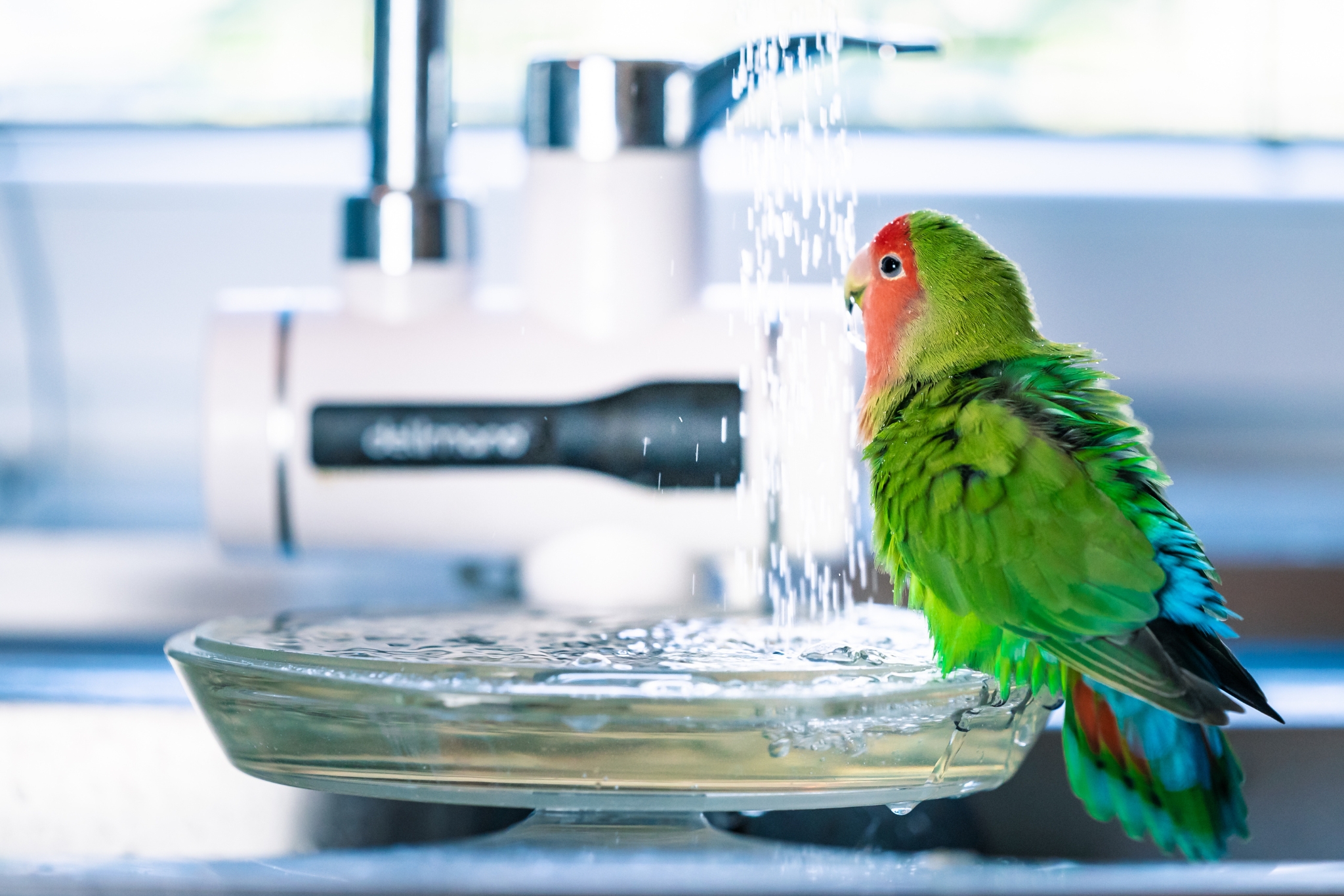
3. Shallow Bowl or Dish Bath
A wide shallow dish with an inch or two of lukewarm water gives your parrot complete control over their bathing experience. Your bird can step in, splash around, or simply walk away whenever it wants.
Best for:
- Independent bathers
- Smaller parrots such as budgies, cockatiels, and lovebirds
Tips:
- Choose a dish that’s wide enough for your bird to move around comfortably but shallow enough for them to stand securely with their head well above the water
- Add a textured surface, such as a clean tile or towel, to give your bird better footing
- Offer the bath earlier in the day so your parrot has plenty of time to dry before bedtime
4. Wet Greens or Leaves
Some parrots prefer a more natural approach. Try placing thoroughly rinsed, damp leafy greens such as kale or lettuce in the cage. Your bird can rub against the wet leaves and get its feathers damp without feeling like it’s being actively bathed.
Best for:
- Very timid birds
- Parrots that have had a bad experience with bathing
Tips:
- Rinse the greens well and shake off the excess water—you want them damp (not dripping)
- Clip or drape the greens near a perch so your bird can rub against them whenever it wants
- Replace the greens daily—wet produce can spoil or develop bacteria fairly quickly
- Once your bird becomes more comfortable around moisture, you can gradually introduce gentle misting as another option
The important thing is to let your parrot set the pace. If your bird is nervous about one method, there’s no need to force it. Trying a different approach can turn bath time from something stressful into something your parrot actually looks forward to.
Water Temperature and Safety Basics
A few simple safety rules can make bath time much more comfortable for your parrot:
Stick with Lukewarm Water
It should feel comfortable on your wrist—never hot or icy cold.
Skip the Soap and Cleaning Products
Healthy parrots don’t need shampoo, soap, or special “bird cleaning” products.
Plain water is usually all they need for regular bathing. If your bird needs help with a specific skin or feather problem, ask an avian veterinarian first.
Keep Water Away From the Face
Unless your bird clearly enjoys it, avoid spraying them directly on the face. Most parrots prefer water gently falling from above or coming from the side.
Bathe Earlier in the Day
Giving your parrot plenty of time to dry before bedtime helps prevent them from staying damp and getting chilled overnight.
Skip Baths if Your Bird is Sick or Very Young
A sick or young bird may have more trouble maintaining its body temperature, so check with an avian veterinarian before bathing.
How to Introduce a Nervous Parrot to Bathing
A bad bath experience can make a parrot wary of water for a long time, so it’s worth taking things slowly from the beginning. The goal is to help your bird see bathing as something safe and enjoyable, not something it has to endure.
Start Small
Begin with a gentle mist from a distance instead of trying to give your bird a full soak. Let your parrot decide whether it wants to move closer or get involved.
Never Force It
Don’t hold your bird under water or chase it around with a spray bottle. That can quickly turn water into something your parrot fears.
Use Positive Reinforcement
Offer a favorite treat or some calm praise during and after bathing attempts. You want your bird to associate water with good things.
Lead by Example
Some parrots become more interested in bathing after watching another bird (or even their owner) enjoy being around water.
Try Different Methods
A bird that dislikes a shower perch might love splashing in a shallow dish. If one method doesn’t work, try another before deciding your parrot simply hates baths.
Look for Signs that Your Bird Actually Enjoys It
There’s a big difference between a parrot that simply tolerates getting wet and one that is relaxed, engaged, and clearly having fun. We’ll cover those signs next.
Reading Your Parrot’s Body Language During Bath Time
Learning to read your parrot’s body language can make bath time much easier. Your bird will usually give you plenty of clues about whether it’s enjoying the experience, simply tolerating it, or feeling stressed and ready for you to stop.
Signs Your Parrot is Enjoying the Bath
- Wings held slightly open or gently fluttering: your bird may be adjusting its feathers to let the water reach more areas
- Fluffed feathers and shaking: a little fluffing and feather shaking is normal when a parrot is getting wet
- Leaning or rolling into the water: if your bird moves toward the water instead of away from it, that’s a good sign it’s comfortable
- Soft chattering or relaxed sounds: calm vocalizations usually suggest your parrot is comfortable and engaged
Signs Your Parrot is Stressed
If you notice these behaviors, its best to back off or end the bath:
- Feathers held tightly against the body: this can indicate fear or discomfort
- Repeated attempts to escape or hide: your bird is telling you it wants some space
- Loud alarm calls or hissing: depending on the species, these can be clear signs of distress
- Panting or open mouth breathing: this can indicate significant stress or overheating and should be taken seriously
The goal isn’t simply to get your parrot wet. You want your bird to feel safe enough to choose to participate, so always let their body language guide you.
Drying Off Safely
After a bath, it’s completely normal for your parrot to shake off the excess water and start preening right away. Preening helps your bird realign its feathers and spread natural oils through the plumage.
Once bath time is over:
Keep Your Bird Warm
Let your parrot dry off in a warm, draft free room where it won’t get chilled.
Let Them Air Dry Naturally
In most cases, natural drying in a comfortably warm room is all your bird needs. A sunny spot can also be nice, just so long as your parrot has the option to move out of direct sunlight.
Be Careful with Hair Dryers
It’s usually best to skip them, especially if your bird isn’t already comfortable with the sound. If you do use one, make sure it’s on the lowest and coolest setting, kept well away from your parrot, and never blowing hot air directly onto the feathers.
Your bird’s own preening routine will do most of the work from there.
Common Bathing Mistakes to Avoid
A few common bath time mistakes can make your parrot uncomfortable or even make it start avoiding water altogether.
Here are the big ones to watch out for:
❌ Using Cold Water
Cold water can startle and stress your bird, so stick with comfortably lukewarm water.
❌ Bathing Too Late in the Day
Give your parrot plenty of time to dry before bedtime. Staying damp overnight can leave your bird chilled.
❌ Using Soap or Other Products
Skip essential oils, soap, shampoo, and “bird bath” products unless your avian veterinarian specifically recommends one. Parrots have sensitive skin and feathers, and plain water is usually all they need.
❌ Forcing Your Bird to Bathe
If your parrot is clearly frightened, stop and try again another time or with a different method. Forcing the experience can make your bird more fearful of water and damage the trust you’ve built.
❌ Never Offering Bathing Opportunities
Bathing is a natural behavior for parrots, so regularly giving your bird the chance to get wet can support healthy feathers and skin and provide useful enrichment.
The Bottom Line
A simple consistent bathing routine can go a long way toward keeping your parrot healthy, comfortable, and happy. The key is to let your bird set the pace rather than forcing the experience.
Start slowly, offer different bathing options, and pay attention to what your individual parrot seems to enjoy.
With a little patience and consistency, many birds eventually come to see bath time as something they genuinely look forward to—not something they need to avoid.
Frequently Asked Questions
How do I know if my parrot needs a bath?
If your parrot’s feathers look dusty or dull, or you notice more preening, scratching, or visible dander than usual, it may be a sign that your bird could benefit from more frequent bathing opportunities.
Can I use tap water to bathe my parrot?
Yes, plain tap water is generally fine for bathing, but filtered or dechlorinated water is a good option if you have concerns about your local water quality.
If your tap water is safe for you to use and doesn’t have an unusual odor or taste, it’s typically fine for external bathing.
Is it normal for my parrot to refuse baths completely?
Absolutely. Some parrots are simply not enthusiastic bathers. If your bird’s skin and feathers look healthy, occasional misting or offering damp leafy greens may be enough.
If your parrot consistently avoids water and you notice problems with its skin or feathers, it’s a good idea to check with an avian veterinarian.